President points to global pressures and African comparisons as petrol tops ₦1,200, promises relief measures are underway….
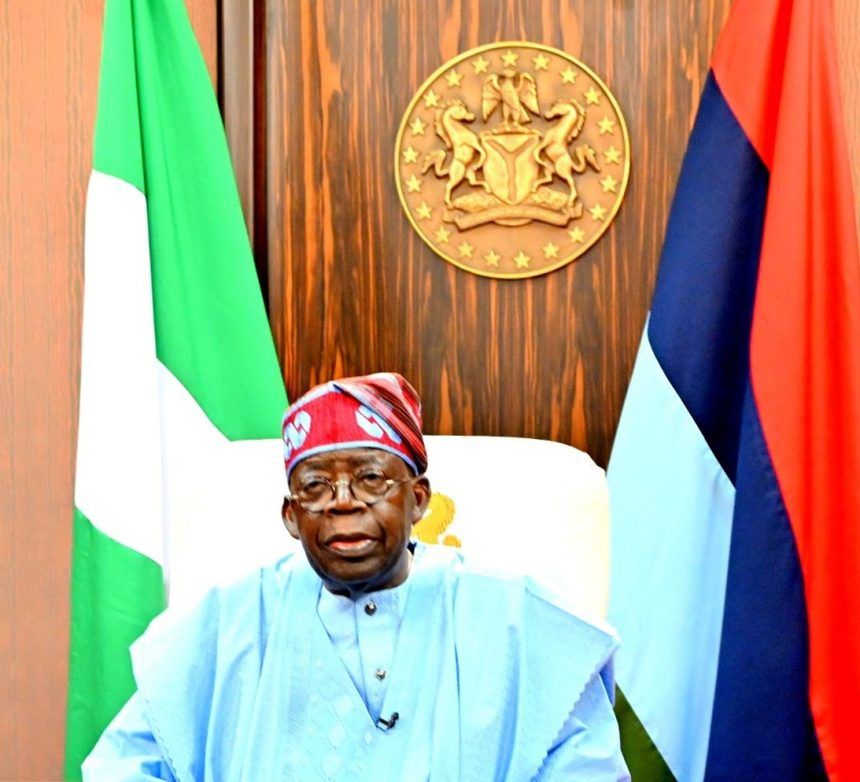
President Bola Tinubu has openly acknowledged the growing economic pressure facing Nigerians as fuel prices continue to soar, while urging citizens not to lose hope despite the current hardship.
Speaking on Friday during a visit to Bayelsa State where he commissioned several projects, the President addressed rising public concern over the cost of living particularly the sharp increase in petrol prices.
“I hear you from various angles of the economy,” Tinubu said. “The fuel price is biting hard, but look around, let’s thank God together that we are still better off.”
In his remarks, the President stressed that Nigeria’s economic challenges are not isolated, noting that several other African nations are grappling with similar or even worse conditions. He referenced ongoing struggles in countries like Kenya, suggesting that the continent as a whole is navigating a difficult economic phase.
“We will not look back,” he added. “We will continue to find ways to ease the suffering of the vulnerable. This is a government that cares.”
Tinubu attributed much of the economic strain to global developments beyond Nigeria’s control, including geopolitical tensions that have disrupted energy markets worldwide. According to him, the interconnected nature of today’s global economy means that crises in one region inevitably affect others.
“The challenges we face today are tied to global realities,” he explained. “We are dealing with the effects of conflicts we did not create, but whose impact we must manage.”
He also indicated that government officials across finance, economic planning, and budgeting sectors are actively reviewing options to reduce the burden on citizens, hinting at possible intervention measures in the near future.
Since assuming office in May 2023, the Tinubu administration has rolled out sweeping economic reforms, including the removal of the long-standing petrol subsidy and the liberalization of the naira. While these policies were introduced to stabilize the economy over time, they have triggered immediate consequences most notably a surge in fuel prices and inflation.
With petrol now selling at over ₦1,200 per litre in many parts of the country, the ripple effects are being felt across transportation, food prices, and basic living costs.
Compounding the situation are ongoing tensions in the Middle East involving major global powers, which have further tightened energy supply chains and pushed prices upward.
For many Nigerians, the hope is that promised government interventions will materialize soon enough to provide relief. Until then, households and businesses alike continue to navigate one of the toughest economic periods in recent years.