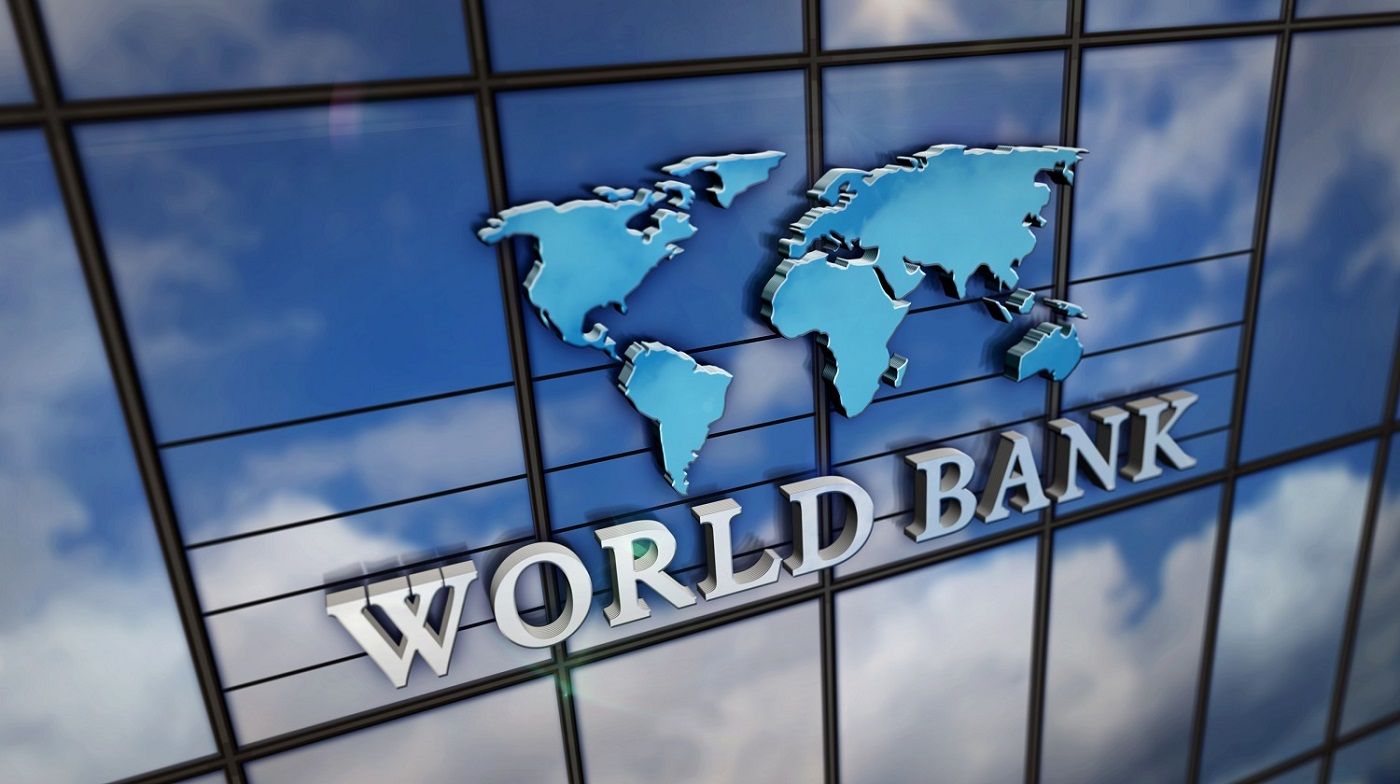
World Bank on glass building. Mirrored sky and city modern facade. Global capital, business, finance, economy, banking and money concept 3D rendering illustration.
Planned ₦4tn bond scheme may stabilise electricity supply but risks deepening fiscal strain and swelling public debt…..
Nigeria’s ambitious plan to wipe out trillions of naira in power sector debt has drawn caution from the World Bank, which warns that the strategy could significantly increase the country’s fiscal burden by effectively transforming private sector liabilities into government debt.
In its latest Nigeria Development Update titled “Nigeria’s Tomorrow Must Start Today – The Case for Early Childhood Development,” the global lender examined the Federal Government’s approach to clearing longstanding arrears owed to electricity generation companies (GenCos) and gas suppliers. While acknowledging the potential short-term benefits, the institution stressed that the financial structure of the plan carries long-term consequences for public finances.
At the centre of the initiative is a ₦4 trillion multi-tranche bond programme launched under the Presidential Power Sector Debt Reduction Programme. The scheme is designed to settle verified debts accumulated between 2015 and April 2025 liabilities that have weighed heavily on Nigeria’s fragile electricity value chain.
The programme has already taken off with an initial ₦590 billion bond issuance, directly allocated to GenCos. This first tranche comes with a seven-year maturity and a fixed coupon, priced at a yield of 17.5 percent.
Although the bonds are being issued through a financing vehicle linked to Nigeria Bulk Electricity Trading Plc, the World Bank emphasised that the Federal Government’s full guarantee effectively shifts the financial risk onto the public balance sheet.
In practical terms, this means the government not the original debtors will be responsible for repaying both the principal and interest over time. According to the report, this arrangement converts accumulated payment arrears into formal sovereign obligations that must be serviced from federal budget resources.
The implication is significant: what was once a sector-specific liquidity problem is now a national fiscal commitment.
The World Bank noted that while securitising the debts could inject much-needed liquidity into the power sector and restore confidence among investors and suppliers, it also creates a steady and unavoidable drain on government finances. Debt servicing obligations tied to the bonds will need to be factored into annual budgets and long-term fiscal planning frameworks.
Crucially, the institution insisted that the programme meets international criteria for classification as Public and Publicly Guaranteed (PPG) debt. As such, it should be transparently recorded in Nigeria’s official debt statistics and incorporated into debt sustainability assessments.
Failure to fully recognise these obligations, the report warned, could obscure the true scale of Nigeria’s fiscal exposure and complicate efforts to manage economic risks.
This development comes at a time when Nigeria’s total public debt has already climbed to about $110.3 billion (roughly ₦159.2 trillion as of the end of 2025), raising concerns about the country’s ability to manage rising debt service costs alongside pressing development needs.
Despite these concerns, the Federal Government under President Bola Tinubu has pushed forward with the plan as part of broader efforts to reform the power sector and resolve legacy financial bottlenecks that have persisted for over a decade.
According to official statements, ₦3.3 trillion has been agreed as the final settlement figure following a verification process. Implementation is already underway, with multiple power plants signing agreements and partial disbursements made.
Nigeria’s electricity sector has long struggled with chronic underfunding, tariff shortfalls, and operational inefficiencies, leaving GenCos and gas suppliers saddled with unpaid invoices running into trillions of naira. These challenges have, in turn, constrained investment and limited the sector’s ability to deliver reliable power.
The new bond programme represents one of the most aggressive attempts yet to break this cycle offering immediate financial relief to industry players while betting on improved performance down the line.
However, the World Bank’s warning highlights a delicate balancing act: stabilising a critical sector without tipping the broader economy into deeper fiscal stress.
As Nigeria moves forward, the success of this strategy may ultimately depend on whether power sector reforms translate into real efficiency gains and whether government revenues can keep pace with the growing weight of its new obligations.