The Nigerian Independent System Operator (NISO) on Wednesday marked its first anniversary, with the announcement of a major policy direction, including advanced plans to begin the ‘islanding’ of the national power grid to curb persistent system collapses.
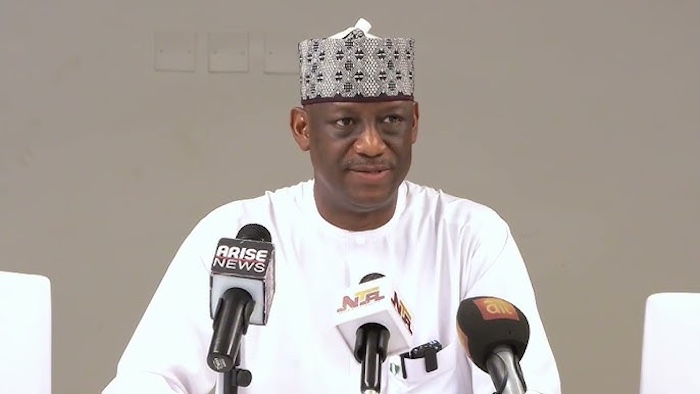
Speaking during the event in Abuja, NISO’s Managing Director and Chief Executive Officer, Mohammed Bello, said the move to segment the grid represented a critical shift in Nigeria’s electricity management strategy, aimed at isolating faults and preventing disturbances in one part of the network from triggering nationwide outages.
The development comes one year after NISO was activated under the Electricity Act 2023, with a mandate to oversee system operations, market administration, planning, and enforcement of regulatory instruments within the Nigerian Electricity Supply Industry (NESI).
Bello said the segmentation of the grid would enhance resilience by ensuring that when faults occur, only affected sections are isolated, allowing other parts of the system to continue operating. This, he noted, would significantly reduce the frequency and scale of grid collapses that have historically disrupted electricity supply nationwide.
According to him, the past year has seen NISO prioritise grid stability, market transparency, coordinated system planning and regional integration. These pillars, he said, are central to repositioning Nigeria’s power sector to support economic growth and national development.
“We also developed our scope for grid islanding to enhance system resilience during (grid) disturbances. We believe that segmenting the grid into different islands will help in alienating or isolating disturbances happening in one island, so that a disturbance on one island should not cascade to the other island.
“Therefore, whenever we have a disturbance on the grid somewhere, it should not affect the remaining part of the national grid. The grid islanding project is also a win. We believe that we’ll have segments of the system islanded, so that in terms of operations, in terms of system disturbances, the part of the grid that is disturbed will be islanded, and allowing the remaining part of the grid to continue in operations, so that there won’t be system collapses,” Bello assured.
The agency, he said, is also making progress in improving system reliability through the enforcement of the ‘Free Governor Mode’ of operation among Generation Companies (Gencos). This measure, which ensures better frequency response from power plants, he said, will contribute to improved grid stability.
However, the NISO CEO acknowledged that compliance remains uneven, adding that enforcement would be strengthened going forward.
According to him, NISO has also initiated a comprehensive effort to address weak protection coordination across the grid. The lack of harmonised relay settings, he noted, has contributed to system disturbances in the past. To tackle this, Bello said the agency was working to standardise protection systems, with the process expected to be completed within months.
Besides, he disclosed that NISO has accelerated the implementation of the Supervisory Control and Data Acquisition and Energy Management System (SCADA/EMS), alongside the deployment of telemetry infrastructure across electricity trading points. These systems, he pointed out, are expected to transition grid management from manual processes to automated, data-driven operations.
Bello explained that with the ongoing deployment of Internet of Things-based monitoring devices across generation units, transmission interfaces, and substations, the agency aims to achieve full end-to-end visibility of the grid.
NISO emphasised that this would also align with regulatory directives requiring Distribution Companies (Discos) to install monitoring systems on key feeders, ultimately enabling real-time coordination across the entire electricity value chain.
“On grid visibility, monitoring, and control, a key priority has been improving our ability to see, understand, and manage the national grid in real time. In this regard, we have accelerated implementation of the SCADA EMS project, working very closely with the Nigerian Electricity Regulatory Commission (NERC) to ensure that the grid monitoring infrastructure tool, which is a valuable tool for the system operations, is completed and operational.
“It’s a work in progress and we are seeing the progress of this. We have also reached advanced stages in the deployment of the telemetry system across the grid at the electricity trading points. We believe that this telemetry system will enhance the efficiency and effectiveness of the electricity market, thereby enabling us to have settlements almost in real-time if we want,” Bello said.
In the electricity market, NISO said it has strengthened compliance with market rules, improved coordination among participants, and initiated upgrades to market management systems to support real-time operations and efficient settlement processes. The MD added that enhanced data transparency is also being pursued to support informed decision-making and build investor confidence.
He noted that the agency is also playing a key role in managing the interface between emerging state electricity markets and the national wholesale market, following recent reforms that allow subnational governments to establish and regulate their own electricity systems.
On system planning, he reported significant progress, including support for the development of the Integrated Resource Plan and the submission of a revised Transmission Expansion Plan, stressing that it is advancing frameworks for renewable energy integration.
In addition, NISO said it is reviewing proposals for a “super grid” initiative aimed at strengthening transmission infrastructure and supporting long-term sector growth through coordinated, least-cost planning.
The CEO also highlighted progress in reducing transmission losses, which he described as a major challenge at the agency’s inception. Losses, which previously stood at nearly 10 per cent, costing billions of naira monthly, he said, have now been reduced to about 7 per cent.
According to him, efforts are ongoing to bring this down further to between 5 per cent and 6 per cent in line with regulatory targets, explaining that these losses were costing between N5 billion to N8 billion monthly hitherto.
On stakeholder engagement, NISO said it has deepened collaboration with key players across the electricity value chain, including generation companies, transmission providers, distribution companies, regulators, and development partners.
At the regional level, NISO announced that Nigeria has successfully achieved trial synchronisation with the West African Power Pool, opening up opportunities for cross-border electricity trade. The CEO said this would not only enhance grid resilience but also create avenues for earning foreign exchange through energy exports while allowing Nigeria to draw power from the regional market when needed.
Despite these achievements, he admitted that challenges remain, including market liquidity constraints, infrastructure gaps, and compliance issues. However, he stressed that these are being addressed through stronger enforcement, improved planning, and targeted technical interventions.
Looking ahead, the MD said NISO’s focus in the second year will be on translating its foundational work into tangible improvements across the sector. Key priorities include deepening grid visibility, strengthening system reliability, enhancing market efficiency, and advancing renewable energy integration.
Bello added that the agency’s performance would ultimately be measured by three outcomes: a stable national grid, a credible electricity market, and strong investor confidence.
He expressed appreciation to the federal government, regulators, industry stakeholders, and development partners for their support over the past year, while commending NISO staff for their role in driving the organisation’s early achievementsEmmanuel Addeh