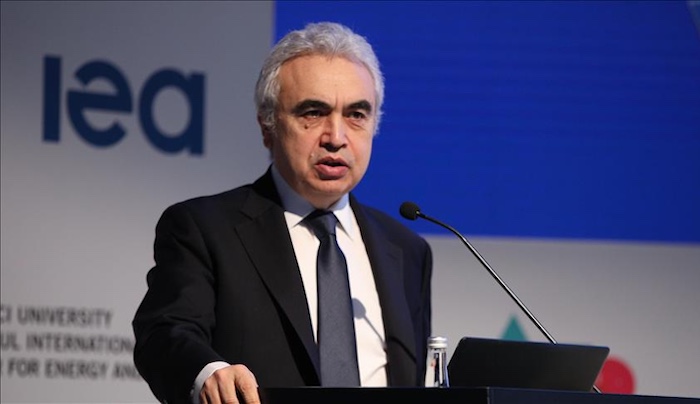
The current oil and gas crisis triggered by the blockade of the Strait of Hormuz is “more serious than the ones in 1973, 1979 and 2002 together”, the head of the International Energy Agency (IEA), Fatih Birol, has warned.
Birol’s warning came amid a new study, which revealed that the effect of long-term illness suffered by people after Covid-19 infections was estimated to cost 38 leading economies in Europe, the Americas, and East Asia, otherwise known as the Organisation for Economic Cooperation and Development (OECD) countries, about $135 billion a year, and would dog their economies for at least a decade.
Speaking during an interview in France, the IEA chief said, “The world has never experienced a disruption to energy supply of such magnitude.”
According to him, European countries, as well as Japan, Australia, and others, would suffer, but countries most at risk are developing nations, which would suffer from higher oil and gas prices, higher food prices, and a general acceleration of inflation.
The IEA member countries agreed last month to release part of their strategic reserves. Some of this had already been released, and the process continues, said Birol.
In reaction to strikes by Israel and the US, Iran had almost entirely blocked traffic in the Strait of Hormuz, through which about 20 per cent of world oil and gas regularly flowed, creating a surge in energy prices.
Meanwhile, the effect of long-term illness suffered by people after Covid-19 infections was estimated to cost 38 leading economies in Europe, the Americas and East Asia – Organisation for Economic Cooperation and Development (OECD) countries – about $135 billion a year, and dog their economies for about a decade.
The OECD study showed the direct health-care costs of long Covid infection combined with the wider effect of people leaving the workforce, and lower productivity will have a lasting effect.
Economic growth could be reduced by as much as 0.2 per cent, according to OECD, because the virus continues to spread, swelling the ranks of people with long Covid.
The projected hit to GDP from lower productivity, increased absence, or employees quitting work altogether will dwarf extra health spending burdens stemming from the sickness, said the OECD study published on Wednesday.
The paper is a rare attempt to quantify the economic effects from so-called long Covid, which has a debilitating effect on sufferers but remains poorly understood scientifically and is patchily monitored for data collection.
“This work is important because it provides for the first time a comprehensive estimate of the economic burden of long Covid across EU and OECD countries,” said Guillaume Dedet, the publication’s coordinator and a senior health economist at the Paris-based organisation.
Dedet added, “It shows that the costs of Covid-19 did not end with the acute phase of the pandemic: the virus continues, and will continue, to weigh on societies and economies for years to come.”
The report estimated losses of between 0.1 and 0.2 per cent of GDP, amounting to a total loss of $135 billion annually across all OECD countries, in scenarios where “low or moderate” residual coronavirus transmission led to ongoing new cases.
The economic fallout of long Covid is “substantial and mainly stems from the indirect costs from reduced productivity and participation in the workforce,” the report stated.
Its predictions were probably an underestimate of the true burden, it added.
OECD said the repercussions were more serious because they added to existing problems, including sluggish growth and productivity in ageing workforces.
Economists had previously struggled to quantify the effect of long Covid on employment and economic growth because few countries continued tracking people who were affected by the condition after the pandemic’s peak.
OECD drew on new survey evidence from the US showing a lasting increase in health-related absence and exit from the labour market, as well as academic studies from the UK, Australia and elsewhere.
It said all available data from high-income countries gave a consistent message: “persistent post-infection symptoms are not only a health challenge but also a structural brake on economic output.”
While many countries had developed policies for long Covid recognition and response, important gaps often remained, the report said. These included the provision of long-term care pathways for patients and the training and support of healthcare workers.
Government action on long Covid is often focused on the health sector, with limited co-ordination with employment, education and social protection policies, the paper said.
Long Covid, defined as a condition lasting at least three months after the initial viral infection has been estimated to affect 18 million adults in the United States.
Sufferers report symptoms including shortness of breath, fatigue and cognitive decline, brain fog, lasting months or years.
Scientists are unsure about exactly why some people experience long Covid and how the condition should be treated. Research suggests the viral infection triggers a heightened immune response and chronic inflammation in long Covid sufferers, indicating that damping these could be a way to tackle the condition.
Ndubuisi Francis