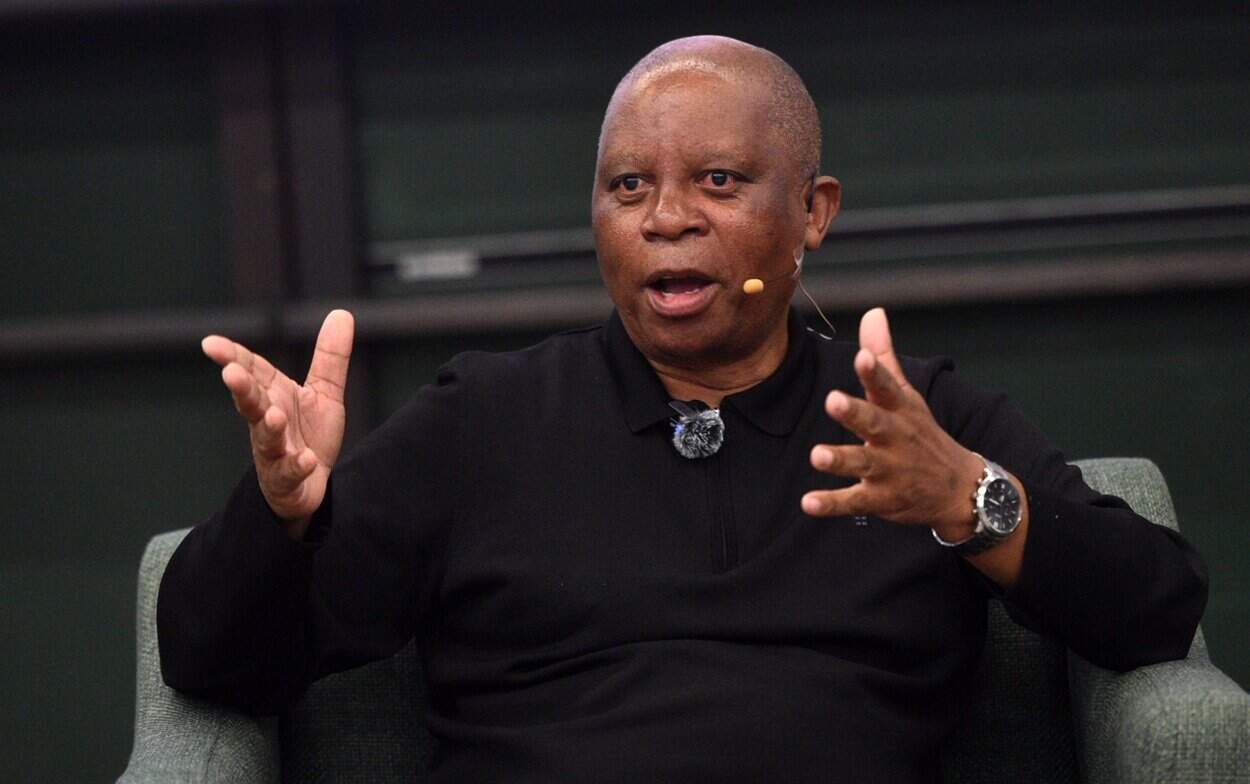
ActionSA leader Herman Mashaba’s announcement that a community crime buster facing criminal charges is a tool he will use to fight crime and corruption will negatively affect his ambitions of becoming the next mayor of the City of Joburg, according to an expert.
Speaking at the Gordon Institute of Business Science in Johannesburg on Tuesday, Mashaba said that he and Xolani Khumalo would make a good team to fight crime and corruption.
Khumalo faces assault charges yet Mashaba praises him
Khumalo, who is out on bail on charges of assault and malicious damage to property, is the ActionSA mayoral candidate in Ekurhuleni.
Khumalo, who was a leader of the former community vigilante group known as Sizokuthola, dealing with crime in Gauteng, was charged with murder a few years ago, but the charges were withdrawn.
“That young man is a national asset and he will be the mayor of Ekurhuleni should ActionSA win.
“He is very popular. Even when I walk with him, I notice that people love him,” Mashaba said.
After his speech he was asked him why, during his term as mayor, he employed Shadrack Sibiya, the suspended deputy national commissioner of crime detection in the South African Police Service.
Sibiya’s suspension came after the Madlanga Commission of Inquiry linked him to criminal activities associated with Vusimusi “Cat” Matlala and Katiso “KT” Molefe.
Mashaba asked about employing Sibiya
Mashaba employed Sibiya as head of investigation in the City of Joburg and said Sibiya did a good job under his leadership and he never found any sign of him being a criminal.
This is despite the fact that Sibiya was previously fired by the Saps for corruption, but later acquitted.
Prof Theo Neethling, a research fellow in political studies and governance at the University of the Free State, said the selection of Khumalo as a candidate for the Ekurhuleni mayoral position by Mashaba raises significant concerns about political ethics, party strategy and leadership integrity.
“By endorsing a figure with such a troubled background, the notion of principled leadership could be questioned and raises questions about Mashaba’s vision for sound and ethical governance.
“It also has implications for public trust,” Neethling said.
“The long-term viability of ActionSA may hinge on its ability to navigate these ethical dilemmas effectively.
Implications for public trust
“Finally, Mashaba’s leadership qualities are put to the test in this context. His choice of candidate reflects badly on his vision for good governance.
“The situation challenges him to demonstrate accountability to voters and to rise above the allure of political expediency in favour of a more principled approach.”
Neethling added that, ultimately, the outcome of that situation would influence not only ActionSA’s immediate electoral success but also its longterm standing in the political landscape.
Reputation and brand expert Tshepo Matseba said at the heart of the issue was a fundamental principle of leadership and public trust.
“Credibility is not built on what leaders say, but on the choices they make and the people they associate with.
“When a political leader positions themselves as anticorruption, the public expectation is not only strong rhetoric, but visible alignment with individuals whose integrity is beyond reproach,” Matseba said.
Leadership and public trust
“The moment there is a perceived contradiction between message and action, a credibility gap emerges. And in politics, credibility is currency.
“The decision to associate with individuals who have faced serious allegations, even if some charges were withdrawn or are still before the courts, introduces reputational risk. It creates a perception problem.
“Perception, particularly in the political arena, often carries as much weight as proven fact.”

