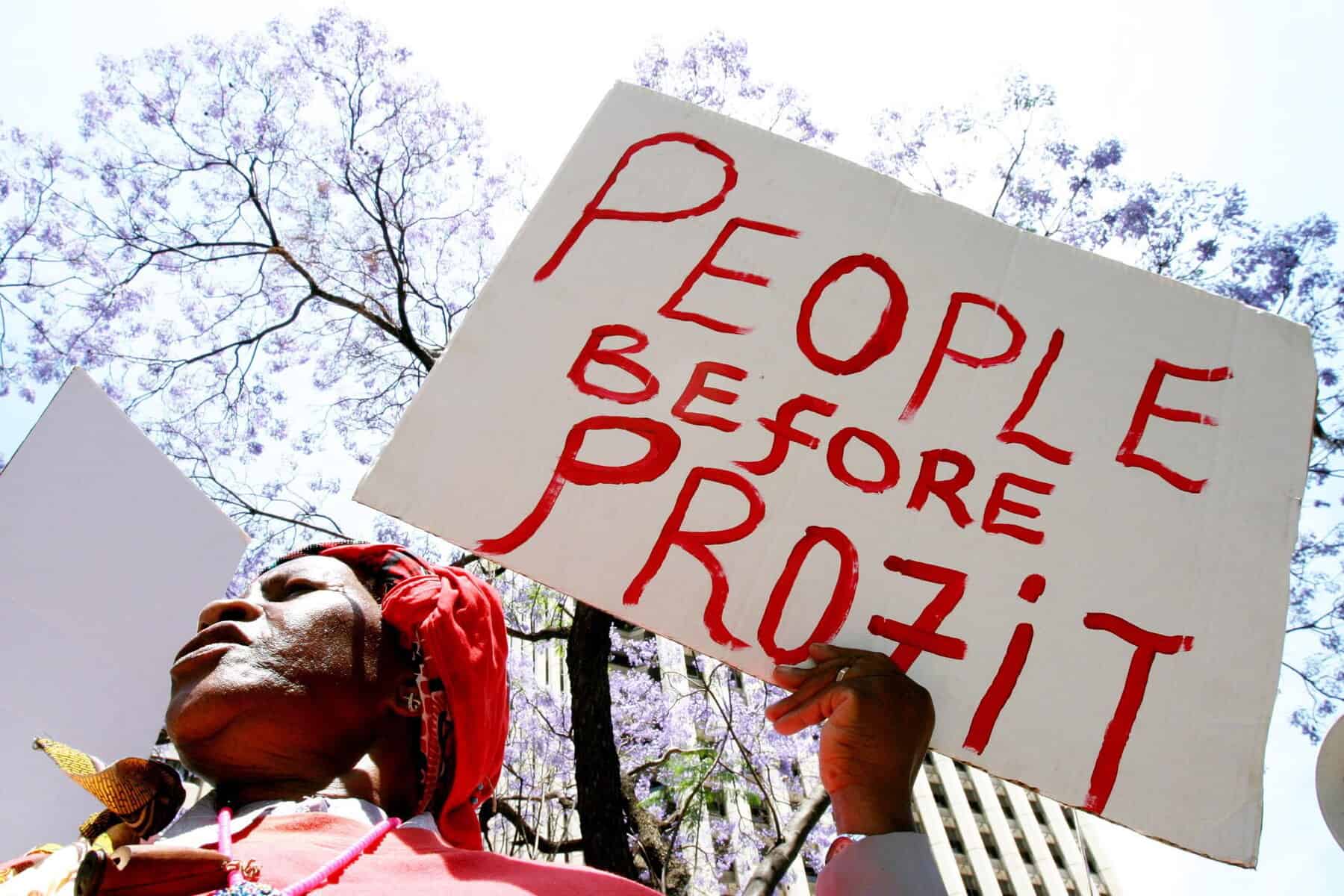
21 October 2004. A protest over the Telkom Towers in Pretoria, South Africa.
For Bontle Moka, founder of the Heal Endo Movement and the voice behind @endometriosis.za, the current menstrual health debate in parliament is about far more than just handing out free pads.
Speaking to The Citizen following the debate, Moka emphasised the need for the law to recognise that for thousands of South Africans, menstruation is a debilitating, whole-body battle.
The proposed Menstrual Health Rights Bill is a government plan aimed at ensuring women and girls can access safe period products for free, while also making certain those products are safe to use and that workplaces support people experiencing severe pain, including women with endometriosis.
But what about menstrual leave?
For many South African women, a day off due to menstrual pain equals a day without pay.
Participants at last week’s parliament colloquium highlighted the need to consider menstrual leave policies, noting that severe period pain can affect productivity and, in some cases, prevent women from working or attending school.
Moka warns that if the Bill fails to include formal recognition of chronic menstrual conditions like endometriosis, it forces women to lie about their health to avoid being labelled “unreliable”.
“Taking a day off without pay further individualises what is actually a systemic health issue,” Moka says, highlighting how financial loss forces many to work through debilitating pain.
“It makes it seem like a personal choice, rather than a necessary response to a condition they did not choose and cannot control.”
She stresses that the Bill must move beyond mere acknowledgement to provide active protection, so that no worker has to choose between their health and survival.
‘Failure of economic justice’
Nokuzola Ndwandwe, founder of Team Free Sanitary Pads, shared her personal experience of working through severe period pain in a male-dominated workplace before her endometriosis diagnosis.
She maintained that expecting women to bear both the cost of menstrual products and the health consequences is a “failure of economic justice.”
Workplace support for menstrual health
Moka said that if she could rewrite the Bill today, it would reflect a “whole-body” perspective. This includes workplace accommodations such as heating pads, remote work options, and “dignity packs” containing stronger prescription medications and heavy-flow products.
Ultimately, she envisions a framework in which menstrual leave covers flare-ups and premenstrual dysphoric disorder episodes at any point in the cycle.
“Employees must be protected from being fired, overlooked for promotions, or discriminated against because of their condition.”
To Moka, menstrual health is a human right. “By building in these practical, inclusive supports, the Bill can recognise endometriosis for what it truly is, enabling people to work safely, manage symptoms with dignity, and participate fully in society,” she concludes.
Endometriosis and combating the pathology of silence
Endometriosis is a painful disorder in which tissue that normally lines the inside of your uterus, the endometrium, grows outside your uterus.
With many patients waiting seven to ten years for an endometriosis diagnosis, accessing any proposed menstrual leave becomes an almost impossible hurdle, said Moka.
Moka advocates that the Bill mandates specialised training for GPs in public clinics to enable early identification of the condition.
She is adamant that the legislation must pivot from ‘hygiene’ to ‘pathology’.
“We are in pain, and we shouldn’t have to fight the healthcare system, the workplace, and even the law to be protected, believed, and seen,” she declares, calling for policies that reflect the lived reality of chronic sufferers.
The danger of normalising extreme pain
Moka issues a direct challenge to the portfolio committee on women, youth, and persons with disabilities: stop using language that treats extreme pain as a normal part of being a woman.
When policies minimise suffering, they perpetuate a cycle of shame that prevents young girls and women from seeking help.
“For many, menstruation is not minor,” Moka notes, listing symptoms that range from excruciating pelvic pain and anaemia to suicidal thoughts.
“We cannot expect people to simply ‘push through’ with Panado or medication.”
By failing to recognise menstruation as a “dynamic disability,” she argues, the law continues to ignore the structural barriers that prevent people from accessing care and dignity.
“It creates an environment where they are not believed, not supported, and ultimately discriminated against, simply for living with a chronic condition.”
The right to rest
While recent parliamentary discussions emphasised universal access to products, Moka argues that true dignity is impossible without acknowledging the “right to rest.”
Her advocacy, which helped shape the Menstrual Health Rights Bill alongside activists like Nokuzola Ndmiller and Candice Chirwa, pushes for a holistic framework.
“Dignity also means acknowledging when the body cannot function, and ensuring that people are not penalised for that reality,” Moka explains, emphasising that access to products is only one pillar of the Bill.
It also speaks to chemical and ingredient transparency, comprehensive education (including boys), and adequate infrastructure, such as clean water and sanitation.
‘A seat at the table’
As she formalises the Heal Endo Movement as an NPO, Moka remains optimistic about the growing presence of grassroots voices in parliament.
While the Bill does not yet guarantee a permanent seat for activists, her collaboration with other organisations signals a shift in political access.
Drawing inspiration from the biblical story of the woman with the issue of blood who touched Jesus’ garment for change, Moka views her advocacy as an intentional act of hope.
“That same spirit drives countless other activists and me today: moving, reaching, advocating with the hope that our presence, our voice, and our seat at the table could change the lives of thousands,” she reflects.