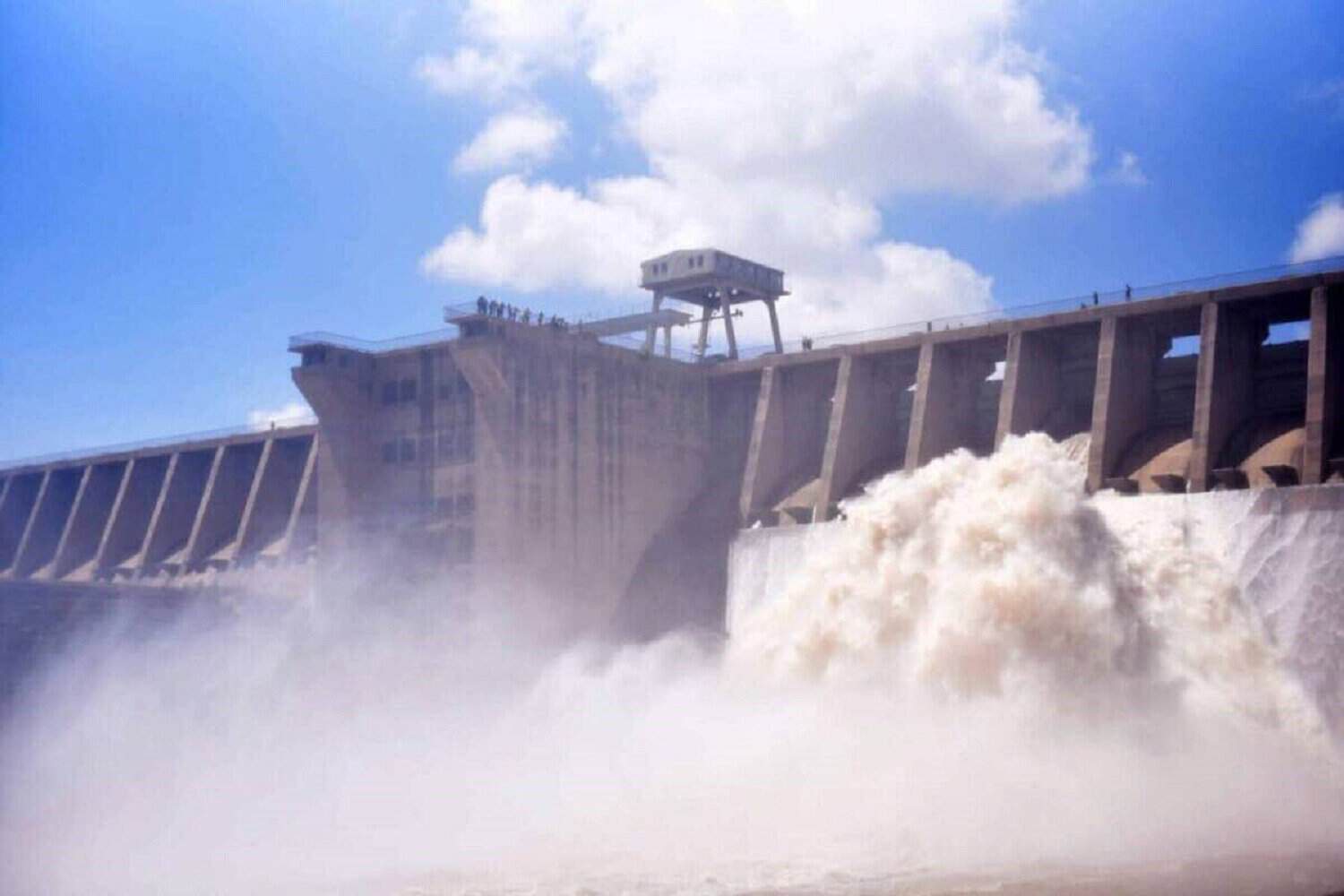
The Vaal Dam remains above 100% capacity, although recent figures show a slight decline in water levels and a shift in outflow management.
According to the latest data from 7 April, the dam stood at 104.07%, down from 104.58% recorded on 2 April. The marginal drop comes as authorities increase water releases while inflows decline.
Outflows increase as levels stabilise
On 7 April, inflows into the dam measured 75.5 cubic metres per second (m³/s), a sharp decrease from 114.5m³/s recorded five days earlier. Meanwhile, outflows surged to 122.5m³/s, compared to just 10.5m³/s on 2 April.
Officials also confirmed that one sluice gate had been opened to help regulate water levels, compared to zero gates open earlier in the month.
The controlled release of water signals an effort to stabilise the dam, which has remained above capacity following recent rainfall across the catchment area.
Barrage levels edge higher
At the nearby Vaal Barrage, water levels increased slightly from 7.4m on 2 April to 7.6m on 7 April.
Outflows at the barrage also rose marginally from 22.4m³/s to 22.7m³/s over the same period, while water temperatures dropped from 22.7°C to 21.4°C.
Understanding balancing dams
The Department of Water and Sanitation (DWS) explained that systems such as the Vaal Barrage function as balancing dams rather than long-term storage facilities.
“Unlike a storage dam where the primary purpose is the long-term storage of water, a balancing dam is designed to act as a multi-purpose facility,” the department said.
It added that such dams typically serve as distribution points, diverting water into pipelines, canals, or power-generating systems, or acting as pumping stations.
“In some instances, the balancing dam may have no natural catchment of its own. Water is usually fed into the dam from one or more outside sources in such a way that a balance is struck between the water entering at one end and being distributed at the other,” DWS said.
The department noted that because of the constant inflow and outflow, water levels in balancing dams can fluctuate rapidly.
“The constant in and outflow of water will cause the water level in the dam to fluctuate, and the smaller the balancing dam, the larger and more rapid such fluctuations will be,” it said.