Inside the paediatric cancer ward at the Uganda Cancer Institute in Mulago, the atmosphere is heavy but quiet.
Children lie on hospital beds or sit close to their caregivers, their small bodies carrying a weight far beyond their age. In their eyes, there is a mix of fear, resilience, and something harder to define, hope that flickers, even here.
For many of them, each day is a battle. Not just against illness, but against uncertainty. They speak, when they can, of simple things: returning to school, playing with friends, stepping back into lives interrupted too soon.
The scale of the challenge they face is stark. According to the Uganda Cancer Institute, between 3,200 and 3,300 new paediatric and adolescent cancer cases are recorded in the country each year.
Yet only about a third of these children ever reach specialised care. The rest remain undiagnosed or are lost along the way, held back by distance, cost, and limited awareness. And yet, even in a place defined by illness, moments of light still break through.
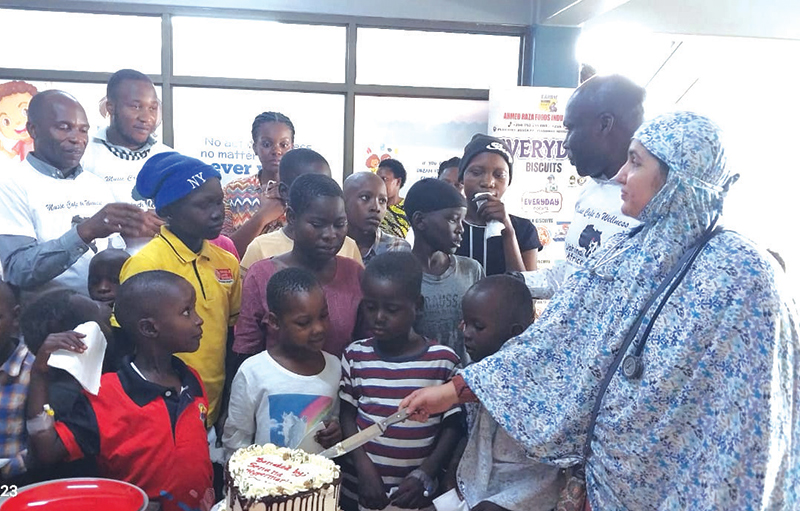
Last Tuesday, the ward briefly transformed. Ushindi Africa Children’s Foundation, working with Ahmed Raza Foods Industries Limited, arrived carrying small but carefully chosen gifts, jars filled with toys, colouring charts, fruit, and cake.
They were simple offerings. But for the children, they meant far more. Laughter returned, if only for a while. Conversations sparked. The tension that usually lingers in the ward softened as children reached for toys, shared smiles, and, for a moment, forgot where they were.
“We are inspired to give these gifts as a way of raising hope among paediatric cancer patients and reminding them that they are not alone,” said Ronald Kyobe, director of Ushindi Africa Children’s Foundation.
“These children go through a lot, and even the smallest gesture can make a meaningful difference in their lives.”
The idea, he explained, draws inspiration from the Jessie Rees Foundation in California, founded in memory of a young girl who, during her own battle with cancer, sought to lift the spirits of others like her.
Her message, “Never Ever Give Up,” has since travelled far beyond its origins, carried forward through acts of giving. Research suggests that such moments are more than symbolic.
A study published by the U.S. National Library of Medicine found that meaningful gifts for children with critical illnesses can significantly improve their emotional wellbeing. They reduce anxiety, lift mood, and create a sense of normalcy in environments where control is often lost. At Mulago, health workers see these effects unfold in real time.
“When it comes to gifting, it is a very big advantage to our children,” said Priscilla Nambalirwa, acting patient support coordinator at the Uganda Children’s Cancer Foundation.
“The treatment journey is long, and we have children who have been here for eight or even ten years. Small gestures like gifts or any form of support along the way actually motivate them to keep pushing through their treatment.”
The impact, she added, often lasts longer than the moment itself. “Some of these children return to the hospital with renewed hope, sometimes even thinking about the possibility of receiving another gift,” she said.
“It may seem like a small thing, but it plays a big role in encouraging them to come back for treatment. Children can sometimes be hesitant when it comes to medication, but these moments of joy inspire them to keep going.”
For caregivers, too, the visit carried meaning. It was a reminder that the burden they carry is seen, that beyond the hospital walls, there are people paying attention. In the end, the gifts did not change the diagnosis.
They did not shorten the treatment. But they shifted something less visible. In a place where illness defines so much, they created space, however briefly, for childhood to return. And sometimes, that is where healing begins.