In the paediatric cancer ward at Mulago, children lie still or lean into their caregivers, their small bodies carrying something far too large for their years.
In their eyes, there is fear, but also a fragile, flickering hope. They speak, when they can, about ordinary things. Going back to school. Playing again. Returning to lives that have been abruptly interrupted.
But for many, those lives are now suspended between treatment and uncertainty. This is not a marginal crisis. It is a national one. Each year, between 3,200 and 3,300 children and adolescents in Uganda are diagnosed with cancer.
Yet only about a third ever reach specialised care. The rest are lost, held back by distance, cost, and limited awareness. Behind those numbers are decisions. Families choose between transport and treatment.
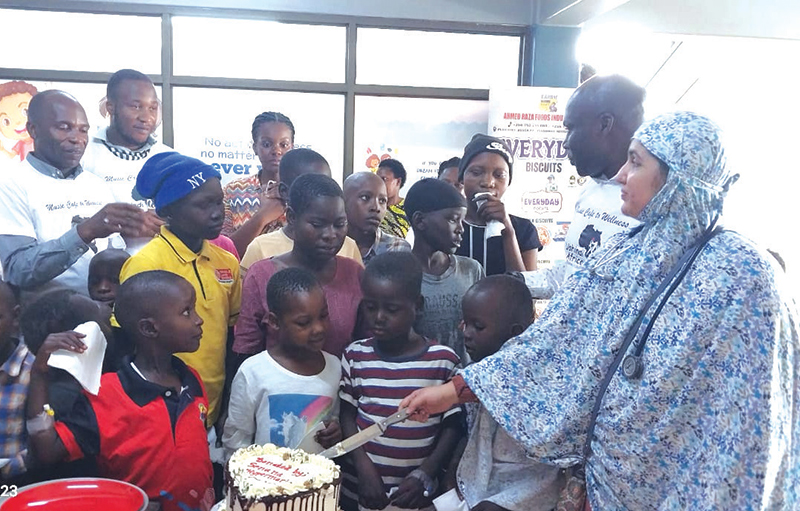
Caregivers navigate a system that is often too far, too expensive, or simply too unknown. The gap is not just medical. It is structural. And yet, within that strain, moments of relief still emerge. Last week, the ward briefly changed. Volunteers arrived with toys, colouring charts, fruit, and cake. The shift was immediate.
Laughter returned. Children reached for something other than medicine. For a moment, the ward felt less like a place of illness, and more like a space where childhood could exist again.
“We are inspired to give these gifts as a way of raising hope among paediatric cancer patients and reminding them that they are not alone,” said Ronald Kyobe.
“These children go through a lot, and even the smallest gesture can make a meaningful difference in their lives.” That difference is not sentimental. It is measurable. Research shows that such gestures improve emotional wellbeing, reduce anxiety, and help children stay engaged with treatment.
As one health worker put it, “Small gestures like gifts…motivate them to keep pushing through their treatment.”
This is where Uganda’s policy conversation must shift. Paediatric cancer care is not only about drugs, machines, or hospital beds. It is about access, continuity, and the human conditions that allow treatment to succeed.
When only one in three children reaches care, the issue is no longer clinical. It is systemic. And systems can be changed. The question is whether this will be treated as a priority. Because what is at stake is not just survival rates.
It is the country’s willingness to protect its most vulnerable citizens when it matters most. Uganda does not lack compassion. The scenes in Mulago prove that. What it lacks is scale. If small acts of care can restore hope, then coordinated national investment can restore possibility.
The choice is not between what is ideal and what is realistic. It is between action and quiet acceptance. In that ward, hope still flickers. The question is whether the country will choose to strengthen it, or let it fade.