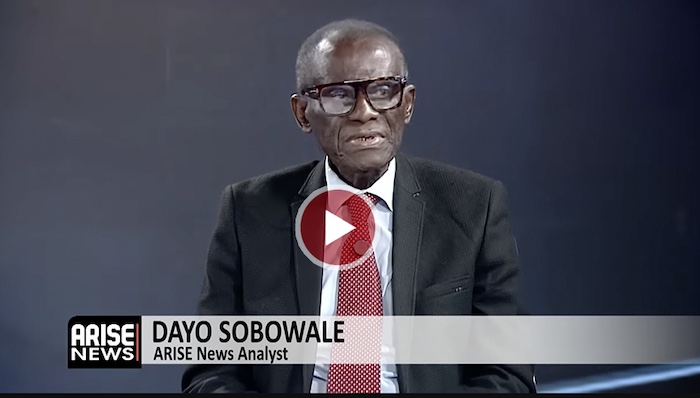
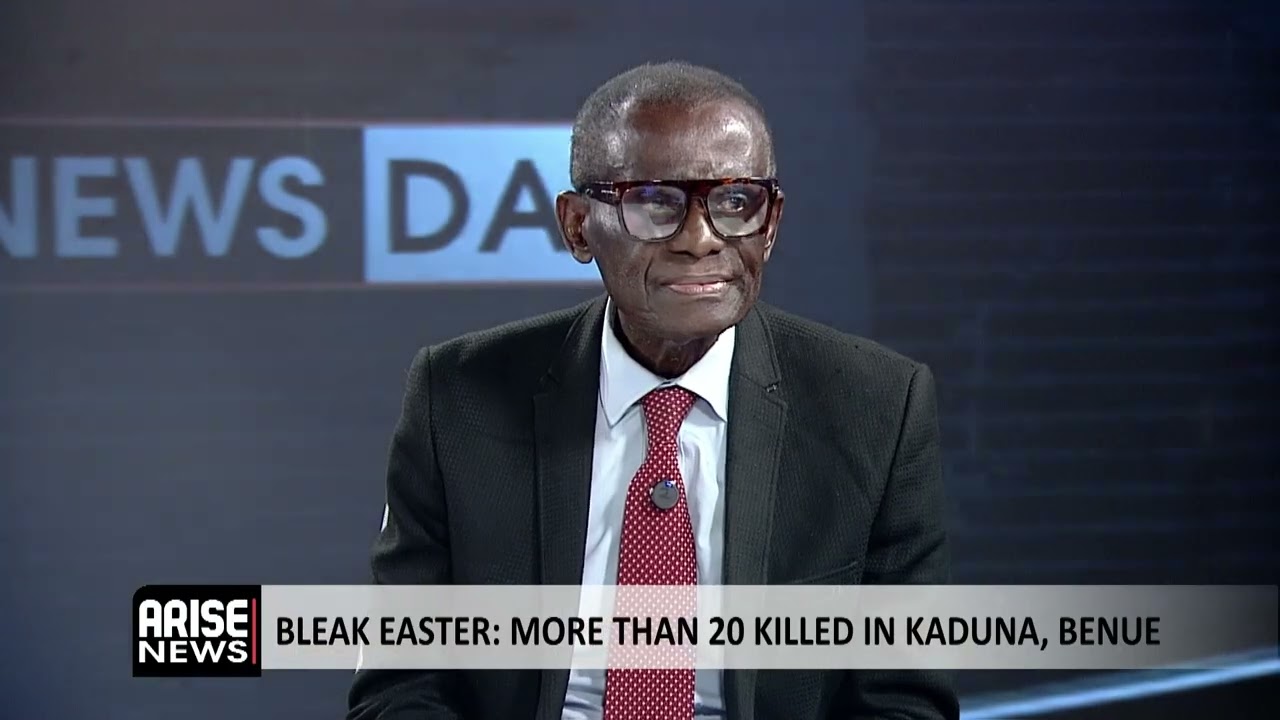
ARISE News analyst Dayo Sobowale has said the recurring attacks on communities during Christian festivals highlight the failure of Nigeria’s security strategy to effectively address persistent insecurity in parts of the country.
Speaking during an interview on ARISE News on Monday, Sobowale described the recent attacks in Benue State and Kaduna State as tragic but not entirely unexpected, noting a pattern of violence during religious celebrations.
“Tragic incidents like these have been happening on seasonal occasions, precisely Christian festivities,” he said.
He stressed that while the violence is not nationwide, certain regions particularly in the Middle Belt have repeatedly experienced such attacks, raising concerns about targeted patterns.
“Persistently, at this period of time, these sort of things happen in Kaduna, Benue, and Plateau State,” he noted.
Sobowale suggested that the nature and timing of the attacks indicate a level of coordination, citing instances where communities were attacked just before gatherings.
“Some people… have raised concern that these things are meticulously planned,” he said.
While he acknowledged previous criticisms of the military, Sobowale described the broader security situation as complex and difficult to resolve.
“We have a protracted, intractable insecurity problem on our hands,” he stated.
He warned that the persistence of such attacks, particularly during religious celebrations, has contributed to growing international scrutiny of Nigeria’s security situation.
“There is the global charge… that we are practicing genocide against Christians… that is a very weighty and disturbing charge,” he said.
On the root causes of the violence, Sobowale pointed to long-standing conflicts between herders and farmers, describing it as a struggle over land and resources.
“The crucial cause is Fulani herdsmen versus farmers… it’s a matter of water and space,” he explained.
He noted that while similar conflicts exist across the Sahel region, Nigeria has struggled to implement effective and balanced solutions.
Sobowale also raised concerns about perceived biases within the power structure, suggesting that this may be affecting decisive action.
“It’s as if there’s some empathy… in the power structure for the Fulani herdsmen,” he said.
Despite these challenges, he rejected the idea that recurring attacks should be accepted as inevitable.
“God forbid… the results show clearly that the security strategy… have not been able to curtail these things,” he said.
He emphasized that the responsibility lies with government and security agencies to prevent such incidents from becoming normalized.
On legislative efforts, Sobowale expressed skepticism about their effectiveness, noting that existing laws such as those against open grazing have not been fully enforced.
“They have not functioned as legislated,” he said.
He also questioned the level of accountability for past attacks, arguing that the absence of consequences may be encouraging repeated violence.
“I don’t think there has been accountability,” he stated.
Sobowale concluded that beyond military action, Nigeria must confront deeper political, social, and structural issues driving insecurity.
“We have to be able to identify… who is the enemy within… and not sweep [it] under the carpet,” he said.
Sobowale’s analysis underscores the urgent need for a more effective and accountable security framework, warning that without addressing underlying causes, cyclical violence especially during sensitive periods may persist.
Triumph Ojo