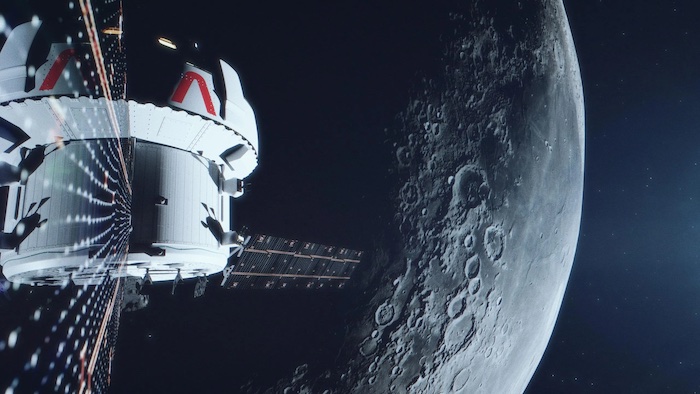
The four astronauts aboard NASA’s Artemis II mission have entered the Moon’s gravitational sphere of influence early Monday, marking a key milestone as they continue their journey around the lunar far side in what is set to become the farthest human spaceflight in history.
The crew—NASA astronauts Reid Wiseman, Victor Glover, and Christina Koch, alongside Canadian Space Agency astronaut Jeremy Hansen—have been travelling aboard their Orion capsule since launching from Florida last week. They are expected to wake around 10:50 a.m. ET on Monday for their sixth flight day.
By 7:05 p.m. ET, the spacecraft will reach its maximum distance from Earth at approximately 252,757 miles, surpassing the long-standing Apollo 13 record by 4,102 miles—a record that has stood for 56 years.
At the height of their trajectory, the Artemis II crew will be flying over the Moon’s far side, about 4,000 miles above its darkened surface. From this vantage point, they will witness the Moon eclipse a distant, basketball-sized Earth in the background—an unprecedented perspective for human explorers.
The mission’s official lunar flyby begins at 2:34 p.m. ET and will plunge the crew into near-total darkness, along with brief communications blackouts as the Moon blocks signals to NASA’s Deep Space Network, the global antenna system used to maintain contact with deep-space missions.
The flyby is expected to last about six hours.
During this period, the astronauts will use professional-grade cameras through Orion’s windows to capture detailed images of the Moon’s silhouette. These photographs are expected to show sunlight bending around the lunar edges, creating a rare eclipse-like visual phenomenon with significant scientific value.
The crew will also attempt to document a striking visual moment as Earth rises from the lunar horizon after the spacecraft emerges from behind the Moon—a dramatic reversal of the familiar moonrise seen from Earth.
On the ground, dozens of lunar scientists at NASA’s Johnson Space Center in Houston will monitor the flyby in real time from the Science Evaluation Room. The astronauts, trained extensively in lunar science, will provide live descriptions of what they observe, adding valuable qualitative data to the mission’s scientific output.
Artemis II is the first crewed test flight of NASA’s Artemis program, a multi-billion-dollar initiative aimed at returning humans to the Moon’s surface by 2028, ahead of competing international efforts. The long-term goal is to establish a sustained U.S. presence on the Moon, including a lunar base that could serve as a stepping stone for future crewed missions to Mars.
Boluwatife Enome