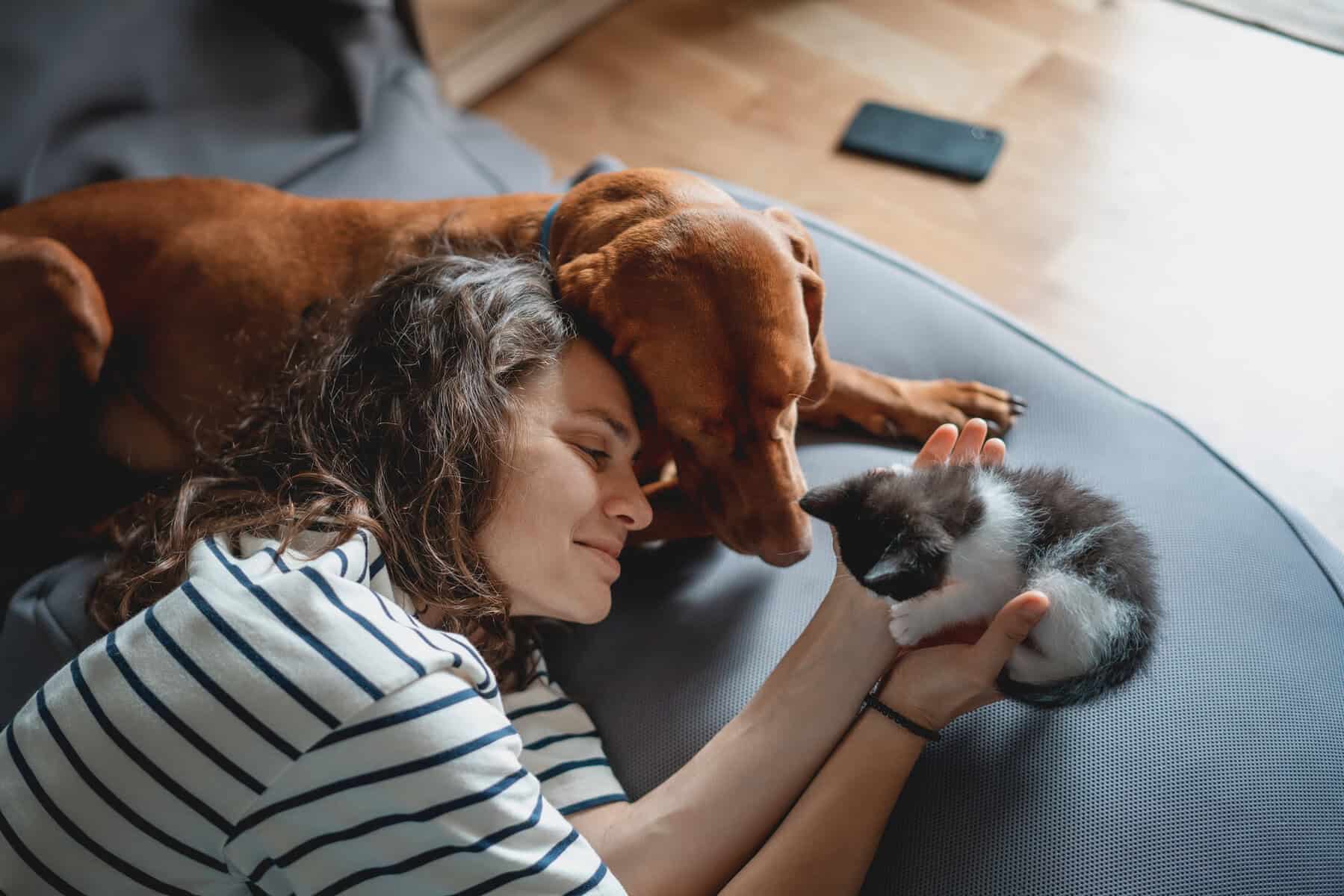
Portrait of a young woman with a Hungarian Pointer dog and a small kitten in her arms lying at home
These days, many people would rather take their dog for a walk than go on a date, have a cat purring on their laps instead of managing a complex friendship and have some goldfish in a tank because, well, they just don’t talk back.
The 21st century has left many people emotionally bruised by the decades that came before it.
Alongside that, pets have become far more than just family additions or selfie accompaniments.
They have become companions, anchors and, in some cases, the most dependable emotional relationship a person can have.
Psychologist and medical doctor Dr Jonathan Redelinghuys said the appeal of animal companionship may lie in the fact that many human relationships no longer offer with any certainty.
“I think that pets provide people with a sense of unconditional positive regard,” he said.
ALSO READ: When motherhood rewrites the script at work
“It protects people from having to experience the kind of abandonment that they might have to face in human relationships.”
He said building a relationship with another person usually comes with the burden of aligning needs, expectations and emotional availability, while an animal enters that space very differently.
“Setting up human relationships is often something that requires two people to have matching expectations and views, whereas buying a pet, I mean, you don’t have to worry about your pet not having the same expectation as what you have from a relationship.”
Are pets replacing human relationships?
Redelinghuys said people also choose animals in ways that mirror the kind of relationship they can manage.
“People take the animal that most suits their lifestyle and circumstances and kind of piece that animal into their lives,” he said.
“So, if you’re a person that doesn’t like to be cuddled or want warmth in your relationship, then a reptile is perfect for you.
“But if you’re the type of person that wants constant companionship or a Velcro like animal, then you can go for a dog. Something in between, I guess, is a cat.”
A pet relationship can be customised in a way human relationships cannot. It can meet a need without bringing an entire emotional committee meeting with it.
He said the difference also lies in the level of responsibility and the kind of accountability an animal brings into a person’s life.
“If you are going for the goldfish, you have minimal responsibility and then it still allows you to live your life,” Redelinghuys said.
“Whereas something like a dog requires a little bit more constant care and affection and brings with it some kind of groundedness into a person’s home life.”
He said this can matter especially for someone who is chronically lonely but does not have “the capacity, whether it be emotional capacity or time capacity, to fulfil the needs of a human relationship”.
A pet, he noted, will only hold you accountable to a very limited extent.
“A pet requires you to meet their basic needs, and everything on top of that is cake.”

It’s a simple relationship with emotional benefit
Limited demand may be exactly why pets have become so emotionally central.
Research argues that many people no longer experience traditional relationships as automatically safe or stable.
Dating can feel brittle and family relationships can be difficult.
Friendships are often stretched thin by work, distance and exhaustion. Pets have stepped into that emotional space.
Redelinghuys said that pets may be an important segue from traditional medicated means of treating certain mental and emotional challenges.
“If a person can have that instead of using medication, which often comes with side effects, it may be a good idea for some individuals.”
He added that children with ADHD, autism and other neurodevelopmental difficulties can also benefit greatly.
“Adding the responsibility of care for animals in certain of these cases also helps that person to develop a sense of routine, responsibility, consequence.”
Now Read: The psychological toll of unemployment