Foton’s steady rise from its quiet market re-launch two years ago has been impressive considering its sole focus on light, medium and heavy-duty commercial vehicles.
Growing success
Last year, its first full 12 months, it parted with 3 612 vehicles, considerably more than parent company BAIC’s 2 365.
ALSO READ: American inspired Foton Tunland V7 and V9 ready to fight
So far this year, the first two months have yielded an offset of 925 units, suggesting it could end the year on a higher number than 12 months ago.
Headed by the largely workhorse-focused Tunland G7, the brand signalled its premium intentions last year by launching the so-called Tunland V-Series.
American looks
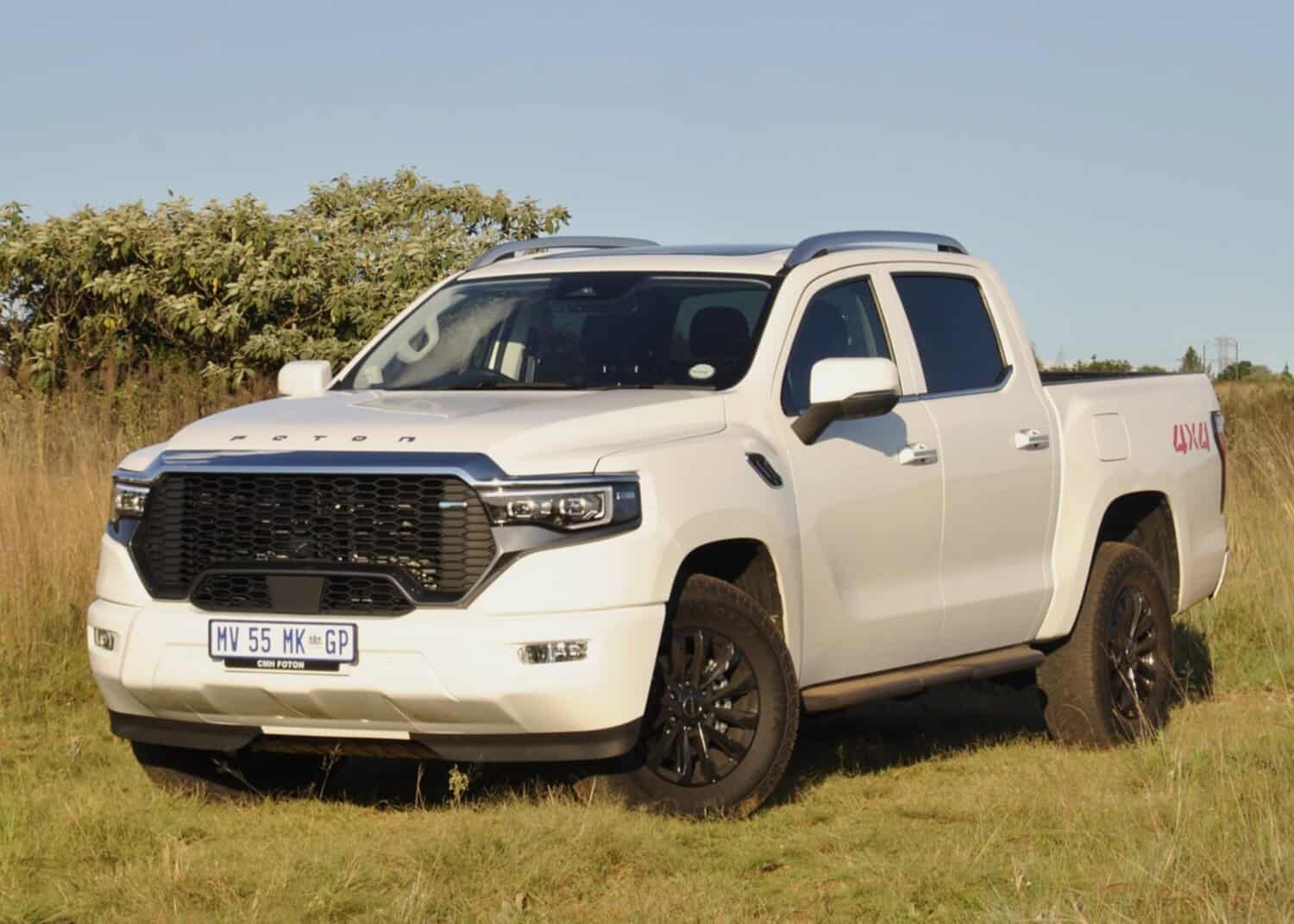
Known as the Mars series in China, the V-Series consists of two distinctly American-styled bakkies; the Ford F-150-inspired V7 or Mars 7, and the Mars 9 or V9, which resembles the Ram and South American Ram Rampage.
At 5.6m long and two metres wide, both become the longest and widest bakkies ever sold in South Africa, an accolade held until now by the Great Wall Motors (GWM) P500, whose dimensions are 5.4m and 1.9m respectively.
V7 vs V9
Styled for purpose, both are, however, different in character. Whereas the V7 is aimed at the likes of the Toyota Hilux and Isuzu D-Max, the V9 is plusher and benchmarked against the Ford Ranger, its Volkswagen Amarok twin and the P500.
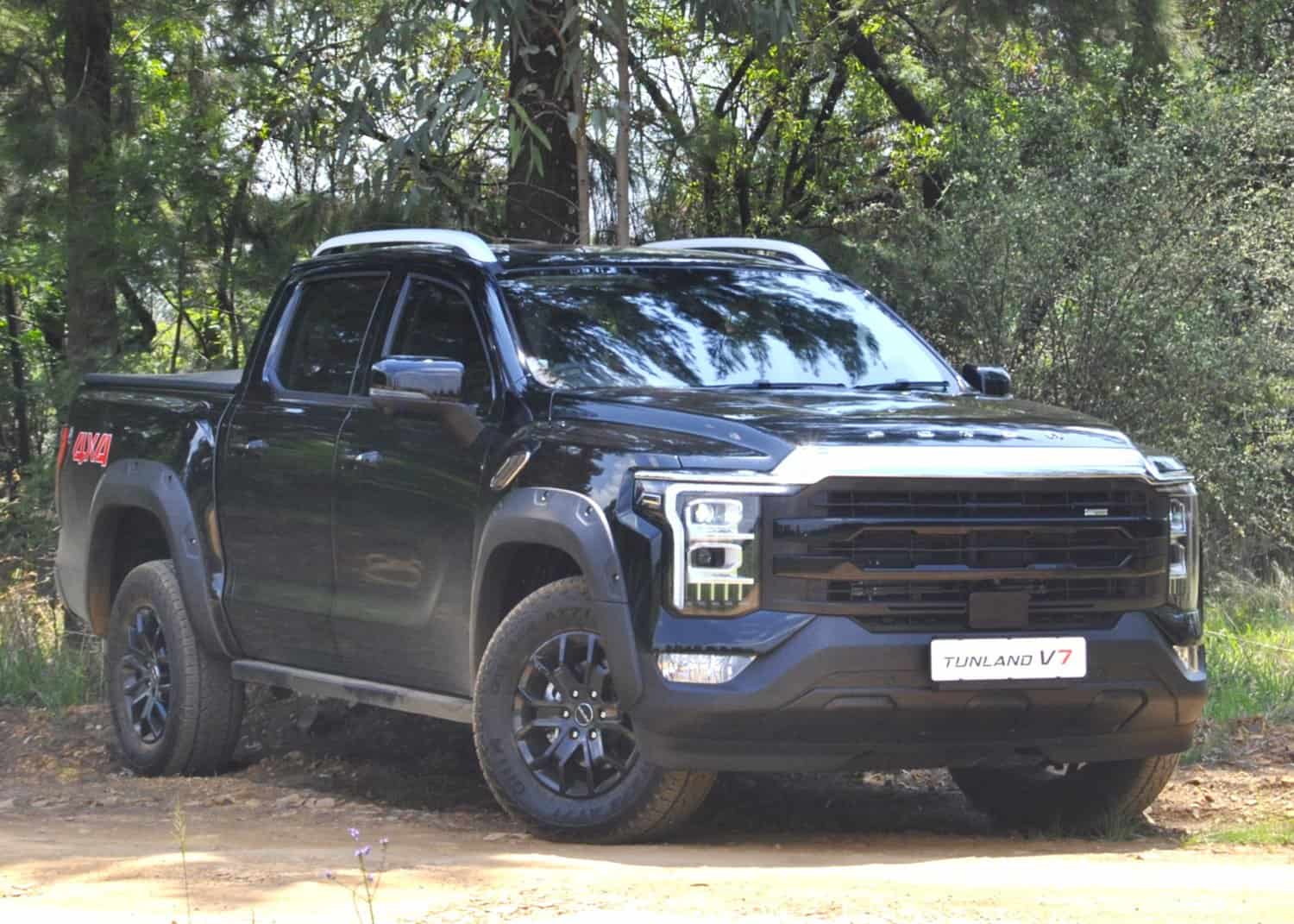
Furthering this is the V7’s leaf spring rear suspension setup and hydraulic power steering versus the V9’s multi-link coil springs and electric power steering.
Mild-hybrid assistance
The similarities resume underneath the bonnet where motivation use a 2.0-litre turbodiesel engine co-developed between Foton and Cummins under the Aucan banner.
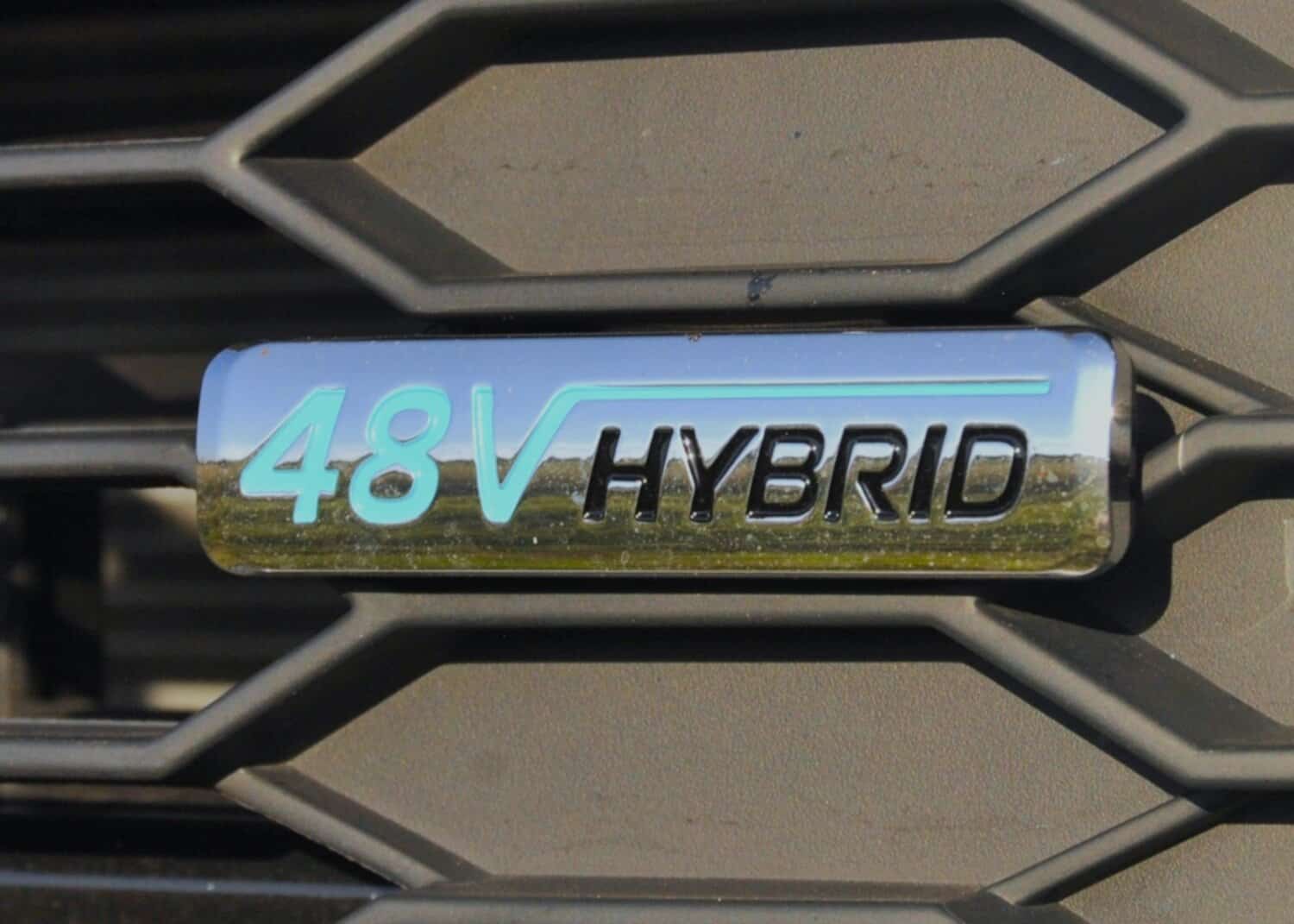
Equipped with a 48-volt mild-hybrid system, the unit develops 120kW/450Nm, which goes to the rear or all four wheels through a BorgWarner part-time four-wheel drive system.
Sending the amount of twist to the drive wheels is the industry standard ZF-sourced eight-speed automatic gearbox.
Similar to the Ranger and Amarok, the Auto setting offsets the 2H, 4H and 4L modes, meaning power is delivered between the front and rear axles on the move without resorting to leaving it in 4H permanently.
The numbers
The downside, though, is that it, together with the engine’s outputs and a kerb mass of 2 360kg, didn’t do the V9 any justice when let loose at Gerotek.
With Road Test Editor Mark Jones behind the wheel, the flagship V9 LTD leisurely reached 100km/h from standstill in 14.4 seconds.
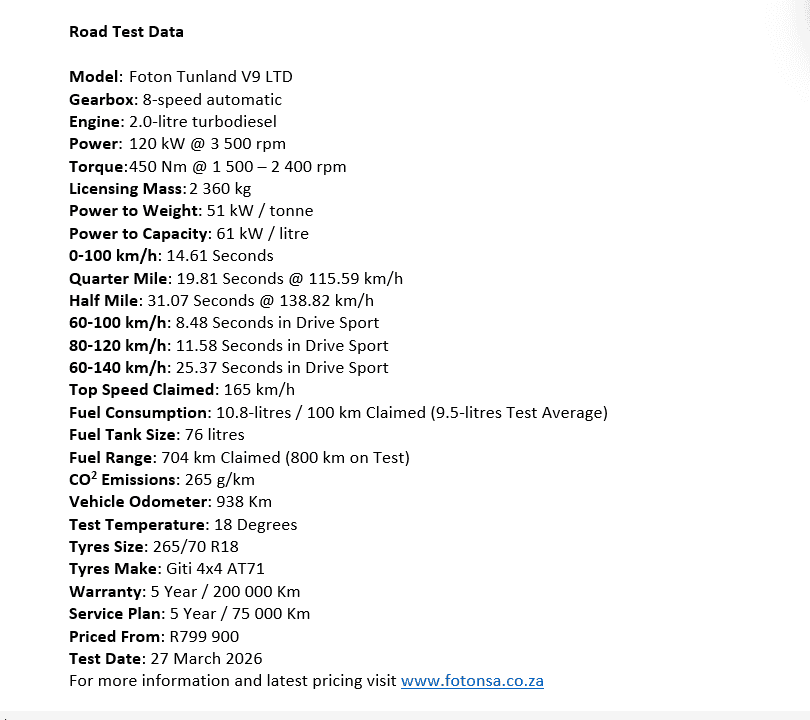
This makes it 3.7 seconds slower than the equivalent Hilux 2.8 GD-6 48V and 2.7 seconds down on the more off-road biased 2.0-litre bi-turbo engined Ranger Wildtrak X. Admittedly, both these develop more grunt at 150kW/500Nm.
Stacked up against the Isuzu D-Max X-Rider, whose 1.9-litre turbodiesel engine makes a 110kW/350Nm, the V9 is also slower, but only just by three-tenths of a second.
Let down by its weight and a linear power response that is smooth and quiet, but possibly lacking at least 20kW to 25kW, the V9 is undoubtedly more leisure-focused than brawn, as its V8-powered Ram looks imply.
Stay tuned
A full road test, dealing its plusher, will be posted soon.
NOW READ: Local Foton CKD production officially kicks-off at ‘PE’ plant