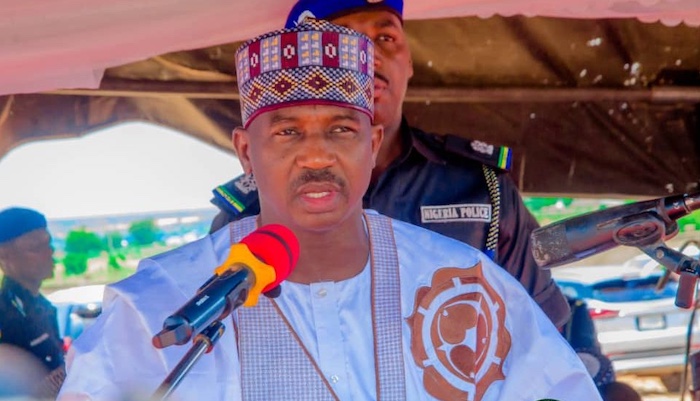
JOHANNESBURG, SOUTH AFRICA - MARCH 19: Matome Chiloane (Gauteng MEC for Education and Sports, Arts, Culture and Recreation) at the launch of Vorentoe Sports School Of Specialisation on March 19, 2026 in Johannesburg, South Africa. The launch marks Gauteng’s 38th School of Specialisation, reflecting the province’s ongoing commitment to nurturing top talent and enabling advanced skills development. (Photo by Gallo Images/Luba Lesolle)
As Matome Chiloane bows out as Gauteng education MEC, questions linger over whether his departure will leave a noticeable gap or bring relief in a department that has faced mounting criticism during his term in office.
Upon his exit, the Gauteng Department of Education (GDE) praised his leadership and commitment to advancing the sector. However, critics said his tenure was littered with persistent crises in pupil placements and school infrastructure, unpaid bills resulting in scholar transport and municipal service disruptions, and rising violence in schools, all of which signalled a troubled administration.
Basic needs failures
One of the most pressing issues during Chiloane’s time in office was the failure to provide basic needs in schools. Several institutions faced water and electricity cuts as municipalities moved to recover unpaid bills.
Reports revealed that the GDE owed municipalities millions, leaving schools vulnerable to service disruptions. At the same time, some pupils were forced to learn in dire conditions, with reports of schools lacking desks, water and proper sanitation.
The department also came under fire over abandoned and unused school buildings, even as overcrowding persisted in other areas.
Scholar transport and placement chaos
Transport issues further compounded frustrations. Unpaid invoices to service providers led to disruptions in scholar transport, leaving some pupils stranded.
Despite this, the department did achieve a milestone in placing Grade 1 and Grade 8 pupils for the 2026 academic year, an area that has historically drawn criticism.
One social media user, Jabulane Radebe, acknowledged this, saying Chiloane “tried your level best to maintain whatever that Panyaza [Lesufi] has initiated… more especially around the enrollment of Grade 1 and 8, which always has backlash year in, year out.”
Safety concerns and funding disputes
School safety also remained a concern. Incidents of bullying increased across Gauteng schools, while cases of alleged sexual misconduct by teachers added to public outrage.
These incidents raised questions about whether enough was being done to protect pupils and restore confidence in the schooling system.
Chiloane’s tenure also saw disputes over funding allocations, including controversy surrounding alleged cuts to quintile 5 schools.
While the department denied drastic reductions, the issue fuelled perceptions of instability and poor communication.
GDE praises ‘steadfast leadership’
In its farewell message, the GDE painted a far more positive picture.
“He rose to the challenge of leading one of Gauteng’s most critical portfolios and worked tirelessly to advance quality education for every learner,” the department said.
It added that under his leadership, the department focused on “strengthening teaching and learning, expanding access to quality education, and equipping learners with the skills and opportunities needed for the future”.
Public divided on his legacy
Public reaction has been divided.
Some were critical of his performance. “Glad he is leaving. He didn’t really contribute much to the department,” wrote one commenter, while another said, “Matome… was not working.”
Others, however, defended him, citing his qualifications and on-the-ground leadership.
“He was one of the leaders on the ground… with an MBA from GIBS. Politics are the enemy of qualified leaders,” one supporter said. Another added: “We remain grateful for his commitment and passion… and we welcome the new MEC with warm hands.”
Will he be missed?
Chiloane leaves behind a department still grappling with systemic challenges. While there were pockets of progress, particularly in pupil placement and academic oversight, these were often overshadowed by ongoing crises.
Whether he will be missed may ultimately depend on whether his successor can resolve the issues that defined his tenure, or whether they persist as a lasting part of his legacy.