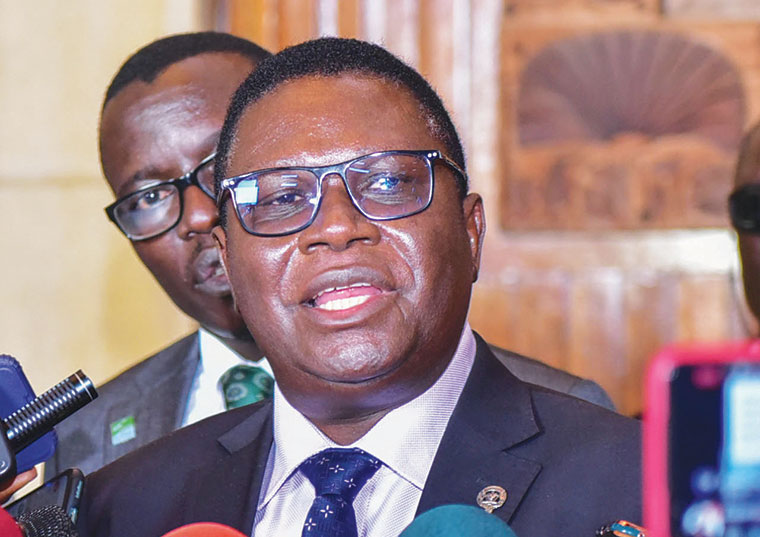
The election of Justice and Constitutional Affairs minister Norbert Mao as Member of Parliament for Laroo-Pece Division has been challenged in the High court in Gulu.
The petitioner, Tonny Kitara, alleges widespread electoral irregularities that he says affected the outcome of the January 2026 polls. In the petition, in which the Electoral Commission is listed as the second respondent, Kitara accuses both Mao and the commission of electoral malpractice, non-compliance with the law and illegal campaign practices.
Court documents show that Mao, the Democratic Party candidate, was declared winner with 7,359 votes, defeating Kitara who garnered 2,867 votes.
Other candidates included Charles Onen with 5,562 votes, Samuel George Okello with 65 votes, Wilfred Opobo with 207 votes, Geoffrey Komakech with 236 votes and Simon Opoka with 318 votes, while 793 votes were recorded as invalid.
Kitara argues that the declaration and gazettement of Mao as MP were flawed due to irregularities that substantially affected the results. He alleges that Mao violated the Electoral Commission’s harmonised campaign programme by campaigning in restricted areas, including Lawiyeadul Ward, and disrupting his campaign activities.
The petitioner also accuses Mao of conducting campaigns beyond the legally permitted time, citing alleged radio appearances on Mega FM, Speak FM and Rupiny Radio between 11:00 pm and 1:00 am shortly before polling day, contrary to the Parliamentary Elections Act.
Kitara further claims that Mao interfered with his rally in Agwee Ward in December 2025 by driving through the venue, allegedly disrupting mobilisation efforts. He also raises allegations of misuse of state resources, claiming that Mao used an official government vehicle and police escorts attached to his ministerial office for campaign purposes, which he says gave him an unfair advantage over other candidates.
The petition further accuses the Electoral Commission of collusion, alleging that one of its officials attended Mao’s rally and issued a voter identification slip during the event, compromising the commission’s neutrality.
Kitara also alleges voter bribery and illegal inducements, claiming that Mao and his agents distributed money to influence voters. Among the cited incidents is an allegation that Mao gave Shs 150,000 to a women’s savings group leader at Gulu Town Primary School to sway support.
He further accuses Mao of making false statements during the campaign, including claims that some candidates had stepped down in his favour, and telling voters that Kitara could instead be appointed to a government or judicial position.
Kitara also alleges that Mao told voters he had the backing of President Yoweri Museveni, which he argues amounted to undue influence. The petitioner faults the Electoral Commission for failing to act on his complaints during the campaign period, arguing that the cumulative effect of the alleged irregularities undermined the credibility of the election.
He is seeking a court declaration that the election was conducted in violation of the law, nullification of Mao’s victory, a fresh election, and costs of the petition. Summonses have been issued directing Mao and the Electoral Commission to file their responses within 10 days.
But in response to the petition, Mao appeared to link it to his bid to vie for the speakership post. “I don’t fight dogs. I fight their owners. Full stop,” he posted on his X account.
The High court is yet to set a hearing date as the deadline for filing election petitions closes on April 2, 2026.