When Alan Kasujja stepped up to lead the Uganda Media Centre, the message from government was clear: communication is no longer an afterthought.
It is central to how the state functions, and how it is understood. At his inauguration, senior officials framed the moment not simply as a leadership change, but as a reset. In a rapidly shifting digital landscape, where information moves fast and trust can erode even faster, the need for a more coordinated government voice has become urgent.
“Effective government communication must be timely, credible, and coherent,” said Aminah Zawedde, Permanent Secretary at the Ministry of ICT and National Guidance.
The Uganda Media Centre, she added, sits at the heart of that effort, tasked with ensuring the government speaks with one voice. The challenge is not abstract. Across ministries, departments, and agencies, messaging has often been fragmented, sometimes inconsistent, and occasionally slow to respond.
For a government seeking to drive economic growth, job creation, and improved household incomes, those gaps carry real consequences. Kasujja, a seasoned broadcaster with experience at the BBC World Service, takes office with that reality in mind.
“Government communication is not merely a public relations exercise. It is central to nation-building,” he said, setting out a vision that places communication alongside policy as a tool of governance.
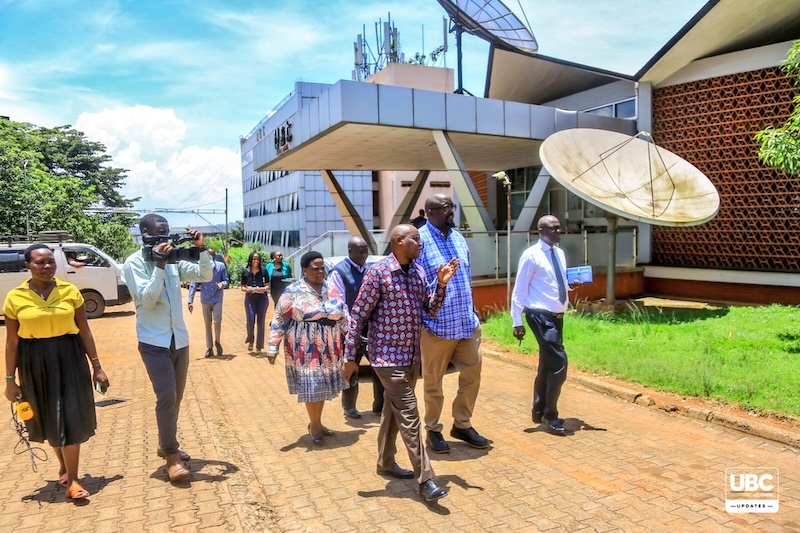
His task, however, comes with constraints. During the transition period, acting Executive Director Obed Katureebe said the centre continued to operate steadily, supporting more than 200 communication and media projects across print, broadcast, and digital platforms.
But that work, he acknowledged, has been stretched thin by limited resources. With an annual budget of just UGX 1.36 billion, the institution faces challenges in transport, equipment, and outreach.
“We have done our best within the available resources,” Katureebe said, “but there is need for increased investment if the Media Centre is to effectively serve as a national communication hub.”

Kasujja appears aware of both the ambition and the limitations. He has pledged to strengthen the centre as a trusted source of verified information, expand its digital footprint, and improve engagement, particularly with younger audiences who increasingly consume news online. Tackling misinformation, he suggested, will be central to that effort.
“We must tell our national story in a way that builds public trust and responds effectively in a fast-evolving digital environment,” he said.
There is also a broader political push behind the transition. ICT Minister Chris Baryomunsi described Kasujja’s appointment as the beginning of a new phase, one that will prioritise harmonised messaging across government.
Plans are already underway to introduce biweekly national issue briefs and position papers at district level, translated into local languages to widen access. The appointment itself follows a directive from President Yoweri Museveni, who, in a December 2025 letter, called for leadership changes at the Media Centre and instructed that Kasujja’s role be formalised.
For Kasujja, the moment carries both expectation and opportunity. “The story we tell about our country and how we tell it will shape the decade ahead,” he said.
In a country where policy, perception, and public trust are increasingly intertwined, that story may matter more than ever.