Funding package from UAE and UK targets port upgrades, budget support, and refinancing of costly debts…..
Nigeria’s parliament has given the green light to a $6 billion external borrowing plan requested by President Bola Tinubu, paving the way for fresh inflows aimed at infrastructure development and fiscal support.
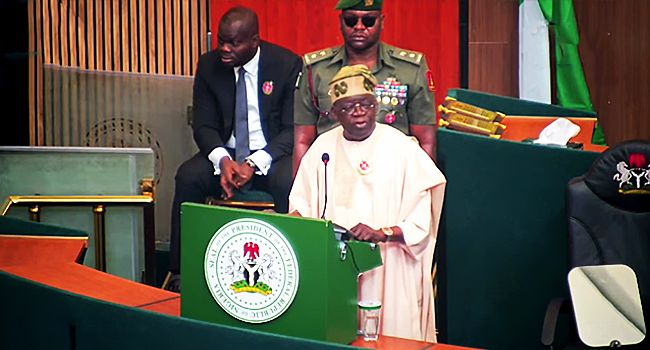
The approval by the National Assembly of Nigeria followed separate requests submitted to both chambers and read during Tuesday’s plenary sessions.
The borrowing package consists of two major components. The first is a proposed $5 billion structured financing arrangement through a Total Return Swap (TRS) with First Abu Dhabi Bank. The facility is expected to be disbursed in tranches and will serve as a key source of external funding for the federal government.
In his communication to lawmakers, Tinubu explained that the facility would support budget implementation, finance priority infrastructure projects, and help refinance more expensive domestic and external debt obligations.
However, he acknowledged that the move would increase Nigeria’s overall debt profile, which stood at approximately $110.3 billion, about N159.2 trillion as of the end of 2025.
The second component of the borrowing plan is a $1 billion export credit facility from the United Kingdom, arranged by Citibank London. The funds are earmarked for the reconstruction and rehabilitation of key maritime infrastructure, including the Lagos Port Complex and Tin Can Island Port.
The request was formally addressed to Tajudeen Abbas and Godswill Akpabio, who presided over deliberations in their respective chambers.
In the House of Representatives, the proposal was referred to the committee on aids, loans, and debt management, chaired by Abubakar Nalaraba. The committee subsequently presented its report, which was adopted by the House, leading to approval of the request.
The Senate followed suit shortly after, granting its approval following the presentation of a report by Aliyu Wamakko, chairman of the Senate committee on local and foreign debts.
With legislative backing now secured, the federal government is expected to proceed with the borrowing programme as part of its broader strategy to boost infrastructure, improve liquidity, and manage its debt portfolio more efficiently.
The development underscores the administration’s increasing reliance on external financing to fund critical projects while attempting to ease pressure on domestic borrowing and stabilise the economy.