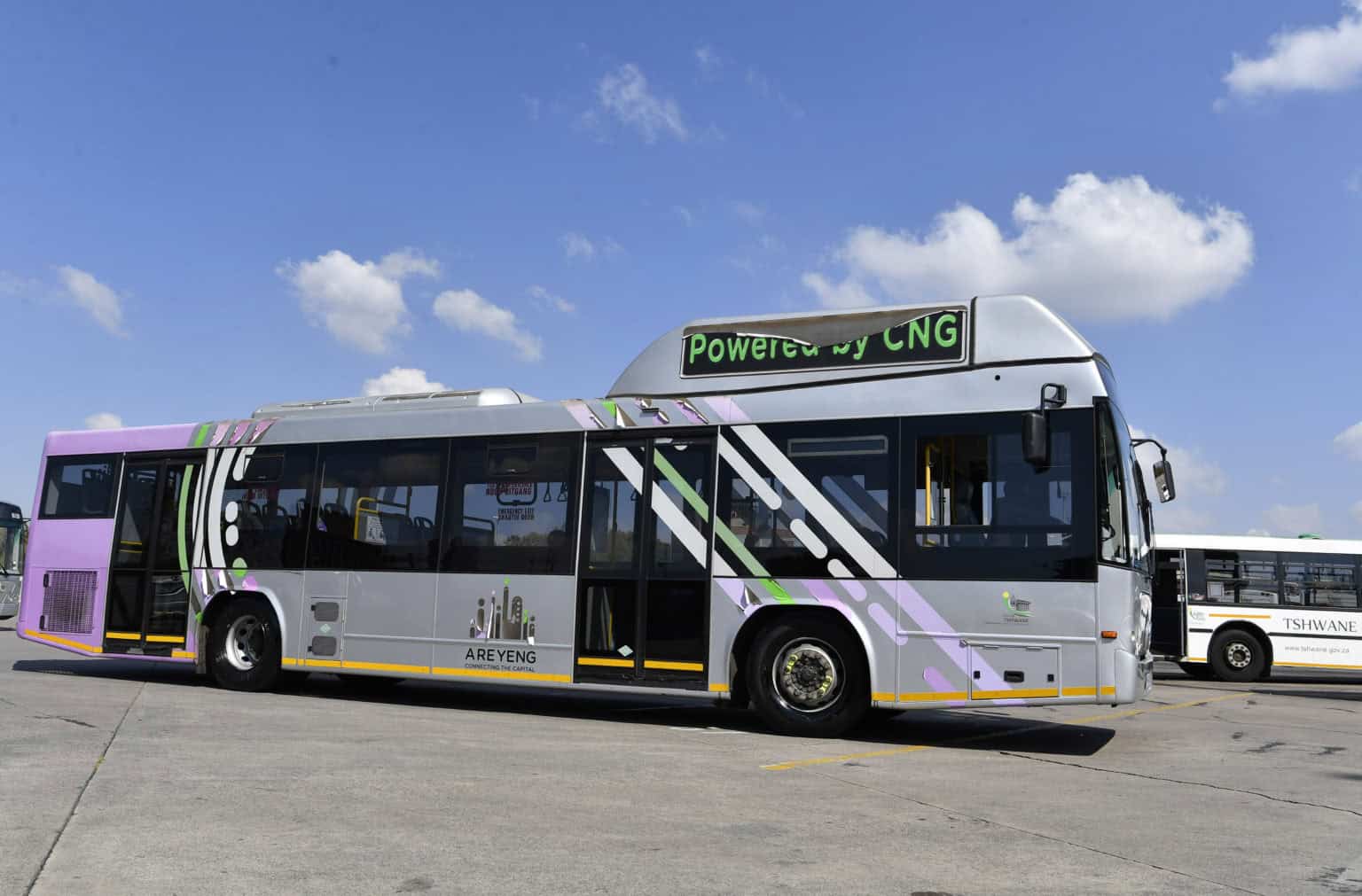
TSHWANE, SOUTH AFRICA - MAY 15: Minister of Transport Fikile Mbalula visits A Re Yeng bus depot to monitor and inspect compliance with measures put in place to protect passengers on May 15, 2020 in Tshwane, South Africa. It is reported that buses will be allowed to transport 50% passengers of their licensed loading capacity, with social distancing, wearing of masks by all passenger and other mitigating measures. Buses will be permitted to operate from 5 am until 7 pm, and the driver must ensure that the drop off is completed by 7 pm. (Photo by Gallo Images/Lefty Shivambu)
Tshwane Bus Service commuters may need to make alternative plans on Tuesday afternoon due to a fuel shortage affecting operations.
On Tuesday morning, MMC for Roads and Transport, Tlangi Mogale, alerted all commuters utilising the Tshwane Bus Service of the current fuel supply challenges being experienced by the City of Tshwane, which are significantly affecting normal bus operations.
The Tshwane Bus Service operates a total of 155 daily shifts across its three depots – C de Wet depot: 102 shifts, Pretoria North depot: 31 shifts and East Lynne depot: 22 shifts. However, all three Tshwane Bus Service depot filling stations have run out of fuel.
The city has already reduced the number of buses in service. From Monday afternoon onward, only 65 of the planned 155 shifts could operate, using the remaining fuel.
“The city had anticipated a similar level of service this morning. However, there is a strong likelihood that no bus services will operate in the afternoon should fuel supplies be restored in time. The city is actively engaging with suppliers and expects fuel deliveries later in the week,” said Mogale.
“We acknowledge the inconvenience this disruption causes to our commuters. While alternative transport options may be limited and not always affordable, we urge passengers to make necessary arrangements to reach their destinations during this period.”
Fuel shortage across SA
Earlier this month, the Department of Mineral and Petroleum Resources (DMPR) assured South Africans that it was in continuous contact with oil companies operating in the country to ensure the stability and security of fuel supply.
“While prolonged geopolitical tensions may exert pressure on international oil prices, the department wishes to assure the public that there is currently no immediate risk of fuel shortages in South Africa,” said the department at the time.
While there is no immediate risk of fuel shortages, the department confirmed fears of fuel price increases.
The continued rise in international crude oil prices is expected to lead to higher fuel prices starting on Wednesday, 1 April.
However, filling stations are buckling under pressure as motorists rush to fill up before the increase takes effect.
Avhapfani Tshifularo, CEO of the Fuel Industry Association of South Africa, has confirmed that less than 200 sites are already dry on diesel.
READ NEXT: Petrol-shedding ahead? Middle East war may lead to a fuel shortage in SA