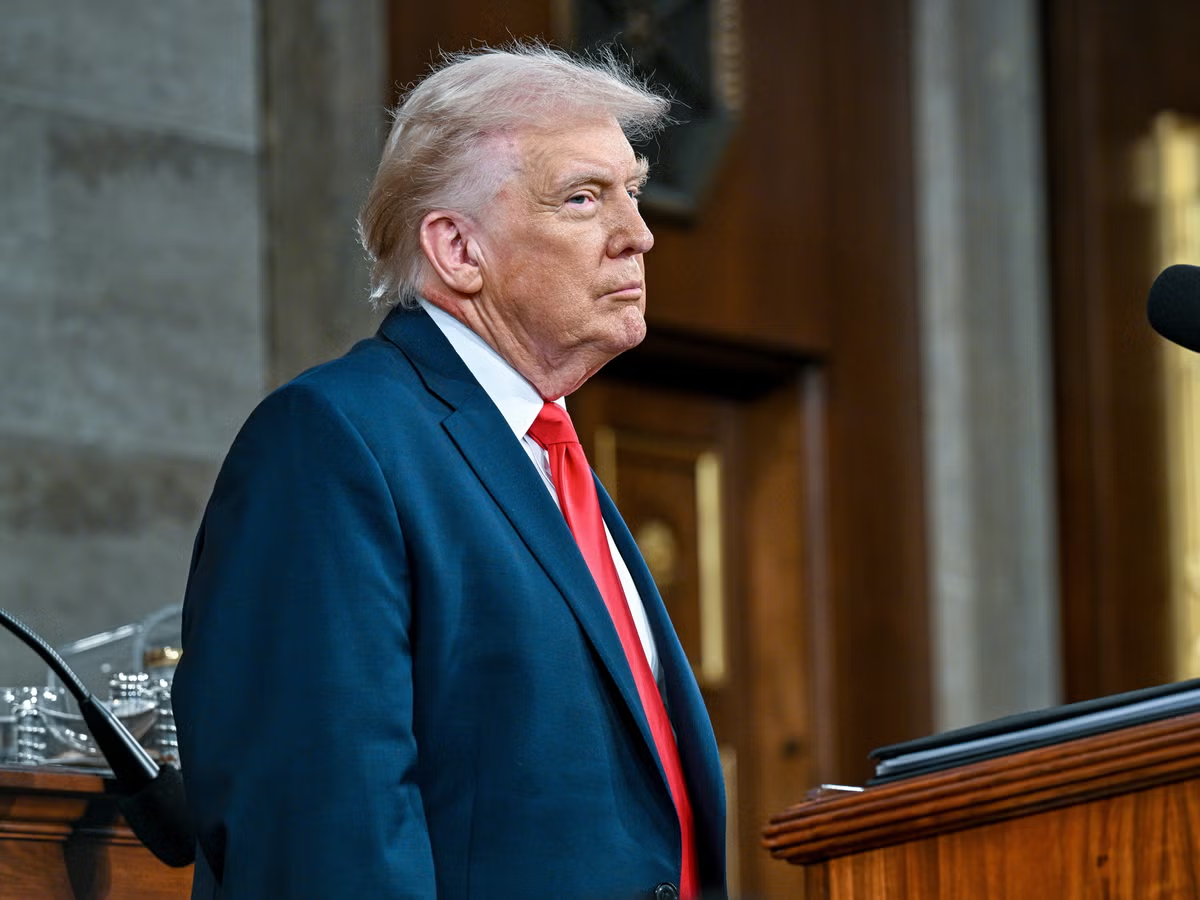
US President Donald Trump has escalated threats against Iran, warning that Washington could destroy the country’s oil infrastructure, power plants, and its main export terminal on Kharg Island if Tehran does not swiftly agree to a peace settlement.
Speaking amid soaring global oil prices, Trump expressed confidence that a negotiated deal could be reached but cautioned that failure to resolve the conflict—or continued Iranian restrictions on the Strait of Hormuz—would prompt US forces to “blow up” key Iranian energy and electricity facilities.
The warnings come as Iran has previously threatened retaliation against the energy infrastructure of Gulf Arab states should US or Israeli strikes target its vital economic sites.
The ongoing war, now in its second month, has already disrupted global energy markets and sent crude prices surging.
Analysts warn that any US ground operation or intensified Iranian retaliation could push oil prices to levels not seen since the July 2008 commodities boom, when Brent crude approached $150 per barrel. Prices are already up sharply this month, with Brent rising nearly 60 percent and West Texas Intermediate (WTI) by more than half.
“If the US were to launch a ground invasion, potentially seizing Kharg Island, or if Tehran escalates retaliatory strikes on energy infrastructure or fully closes the Strait, projections of $200 per barrel oil will no longer be far-fetched,” said Tamas Varga.
Meanwhile, fighting continues across the region. Israel has intensified its offensive against Hezbollah in southern Lebanon, reportedly striking an army checkpoint and killing a Lebanese soldier.
Indonesia also confirmed that one of its peacekeepers was killed after a projectile hit a UN position.
The Israeli military reported the death of an additional soldier on Sunday, bringing the total fatalities in the southern Lebanon operations to six since hostilities began earlier this month.
Diplomatic efforts appear limited as military activity escalates. Israel said its air defences intercepted missiles launched from Iran and confirmed airstrikes on “terror regime military infrastructure” in Tehran.
Among the targets, Israel said it struck Imam Hossein University, which it claims supports the Islamic Revolutionary Guard Corps’ advanced weapons programs. Tehran has responded with warnings that it could target US-linked universities in the Middle East in retaliation.
The situation underscores the high-stakes nature of the conflict, with global energy markets, regional security, and international diplomacy all hanging in the balance.
About the Author