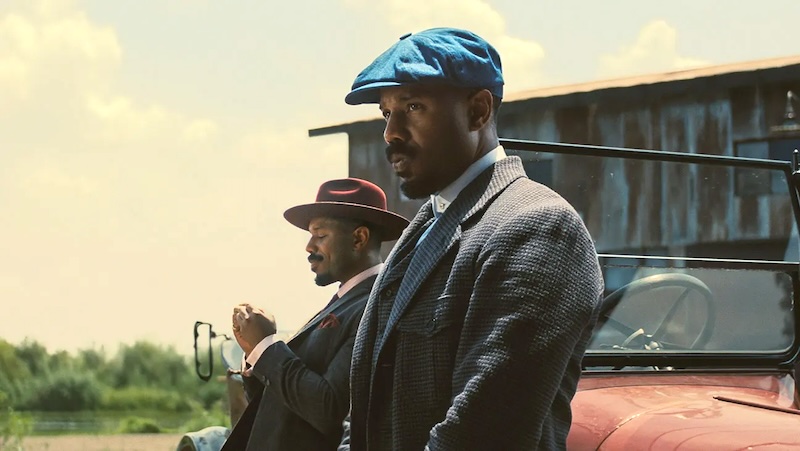
The 98th Oscars ended a week ago, and once again, Ugandans could not care less.
Yes, people love Michael B. Jordan, who won the Best Actor award for Sinners. But Sinners was not that big of a hit among Ugandan viewers. You can say the same for Hamnet, One Battle After Another, KPop Demon Hunters, and every other film that dominated the Oscars.
That said, you can’t ignore the fact that the 98th Oscars raked in a whopping 17.9 million viewers in the United States alone. Don’t forget that the ceremony is televised in over 100 countries worldwide. It would be an exaggeration to call the Oscars irrelevant.
Surprisingly, when the Academy of Motion Picture Arts and Sciences emerged in 1927, it had no interest in presenting awards. Louis B. Mayer, who headed MGM (Metro- Goldwyn-Mayer), wanted to create an organization that could mediate labour disputes.
At the time, it consisted of five branches: Actors, Directors, Producers, Writers, and Technicians. These days, the Academy steers clear of labour disputes and negotiations.
The organization tarnished its image during the Great Depression by siding with Hollywood’s biggest film studios in a campaign designed to compel industry workers to accept salary and wage reductions. They never recovered.
Today, they do everything from administering libraries to preserving film memorabilia and even setting industry standards for film production. During the Academy’s earliest years, the awards committee was just one among numerous committees under the Academy’s umbrella.
Back then, the organization was too busy navigating labour arbitrations to take the suggestion of an industry award seriously. They finally adopted the concept in 1928, outlining a structure that would present the ‘Academy Award of Merit’ to individuals in 12 categories.
Since then, the Academy has expanded that number to 24 categories. Also, you have probably noticed that ‘Oscar’ is typically used in the place of ‘Academy Award of Merit.’ No one knows for certain where the name came from.
Bette Davis (Legendary Actress) claimed in a biography that she observed the statue’s backside during a ceremony and commented that it looked like her husband (Harmon Oscar Nelson Jr.).
Bruce Davis, who was the Academy’s executive director for two decades, believes that Margaret Herrick is the most likely culprit. Herrick was the Academy’s librarian in 1936. She eventually ascended to the role of executive director.
Apparently, the statue looked like her uncle Oscar. As one of the very few women of influence in the industry at that time, she held so much power that her use of the term ‘Oscar’ caught on.
Whether that is true or not, the statue (a knight standing on a film reel with five spokes representing the Academy’s original branches and holding a sword to defend the film industry against external threats) has become synonymous with the world’s most famous award show.
13.5 inches high and weighing 3.8kg, the statuette was initially made of plaster due to metal shortages during WWII. Created by sculptor George Stanley, based on designs by MGM art director Cedric Gibbons, the Academy eventually switched to gold-plated britannium (24 karats).
The physical object is worth roughly $650. However, the perceived value is usually so much higher, depending on who owns the statue. For instance, Orson Welles’ Citizen Kane Oscar was sold for the equivalent of $1.2M in 2011.
But that was a rare exception. Generally speaking, Oscar winners sign a contract compelling them to sell the statuette back to the Academy for $1 if they want to get rid of it. They don’t have the option of selling it for a profit.
But I think you get the point. While this ceremony means nothing to most Ugandans, the Oscars have a long and storied history that makes them a vital aspect of the film industry.
katmic200@gmail.com
About the Author