Improved reserves, tighter policies, and FX reforms boost confidence but global risks keep outlook uncertain…..
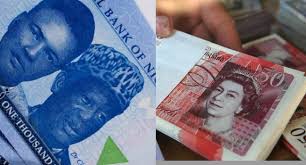
Nigeria’s currency is showing early signs of resilience against the British pound, offering a cautious sense of stability after months of volatility in the foreign exchange market.
At the official window, the naira settled at N1,837/£1 on Wednesday, maintaining its position below the critical N1,900/£ threshold, a level widely seen by traders as a psychological barrier.
Naira Gains Momentum
Market activity suggests that breaking below N1,900/£ has strengthened confidence among investors betting on the naira. So far this year, the currency has managed to retain much of its gains against the pound, supported by improving macroeconomic fundamentals.
Analysts say ongoing reforms by the Central Bank of Nigeria are beginning to take effect, particularly efforts aimed at curbing inflation and boosting foreign exchange liquidity.
The naira is currently trading well below its 200-day moving average of N1,915/£, a signal that the longer-term trend may now favour local currency strength.
Key Levels to Watch
Technical indicators highlight crucial zones that could determine the next direction of the market:
- Resistance: N1,860/£ to N1,875/£
- Breakout level: Above N1,900/£ could signal a reversal in favour of the pound
- Support zone: N1,805/£ to N1,807/£
- Next target: N1,790/£ if naira strength continues
While the pound recently rebounded from a 52-week low of N1,804/£, analysts believe the earlier sell-off may be losing steam.
Policy Moves Behind the Shift
A combination of monetary tightening and structural reforms has played a key role in stabilising the currency.
The central bank, led by Olayemi Cardoso, has maintained relatively high interest rates to combat inflation, although the Monetary Policy Rate was recently eased slightly to 26.5 percent.
Other supportive factors include:
- Rising foreign reserves
- Increased FX market liquidity
- A sharp drop in the parallel market premium to below 2 percent
- Diaspora remittances climbing to around $600 million monthly
Additionally, Nigeria’s banking sector recapitalisation has attracted over N4.6 trillion in fresh capital, helping to mop up excess liquidity that previously pressured the naira.
The reduction in “Ways and Means” financing, cutting government borrowing significantly has also helped stabilise the currency environment.
Global Forces Still in Play
Despite the naira’s improving outlook, external pressures remain a key factor.
The Bank of England has maintained a relatively hawkish stance, keeping interest rates elevated at 3.75 percent. This has supported the pound globally, limiting the extent of its decline against the naira.
At the same time, geopolitical tensions particularly in the Middle East have pushed oil prices above $100 per barrel. While this boosts Nigeria’s revenue, it also fuels global inflation and strengthens major currencies.
The situation has been further complicated by disruptions such as the closure of the Strait of Hormuz, adding to uncertainty in global markets.
Pound Faces Broader Pressure
Globally, the British pound has struggled in recent weeks.
It is on track for monthly losses, weighed down by:
- Weak UK retail sales data
- Rising inflation expectations
- Risk-averse investor sentiment
- A stronger US dollar
Even as the pound holds firm in some sessions, analysts say the broader outlook remains fragile, especially as central banks adopt a “higher-for-longer” interest rate stance.
A Delicate Balance
For now, the naira’s stability reflects a mix of disciplined policy action and favourable inflows. But the outlook remains finely balanced.
Sustaining the gains will depend on:
- Continued FX market reforms
- Inflation control
- Strong oil revenues
- Stability in global financial markets
While the recent performance offers cautious optimism, traders and policymakers alike know that maintaining currency stability in a volatile global environment is an ongoing challenge, not a one-time achievement.
About the Author