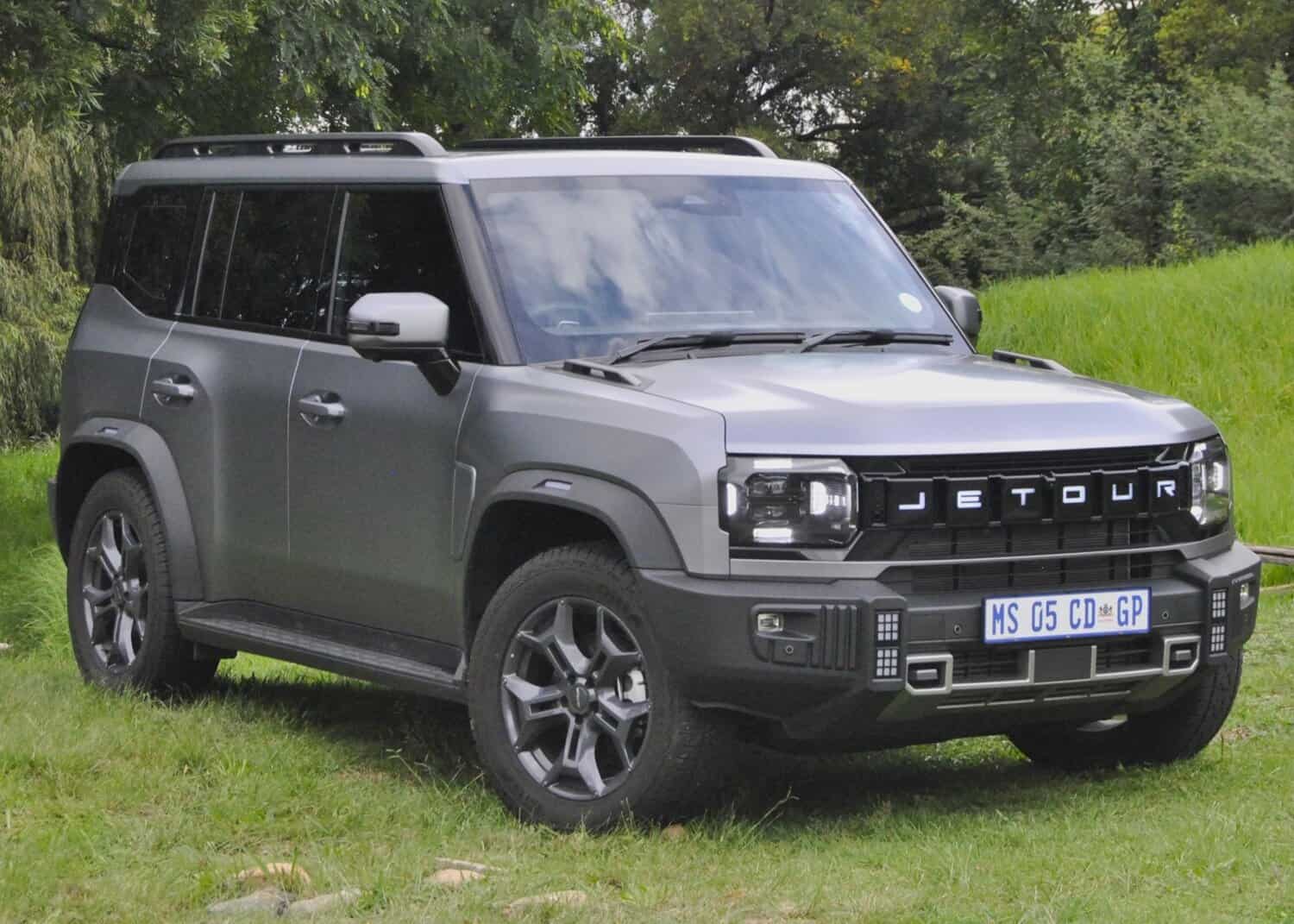
As in the United Arab Emirates, the Jetour T2 has been something short of a smash-hit success since going on sale locally last year. And for good reason.
Smash-hit
Whereas the Chery-owned brand has been on a roll since entering South Africa in 2024 with the Dashing and X70 Plus, the T2, and by extension, the T1, have upped their profiles considerably.
Although branded as the “Temu Defender” for resembling the Defender 110, it is not an illegal copy.
ALSO READ: Already priced Jetour T2’s specification sheet finally made public
Instead, the T2 is the result of Chery’s partnership with JLR, with assembly taking place in Fuzhou in a plant owned by former Mitsubishi China assembler, Soueast.
Having amassed sales of 2 270 units since sales started last November, the arrival of the T2, in Odyssey guise, for the weeklong stay came with a lot of promise.
No clear picture
Although driven in Fuzhou two years ago, the route was a purpose-built off-road course at a speed below 40 km/h.
What’s more, it wasn’t laced with technical obstacles, most likely due to the T2 being a unibody SUV without a low-range transfer case.
While the Odyssey is equipped with locking centre and rear differentials, its lack of a reduction gear puts it at a disadvantage when taking its “adventure vehicle” claims in mind.
As such, the weeklong stint involved the urban jungle where the T2 will spend the majority of its life.
About those looks….
Viewed on the first glance, the T2’s appeal is immediate and the reason for it selling over 2 000 units in four months obvious.
Besides the test unit’s matte grey exterior finish, the Defender-inspired styling is purposeful, macho and stylish.
For South Africa, the Jetour JT logo has been replaced by an individual block letter arrangement on the grille, which, in typical Chinese vehicle fashion, is also illuminated.
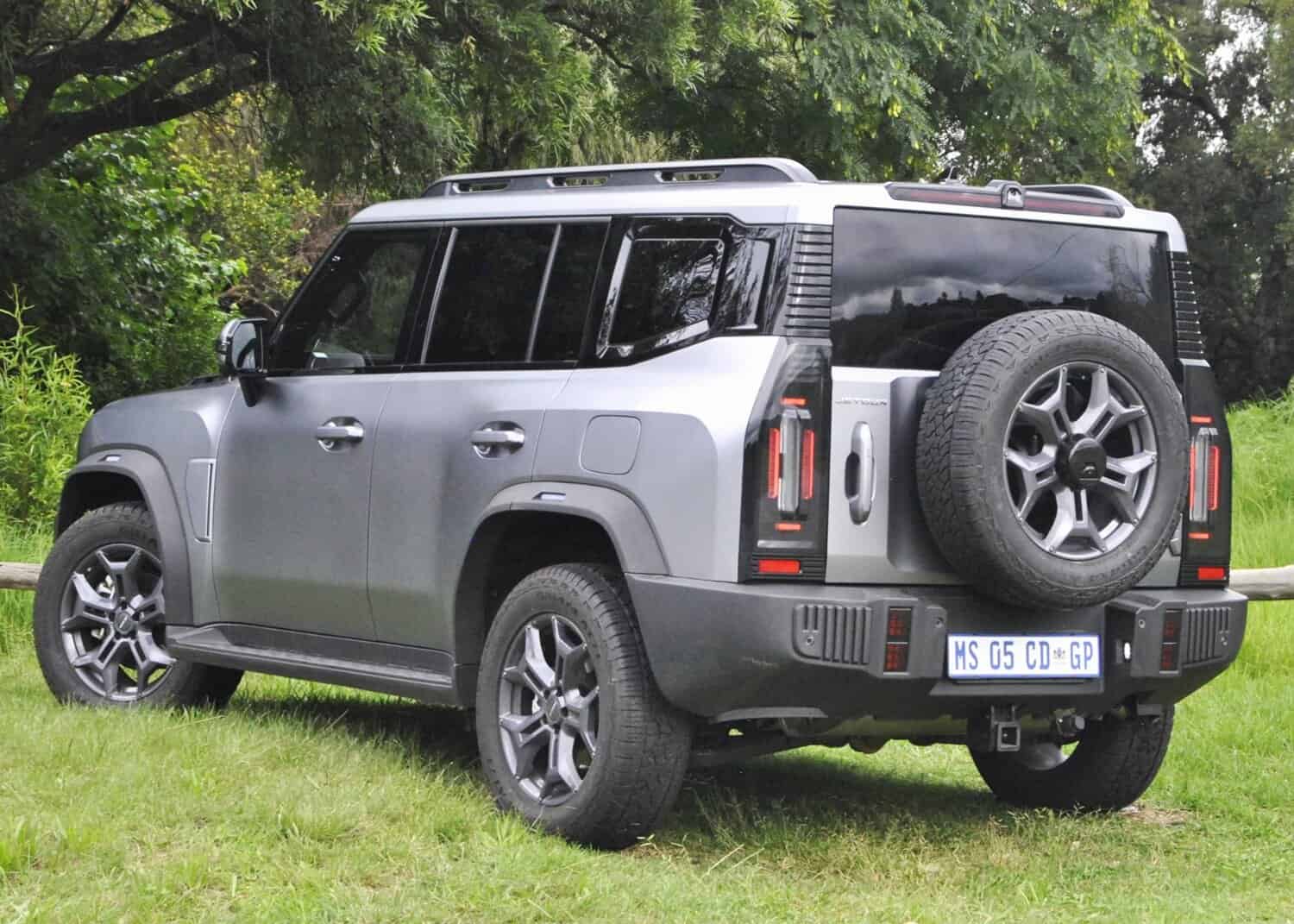
Down the side, the Defender influence has been slightly altered with an upwards-moving shoulder line from the C-pillar up.
At the rear are bar-differently styled light clusters; the rear facia is near identical to the Defender, right down to the spare wheel affixed to the tailgate.
This also includes the soft closing function for the tailgate the “Landy” also features.
As much as the “Temu Defender” adage is unlikely to go away, the T2’s “tribute styling” has still been executed well – an attribute that only represents the start of why it has become such a sales hit.
Nothing ‘Landy’ inside
Opening the door is where the Defender’s touches stop, as Jetour has applied its own design to the interior.
Designed around the minimalist principle means all the various controls are located within the 15.6-inch infotainment display.
However, Jetour has, thankfully, retained physical buttons for the dual-zone climate control and finger-tip switches on the centre console.
What’s more, the awkward-to-grasp almost quartic steering wheel has been furnished with physical buttons and rocker switches.
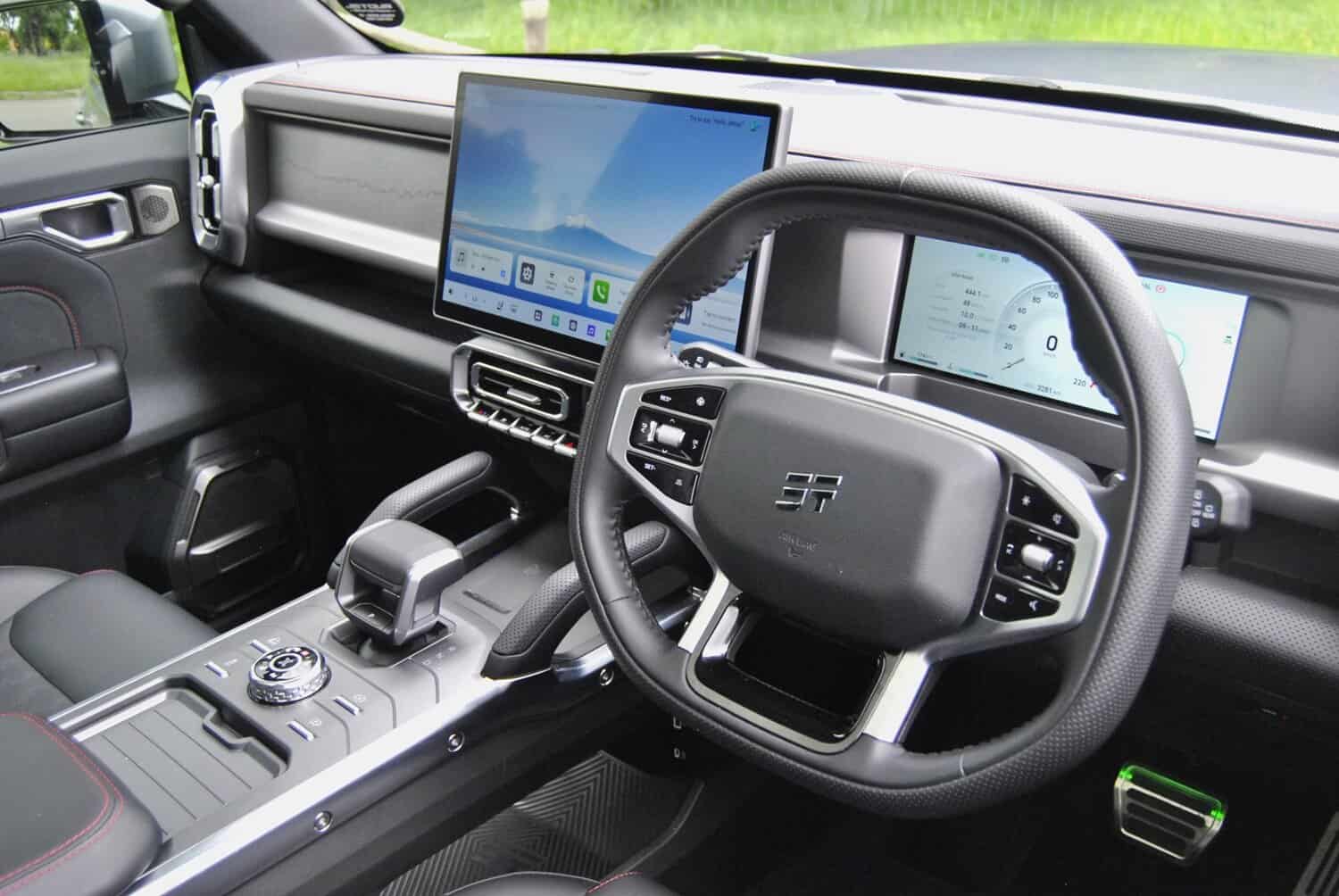
Despite appearing dark as a result of the swaths of black/grey plastic with silver and faux chrome inserts, built quality is solid.
In addition, the level of fit and finish is premium, with soft-touch materials, textured rubber-like detailing on the dashboard and doors, and a grained finish on the centre console.
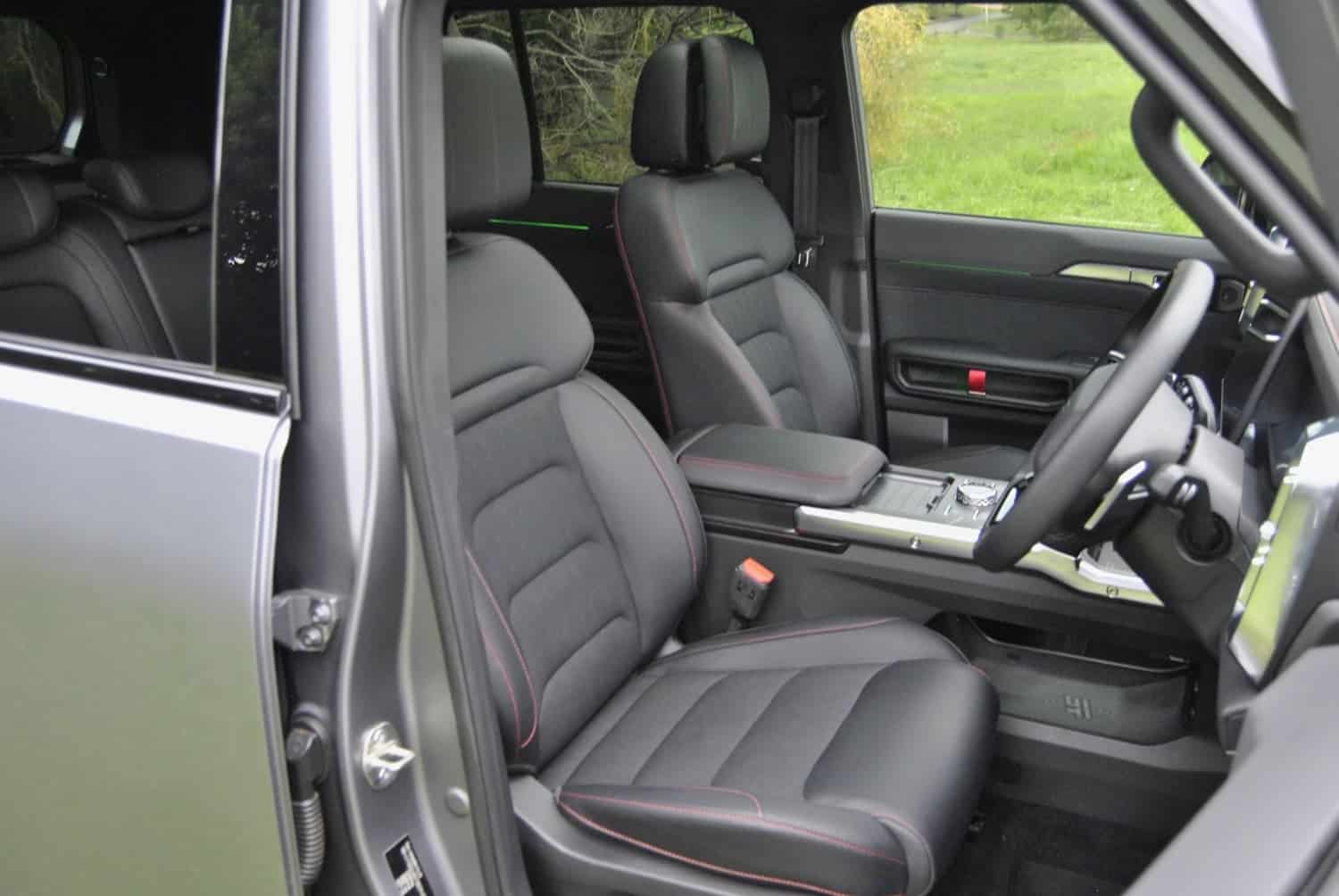
As well as the aircraft-style gear lever and console-mounted grab handles, the leather-trimmed seats offer good support and comfort, as well as being electric and ventilated.
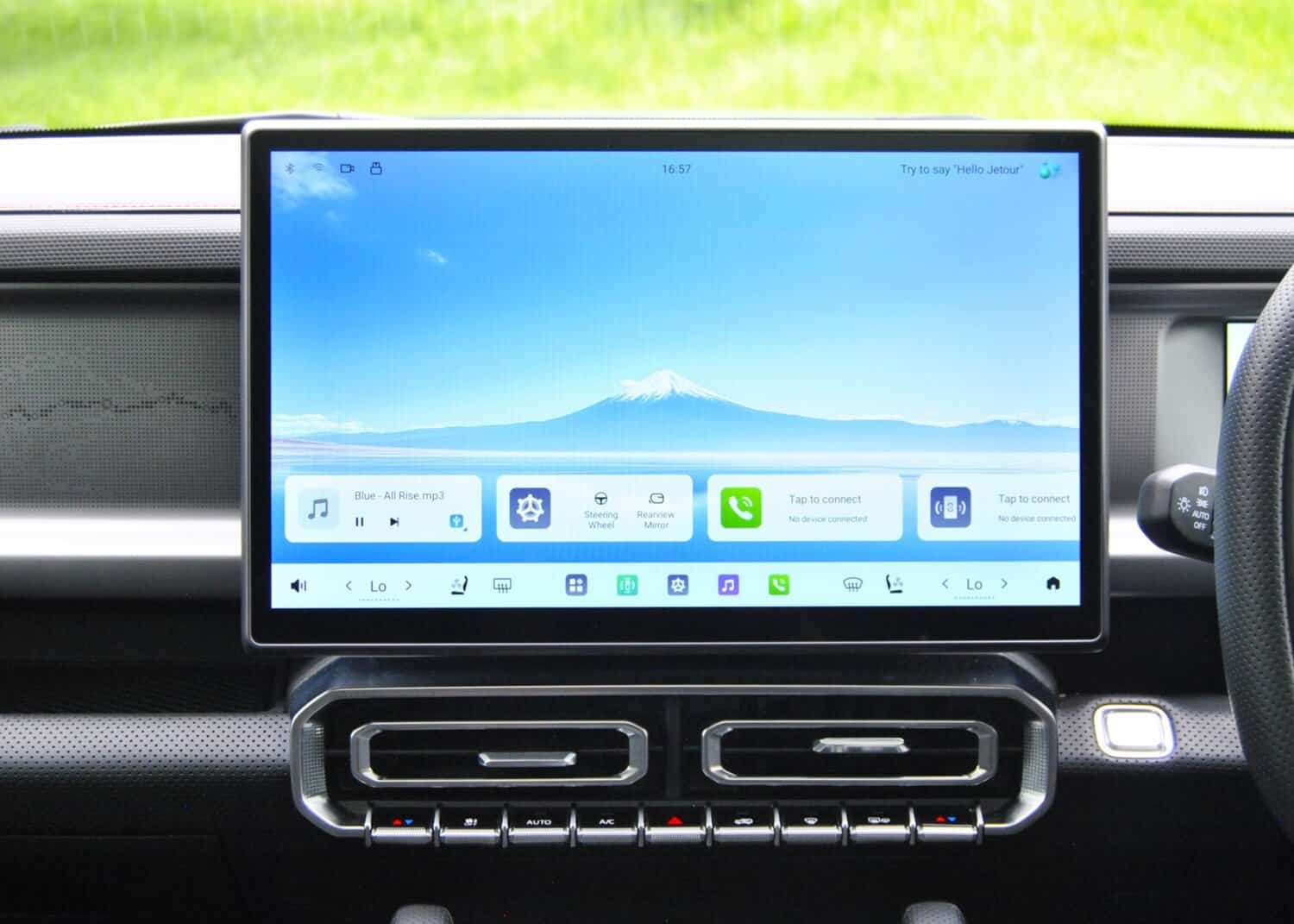
In an ongoing departure from recent Chinese vehicles, the T2’s seat drops all the way down, thus not obscuring a clear view of the 10.25-inch digital instrument cluster.
The cluster itself has been recessed into the dashboard, helped further by the steering column being adjustable for rake-and-reach.
While connectivity is taken care of by wireless Apple CarPlay and Android Auto, the infotainment system will take some learning despite input being quick.
As much as Jetour has tried to simplify the system by cutting down on sub-menus and including shortcut icons at the base of the display, it still isn’t as easy as JLR’s Pivi Pro.
Spacious and nifty
Moving to the rear comes with little to fault as well. Besides no qualms about space, headroom isn’t affected at all by the standard panoramic sunroof.
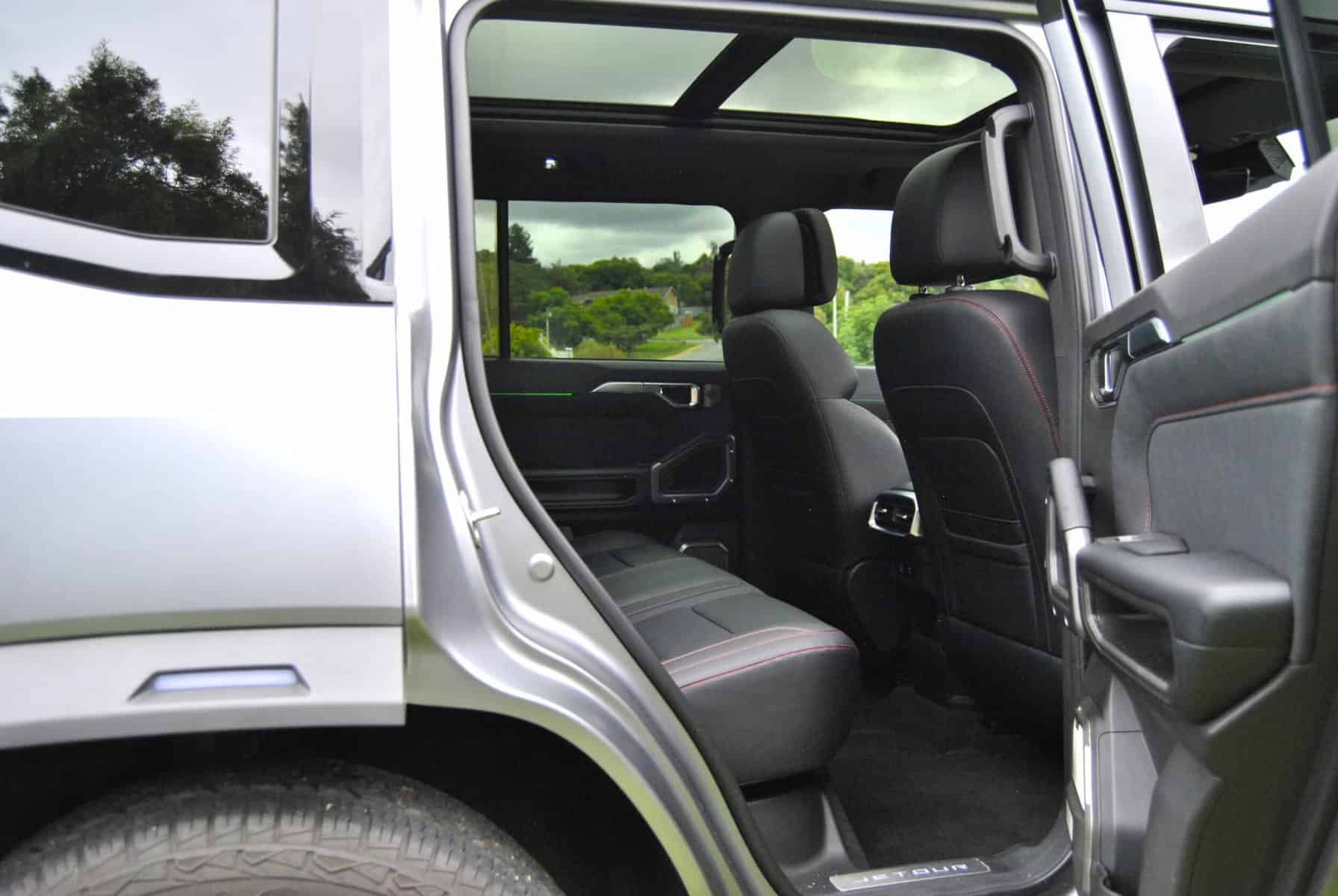
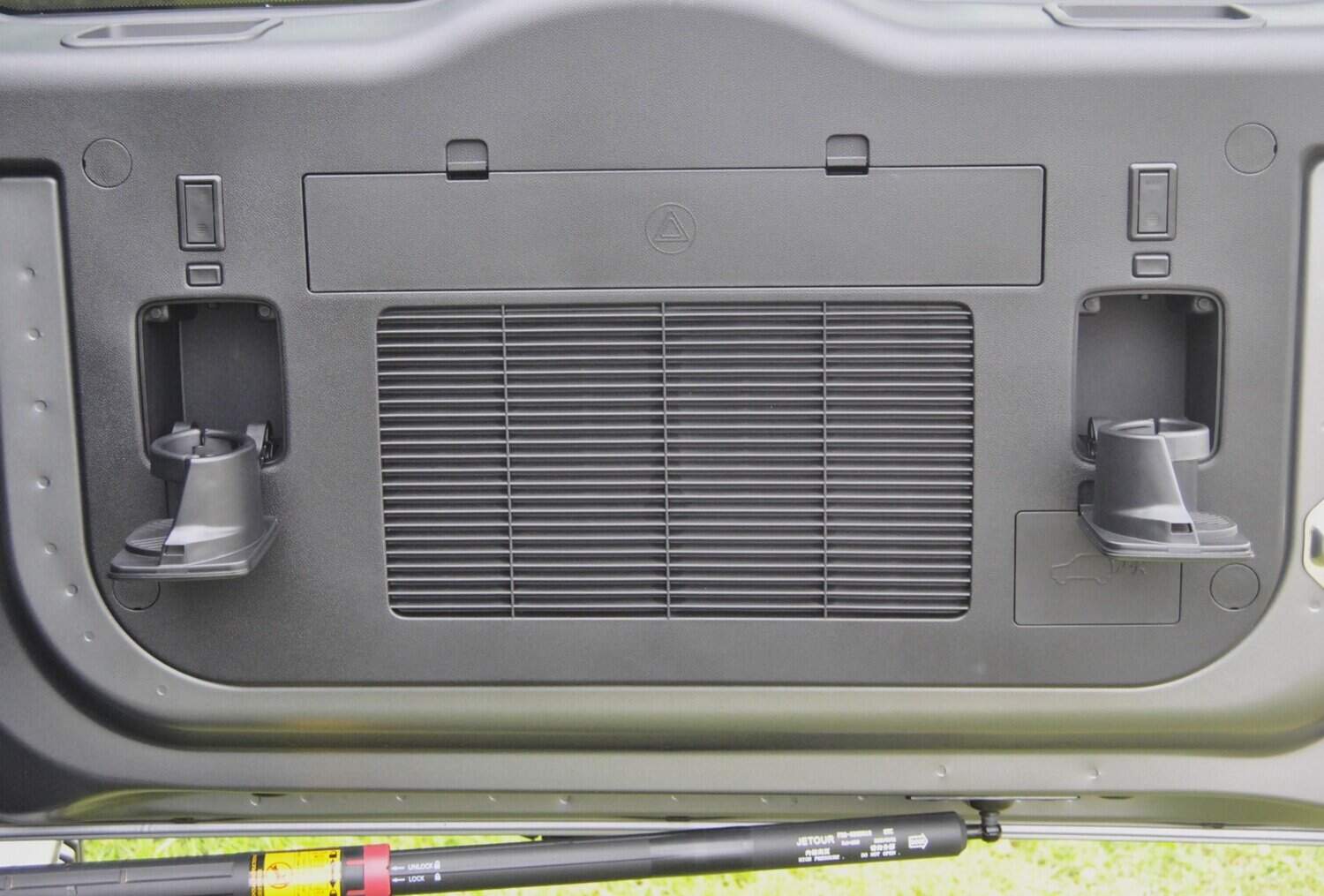
Opening the tailgate is, however, the T2’s party piece, as the lower gas strut features a locking mechanism by simply turning it to “Lock” in order to prevent the door from closing.
More nifty than innovative are a pair of cupholders integrated into the door card.
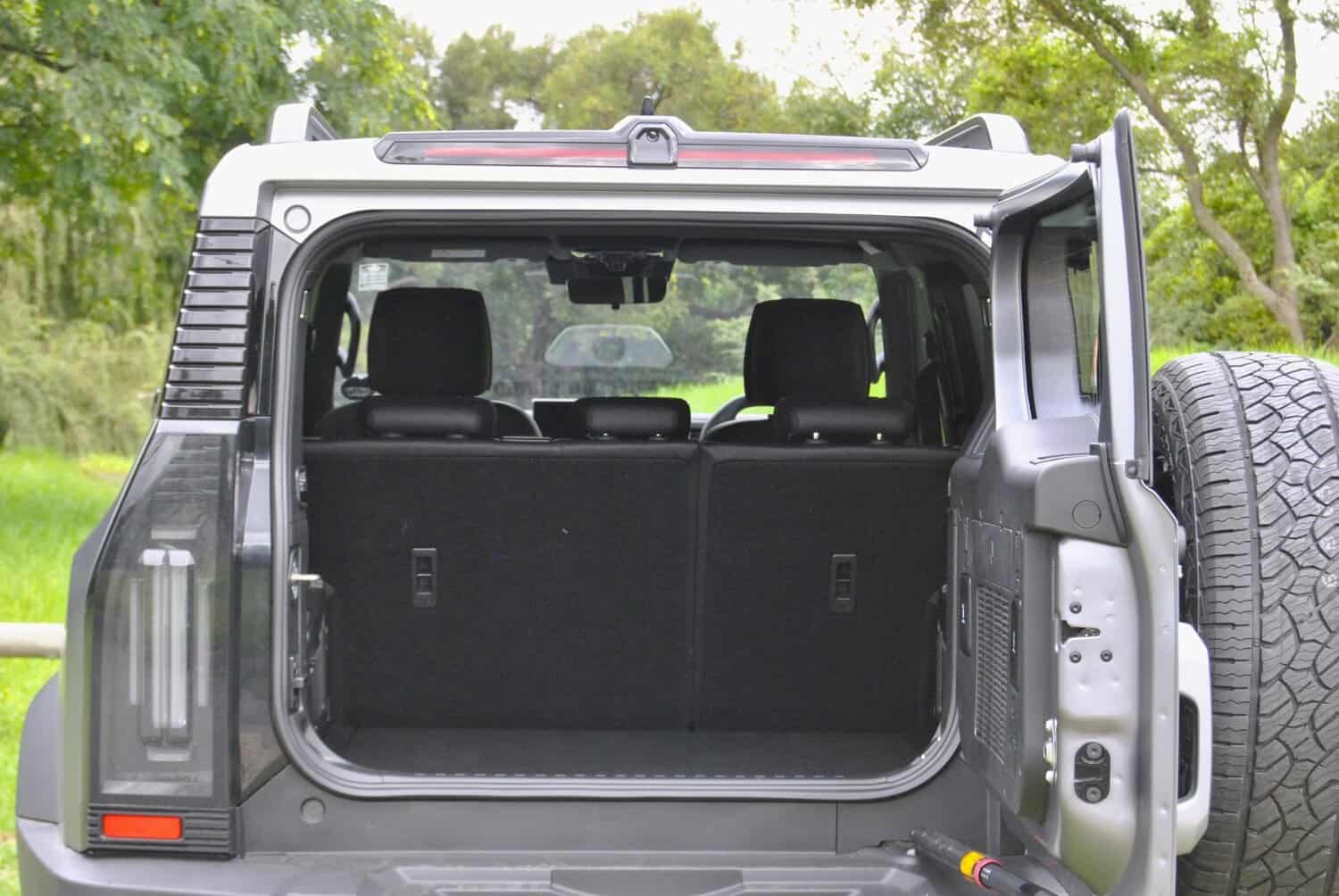
As for space, the T2’s boot has a capacity of 580-litres. Tipping the rear seats forward increases this to 1 494-litres.
However, as in the GWM Tank 300, the rear cushions need to be lifted first before the seatbacks can be folded.
Spec
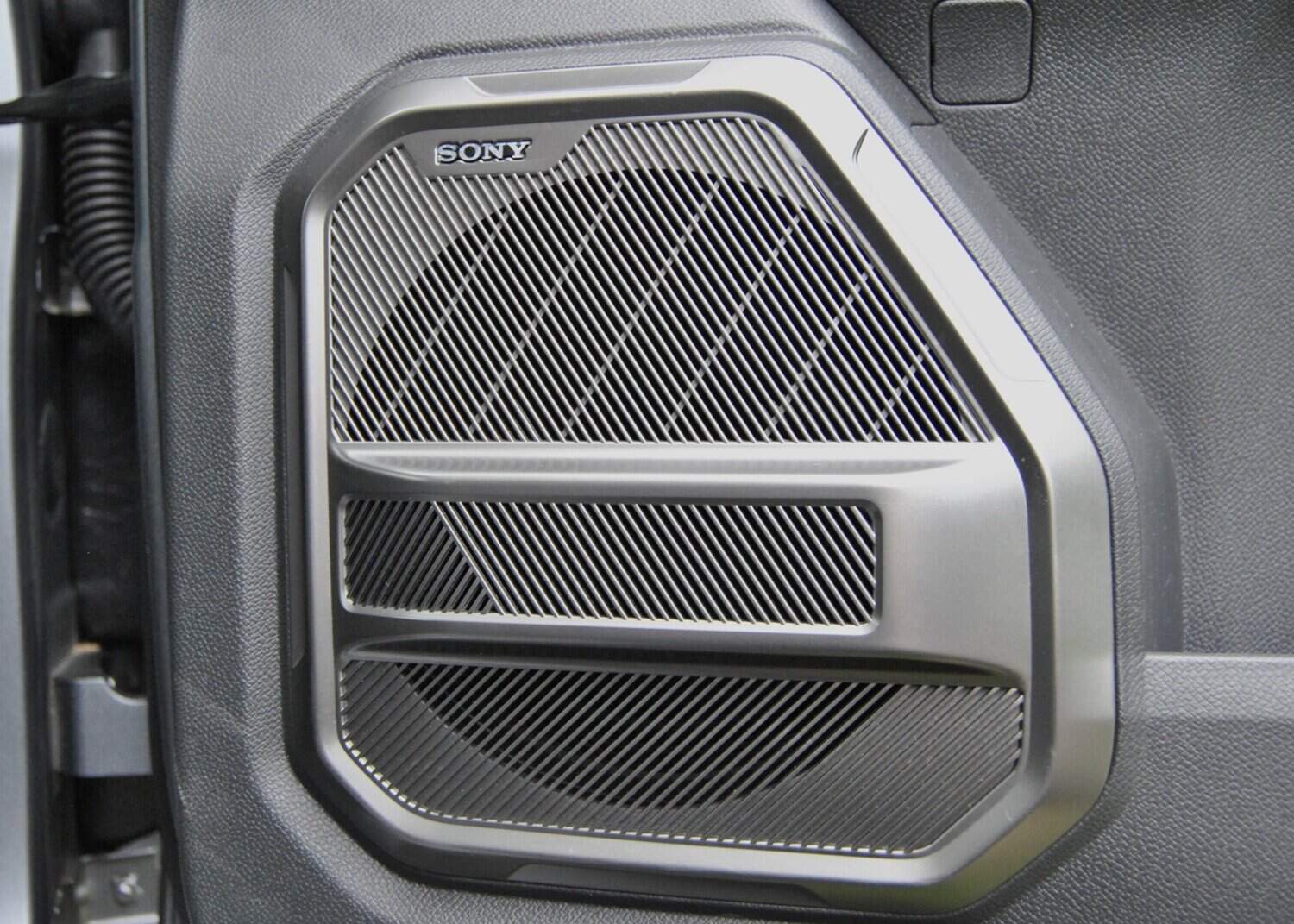
Being the flagship, the Odyssey isn’t lacking for spec, as it comes equipped with LED headlights, a wireless smartphone charger, ambient lighting, illuminated door sills and a 12-speaker sound system.
The latter in particular surprised and rates as one of the best executions of a Sony-branded system in any Chery Group product tested to date.
On the safety side, the various systems can be switched off entirely, only to re-engage when the ignition is switched back on.
As standard, the Odyssey is outfitted with:
- front and rear parking sensors;
- 540-degree camera system;
- six airbags;
- tyre pressure monitor;
- Hill Descent Control;
- Auto Hold Assist;
- Adaptive Cruise Control;
- Rollover Mitigation;
- Automatic Emergency Braking;
- Door Open Alert;
- Lane Departure Warning;
- Blind Spot Monitoring;
- Forward Collision Warning;
- Lane Keep Assist;
- Rear Cross Traffic Alert;
- Reverse Automatic Braking.
Here we go again…
Where matters start to go wrong for the T2 is on the move. Up front, it uses the same 2.0 T-GDI engine as the erstwhile Chery Tiggo 8 Pro Max and the new Tiggo 9.
Detuned, though, to 180kW/375 Nm, the engine’s willingness and strong pull are, once again, spoilt by the typical throttle calibration issues that continue to dog most non-hybrid Chinese products.
In the T2, this is particularly annoying as any input on the accelerator isn’t immediately “recognised”.
As such, it remains stationary for a good few seconds until “connection” is made.
This means that care needs to be taken, especially during a hill start, to prevent wheel spin.
The throttle’s mapping means the seven-speed dual-clutch gearbox’s smoothness is negated, despite the presence of the paddle shifters.
Once out of the low-speed “dead zone”, the setup works effortlessly as the ‘box shifts unobtrusively and the engine responds a trifle better.
“Soft” off-roader
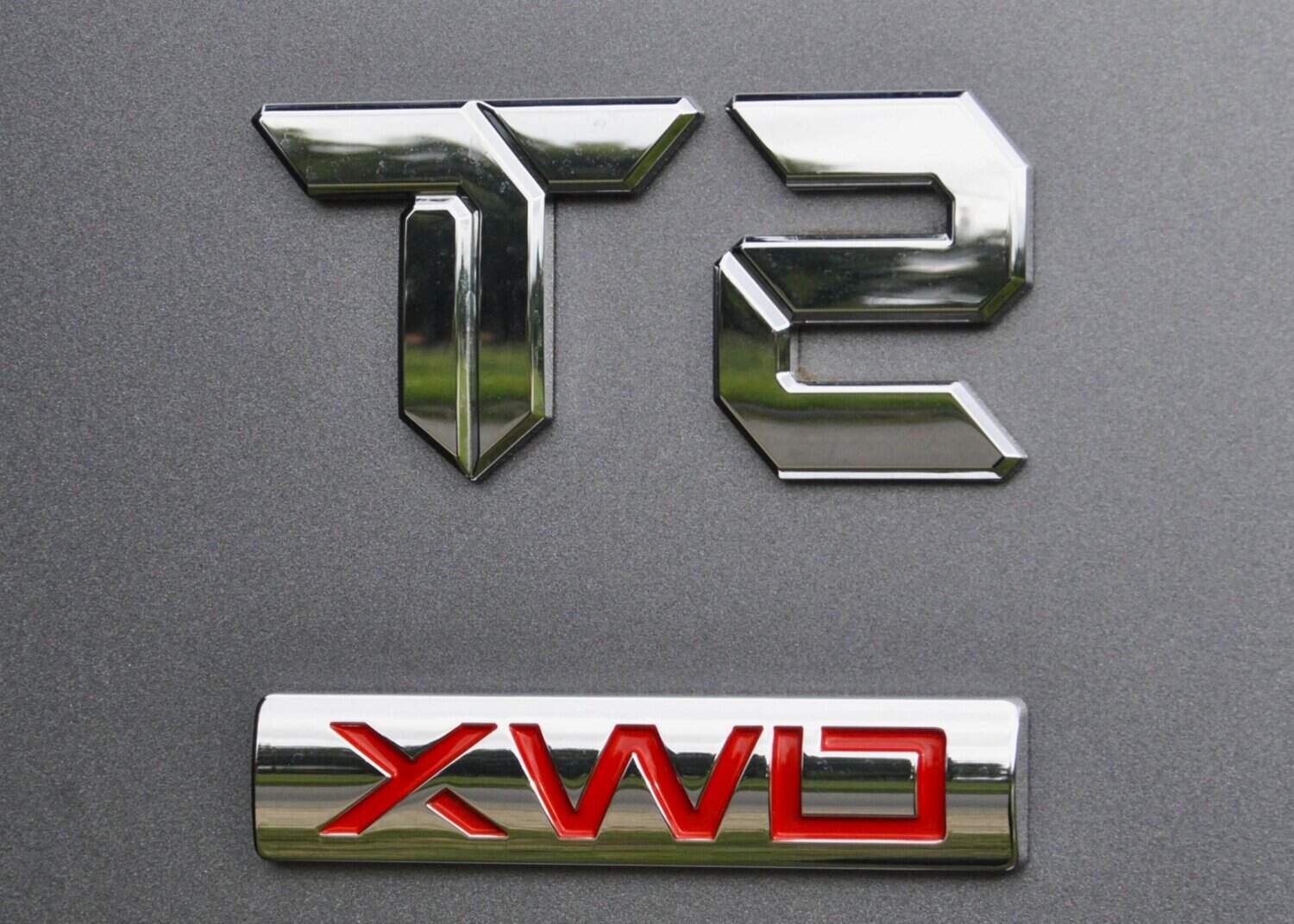
In Odyssey guise, the T2 not only comes with the mentioned locking differentials but also Jetour’s XWD all-wheel-drive system.
Completing it are six driving modes activated by the rotary dial on the centre console: Eco, Normal, Sport, Snow, Mud, Sand and Rock, the latter with a Crawl function.
As an alternative, pushing down on the dial activates the so-called X-mode in which the T2 decides which terrain is most suitable.
In addition to a claimed 220 mm of ground clearance, the 19-inch alloys are wrapped in all-terrain tyres as standard.
On the move
On the move, the wheels don’t translate to a coarse and unforgiving ride. Because of the T2’s unibody setup, the ride is comfortable and imperfections are well dampened.
Wind noise seeping into the cabin at the national limit was a different affair, as was the worrying feel when stopping on the brake pedal.
While the T2’s 1 910 kg mass is core for the segment, a simple prod felt insufficient in bringing it to a stop. Instead, more than normal input is needed to bring it to a halt.
Consumption
Left to normal mode, fuel consumption was expected to be high on the back of Jetour’s 9.3 L/100 km claim.
As it turned out, the 510 km tenure saw a best of 9.8 L/100 km showing up on the instrument cluster.
Conclusion
As much as it has stuck a sweet spot, as its sales figures show, referring to the Jetour T2 as a hardcore off-roader along the lines of the Defender can be considered cheeky.
While likely to go a fair way before struggling, it is unnecessarily hobbled by lack of a low-range ‘box’ that would have paid off even more in furthering its standing as a rival for the Toyota Land Cruiser Prado or Ford Everest.
At R679 900, its value-for-money factor is simply unbeatable. However, if sub-R1-million off-roading is what matters, forking out an additional R50 950 for the diesel-engined GWM Tank 300 Super Luxury makes more sense.
Away from this, the T2 is a hard package to beat, yet some fine-tuning, especially on the driveability front, needs to happen.
NOW READ: A guide to Jetour’s model lineup: From Dashing to T2
About the Author