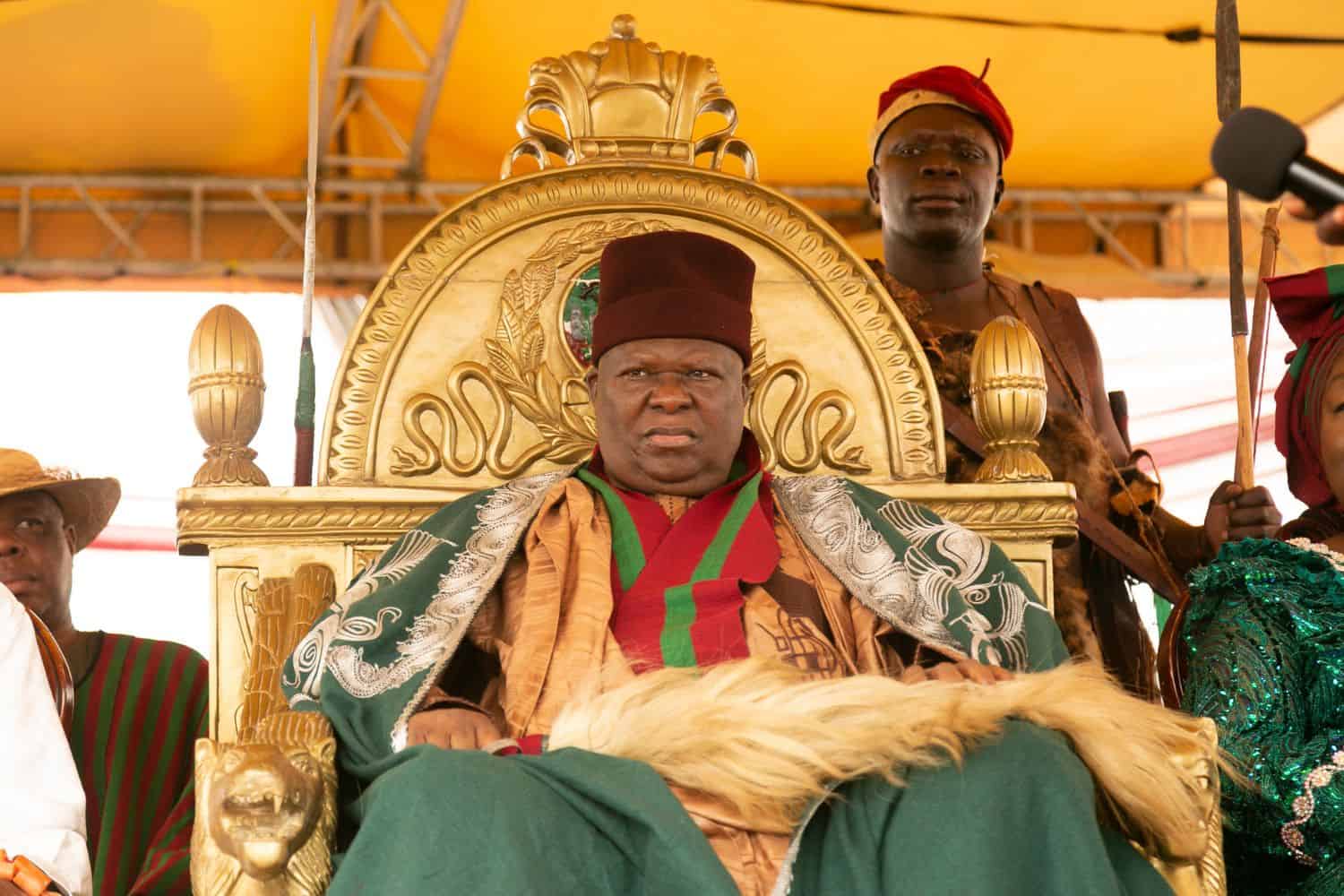
The Department of Cooperative Governance and Traditional Affairs (Cogta) has confirmed it was caught off guard by reports of an alleged Nigerian king being crowned in East London and warned that those who falsely claim royal titles could face up to three years behind bars.
Cogta told The Citizen that it learned about the alleged coronation not through official channels, but through press coverage.
The department confirmed it “learned through the media about the alleged coronation of a Nigerian King in East London,” and stated it was still gathering details, noting it was “in the process of obtaining more information on the matter.”
The incident has drawn sharp public criticism and prompted questions about whether South Africa’s legal framework is strong enough to prevent foreign or unrecognised figures from establishing parallel traditional structures on local soil.
ALSO READ: ‘It may lead to bloodshed’: Traditional expert weighs in on ‘Nigerian king’ in EC
Who counts as a legitimate king in South Africa, and how you can tell
Under the Traditional and Khoi-San Leadership Act, 2019 (Act No. 3 of 2019), the bar for legitimate royal recognition is clearly defined.
Only communities and individuals formally recognised by the president of the Republic carry legal standing as kingships and kings.
“The legal recognition of a person as a King or Queen by the President is through publication of a government gazette and issuance of a certificate of recognition recognising such a person as a King.”
Cogta was unambiguous on this point.
“Any community that is not legally recognised as a Kingship and any person who is not legally recognised in terms of these sections of the Act are not a legitimate Kingship and King, respectively.”
The department further stated that “anyone who and any community which claims to be a king or kingship, respectively, without having the government gazettes and certificate of recognition published by the President are thus not legitimate.”
The legal consequences for those who falsely claim to be traditional leaders
Beyond the question of legitimacy, the department pointed to the criminal consequences built into the legislation.
Section 7(9) of the Act is direct: anyone who is not a legally recognised traditional leader but presents themselves as one is committing a criminal offence.
Cogta confirmed that such a person “is guilty of an offence and is liable upon conviction to a fine or imprisonment not exceeding three years.”
The department stressed that the Act covers the full hierarchy of traditional leadership structures, from kingships and queens through to principal traditional leaders, senior traditional leaders, and headmen and headwomen.
Diaspora communities can practise their customs, but not outside the law
One of the central questions raised by The Citizen’s enquiry was whether South Africa has a regulatory framework for managing diaspora communities that maintain their own traditional customs.
The department’s answer was yes, but with a firm boundary.
Cogta stated that “anyone in the country may practice their own traditional customs but in compliance with the laws of the country”, specifically the Constitution and the Traditional and Khoi-San Leadership Act.
The department’s position is that this existing framework already provides the regulatory foundation needed and that no parallel or separate framework is required for diaspora communities.
“The department and government have a clear regulatory framework for managing all communities that practise their own traditional customs,” Cogta said.
The ATM’s enforcement criticism and the department’s guarded response
The African Transformation Movement (ATM) has publicly alleged that government enforcement of traditional leadership matters has been weak, a characterisation that has added political weight to the controversy.
The department, however, declined to engage with the allegation directly without further details.
Cogta said only that “more information will need to be provided to enable the department to respond meaningfully to the allegation.”
The measured response may itself fuel further debate about whether the government is doing enough to police the boundaries of recognised traditional authority, particularly as incidents like the alleged East London coronation draw national attention.
What the department wants legitimate traditional leaders to know
For South Africa’s recognised traditional leaders who may feel their authority and legitimacy are being eroded by incidents of this nature, the department offered reassurance grounded in the law.
Cogta acknowledged those concerns directly, stating that the country has the Traditional and Khoi-San Leadership Act, 2019, which specifically regulates matters relating to the sector.
“Government is committed to working with traditional leaders and communities to ensure that the legitimacy is not undermined,” the department said.
The department’s broader message is that the legal architecture exists, and that it intends to use it.
READ NEXT: Hlabisa warns bad metros could sink SA