The United Nations General Assembly is set to vote on a landmark resolution seeking to officially classify the transatlantic slave trade as “the gravest crime against humanity” — a move supporters describe as a major step toward historical justice, global remembrance, and restorative accountability.
The draft resolution, expected to be considered on Wednesday, declares that the trafficking of enslaved Africans and the racialized chattel enslavement of African people represent one of history’s most severe violations of human dignity.
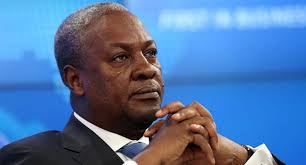
Leading advocacy for the measure, Ghana’s President, John Mahama visited UN headquarters to rally international backing for what he described as a historic moral reckoning.
Speaking before the Assembly, Mahama said the resolution offers the world an opportunity to confront the scale of suffering inflicted during more than four centuries of slavery.
“It allows us as a global community to collectively bear witness to the plight of more than 12.5 million men, women and children whose homes, communities, names, families, hopes, dreams, futures and lives were stolen over the course of 400 years,” he said.
A Call Against Historical Erasure
Mahama described the resolution as a safeguard against historical amnesia, warning against efforts to erase or dilute the truth of slavery and its enduring consequences.
Without naming specific governments directly, he criticized recent attempts in parts of the United States to restrict teaching materials on slavery, segregation, and racism, saying such moves threaten honest historical understanding.
Legacy of Slavery Still Visible Today
Beyond historical recognition, the draft text stresses that slavery’s impact remains visible through persistent racial discrimination, systemic inequality, and forms of neo-colonial dependence that continue to shape global realities.
Amma Adomaa Twum-Amoah, the African Union’s Commissioner for Health, Humanitarian Affairs and Development, said the language of the resolution is crucial because it removes lingering ambiguity from the historical record.
“What was done to Africans was not a tragic accident of history, but the result of deliberate policies whose legacies still structure today’s inequalities. Justice begins with calling things by their proper names.”
Reparations and Restorative Justice in Focus
The resolution also urges countries historically involved in the slave trade to engage in restorative justice efforts, reopening global conversations around reparations, formal apologies, and institutional reform.
Samuel Okudzeto Ablakwa said nations that played central roles in the slave trade — including European powers and the United States — must formally acknowledge their responsibility.
“The perpetrators of the transatlantic slave trade are known. We expect formal apologies to Africa and to people of African descent.”
He added that restorative measures could include the return of looted African cultural artifacts, stronger anti-racism reforms, and forms of compensation aimed at addressing enduring historical damage.
Debate Over Language
Some member states have raised concerns that describing slavery as the “gravest” crime against humanity could imply a hierarchy of suffering among historical atrocities.
Responding to the criticism, Ablakwa said the resolution does not seek to rank one people’s pain above another’s.
“We are not ranking suffering. We are saying that if you examine human history, few atrocities were as systemic, prolonged, and globally consequential as the transatlantic slave trade.”
He emphasized that the intent is recognition, not comparison, adding that the centuries-long scale and lasting consequences of slavery demand clear moral naming.
The vote is being closely watched as part of a broader international push for historical accountability and renewed debate over reparations for slavery and colonial exploitation.