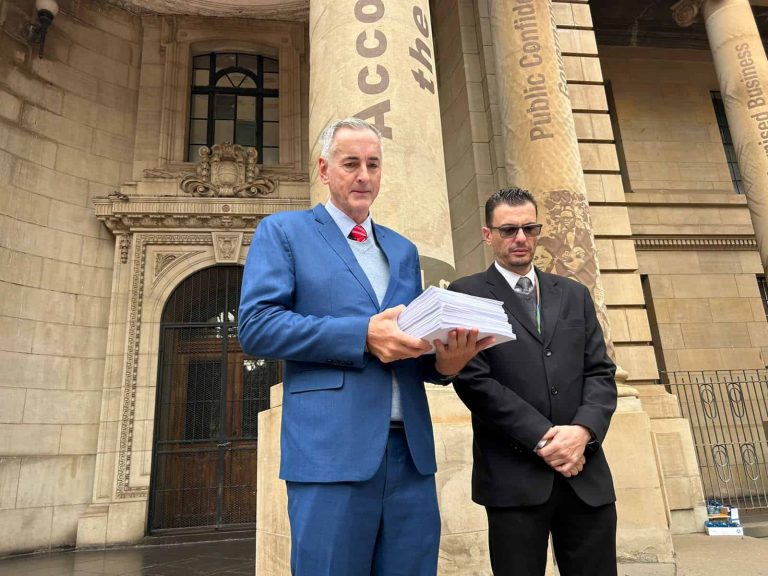
Kristalina Georgieva says prolonged rise in energy prices may slow global growth and intensify pressure on emerging market currencies…..
The International Monetary Fund (IMF) has cautioned that a sustained increase in global oil prices could significantly push up inflation worldwide, as geopolitical tensions between the United States and Iran continue to unsettle energy markets.
Speaking in an interview with Bloomberg on Saturday, IMF Managing Director Kristalina Georgieva warned that a sharp rise in energy costs could ripple across the global economy, driving inflation higher and slowing economic growth.
Her comments come against the backdrop of the escalating conflict involving the United States and Iran, which has heightened fears of supply disruptions in the Middle East, a region responsible for roughly one-third of global oil production.
Rising Oil Prices Could Fuel Inflation
According to Georgieva, even a moderate increase in energy prices could have noticeable consequences for the global economy.
“What I can tell you from prior experience is that if we are to have an increase of energy prices by 10 percent and that stays for some time, stays for a year, inflation would go up by 40 basis points, growth will slow down somewhere between 0.1 percent and 0.2 percent,” she said.
She noted that policymakers across the world would need to factor in these risks when shaping economic policies.
“In other words, it is an impact that has to be taken into account. So policymakers have to brace for it,” Georgieva added.
The IMF chief also warned that rising energy prices combined with geopolitical uncertainty could trigger currency volatility, particularly across emerging markets.
She explained that several emerging market currencies are already facing depreciation pressures, a development that could complicate debt repayment for countries with large dollar-denominated obligations.
“We see emerging market currencies depreciating. For those of them that borrowed in dollars, it makes the service of that more expensive,” she said.
However, Georgieva noted that weaker currencies could provide a limited benefit for export-driven economies, as cheaper exchange rates can improve the competitiveness of their goods in international markets.
Amid the uncertain global outlook, Georgieva urged governments to manage public finances carefully and avoid policies that could worsen economic vulnerabilities.
“For the fiscal authorities in countries, I just want to repeat what we have been saying time and again: be very careful how you deploy your bundles,” she said.
She emphasised the need for governments to rebuild fiscal buffers during stable periods, enabling them to respond effectively when economic shocks arise.
The IMF’s warning comes as global oil markets experience a sharp rally driven by fears that the conflict could disrupt energy exports from the Gulf region.
Oil traders are particularly concerned about the security of the Strait of Hormuz, a crucial shipping route through which around one-fifth of the world’s oil supply passes each day.
Benchmark Brent crude surged above $92 per barrel on Friday, extending gains to more than 27 percent this week as markets reacted to growing geopolitical risks.
Analysts say the sudden price jump reflects the increasing “geopolitical risk premium” that traders are adding to oil prices amid fears of prolonged tensions or potential supply disruptions.
Some market participants warn that the global energy market may still be underestimating the risks if the situation worsens.
They caution that a prolonged disruption to shipping through the Strait of Hormuz could push oil prices above $100 per barrel within days.
Energy markets are already showing signs of strain, with prices for diesel and jet fuel climbing sharply as refinery operations in parts of the Middle East and Asia face disruptions.
Meanwhile, Iran has reportedly launched missile strikes targeting energy infrastructure in the United Arab Emirates, Saudi Arabia, and Qatar, further tightening concerns about regional supply.
Major financial institutions such as JPMorgan Chase and Goldman Sachs have warned that if the Strait of Hormuz remains blocked for several weeks, oil prices could climb beyond $100 and potentially reach $150 per barrel before the end of summer.
Adding to the concern, energy analyst Bob McNally, president of Rapidan Energy Group, said the market is still trying to assess how long a potential closure of the strategic waterway might last.
For now, the combination of geopolitical tensions, volatile oil markets, and rising inflation risks is creating a challenging outlook for the global economy, one that policymakers and investors alike are watching closely.