Agency says one figure reflects economic reality, while the other captures statistical distortions from methodology changes
Nigeria’s National Bureau of Statistics (NBS) has announced plans to publish two separate inflation figures for December, following a major overhaul of its Consumer Price Index (CPI) methodology that caused the headline inflation rate to surge dramatically.
According to a Bloomberg report citing sources within the bureau, the revised methodology is expected to push December inflation to an “artificially inflated” 31.2 percent, a sharp jump from 14.5 percent recorded in November.
The move comes as Nigeria’s inflation data remain a critical input for the Central Bank of Nigeria (CBN), which is in the process of transitioning toward an inflation-targeting monetary policy framework.
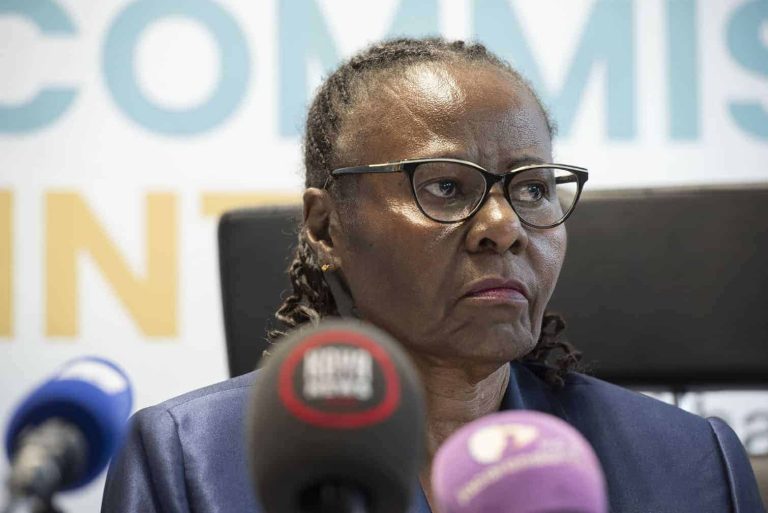
Speaking on the development, Statistician-General of the Federation, Adeyemi Adeniran, said the NBS decided to take the unusual step of publishing two figures in the interest of transparency.
According to him, one inflation figure will reflect underlying economic fundamentals, while the second will capture the spike created by arithmetic and base-year effects arising from the CPI rebasing exercise.
“This spike does not reflect the economic fundamentals,” Adeniran explained. “It is largely driven by arithmetic and base effects. These things are not unexpected or unusual in statistical computations.”
He added that more frequent and timely rebasing would help prevent similar distortions in the future.
The inflation data are scheduled for release on January 15.
Meanwhile, Ayo Andrew, Head of Price Statistics at the NBS, disclosed that the agency is also considering revisions to its monthly inflation figures to correct the distortions linked to the new methodology.
Andrew explained that the problem stemmed largely from how the new base period was calculated, noting that the CPI rebasing relied on the average of all months in 2024, rather than a single reference month as done in previous exercises.
In 2024, the NBS rebased Nigeria’s CPI for the first time in 16 years, shifting the reference year to 2024. The exercise also involved reweighting several categories and expanding the inflation basket to 934 items from 740, a change that significantly affected the December calculation.
According to Andrew, the long delay in updating the CPI basket, combined with the large number of newly added items, amplified the base effects that distorted the inflation reading.
Despite the statistical spike, the Central Bank of Nigeria has already factored the rebasing and related computational issues into its three-year inflation outlook.
The apex bank is still targeting a moderation in inflation to around 13 percent by next year, even as current price pressures persist and data adjustments create short-term volatility.
Adeniran reiterated that the December spike should not be interpreted as a sudden deterioration in economic conditions, stressing that it reflects methodological adjustments rather than real-world price movements.