US President Donald Trump has disclosed that he was secretly moved from the presidential aircraft to a smaller military jet after American security officials detected a potential threat linked to Iran following the NATO summit in Ankara, Turkey.
The revelation has shed new light on an extraordinary security operation that unfolded on July 8, when Trump appeared to board the presidential aircraft in full view of cameras before being quietly transferred to another plane and flown to the United Kingdom.
Trump said the decision to change aircraft was made by the US Secret Service and military officials. He indicated that he was not given extensive details about the threat, noting that security concerns are a routine part of his presidency.
According to reports by Reuters and other major US media organisations, the operation was triggered by intelligence indicating a credible threat against the president.
CBS News previously reported that US authorities had detected a possible Iranian or Iranian-linked missile threat involving the aircraft Trump was expected to use.
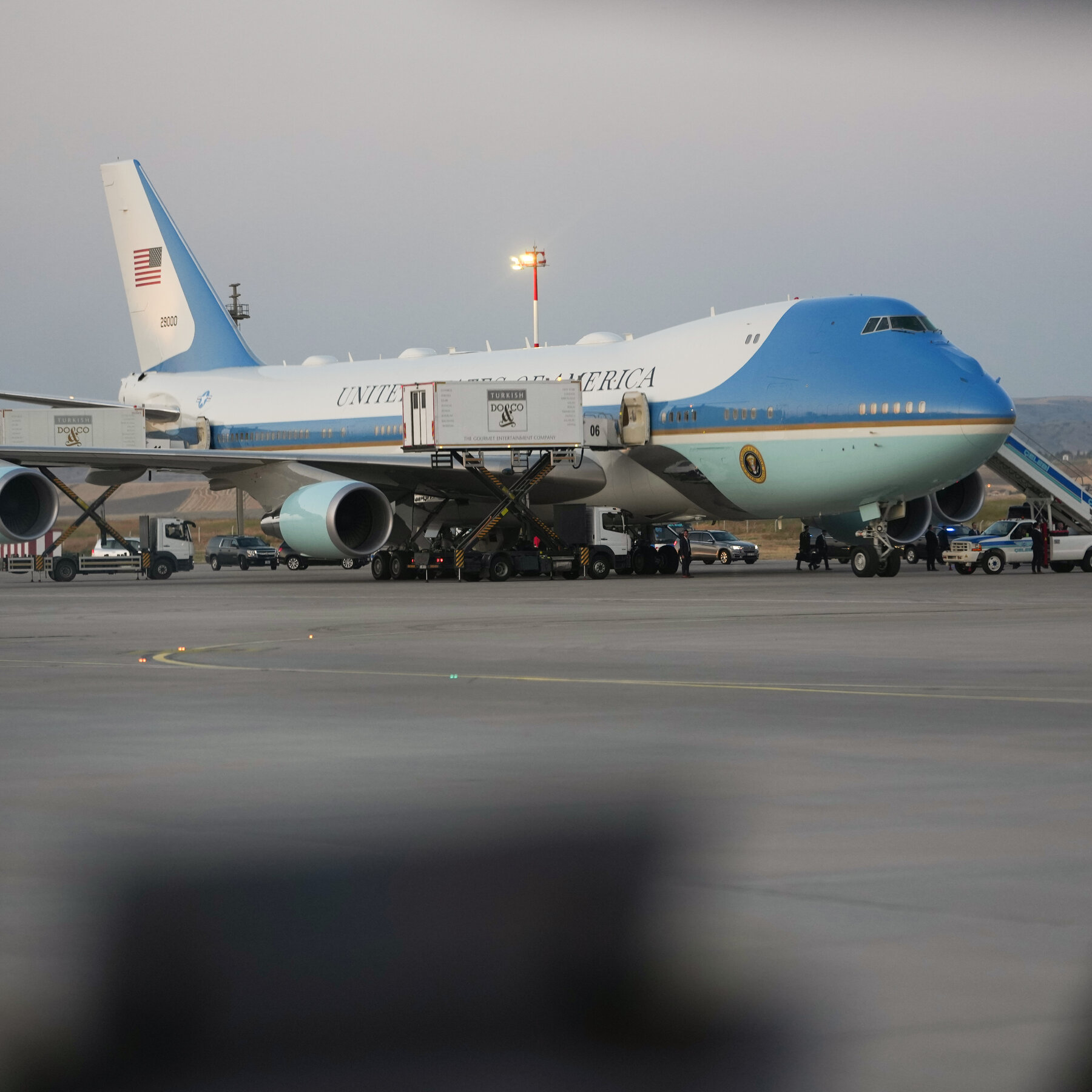
The covert transfer reportedly took place after Trump had boarded the older Air Force One at Ankara airport. He was subsequently moved off the aircraft using a catering truck and taken to a C-32A military jet, a modified Boeing 757 typically used for high-ranking government officials.
The manoeuvre was designed to conceal Trump’s actual departure from Ankara and preserve uncertainty over which aircraft was carrying the president.
The unusual operation came amid heightened tensions between Washington and Tehran. Trump had attended the NATO summit in Ankara after travelling there aboard a newly refurbished Boeing 747-8 donated by Qatar. However, rather than return to Britain on the Qatari aircraft, he initially boarded the older Air Force One, which was believed to have stronger defensive capabilities.
Reports indicate that the smaller C-32A, operating under the call sign “Reach 18,” was used for Trump’s actual journey, while the aircraft carrying journalists and other members of the presidential entourage continued operating under the Air Force One call sign.
The deception was so carefully managed that journalists travelling with the presidential delegation were reportedly unaware that Trump had left the aircraft. Some White House personnel and senior officials also remained aboard the original plane.
Reporters were instructed to keep their window shades closed during the journey, an unusual measure that later attracted attention.
The aircraft subsequently travelled to the United Kingdom, where Trump rejoined the presidential entourage before continuing his journey aboard the Qatari-donated aircraft.
The episode has raised fresh questions about presidential security, the capabilities of the new Qatari aircraft and the safety of journalists who remained aboard the plane being used as a decoy.
CBS News had earlier reported that the Secret Service advised Trump to use the older Air Force One because it possessed defensive systems designed to protect the president against potential threats, while questions remained over whether the newer aircraft had been equipped with all of the same capabilities.
Reuters reported on Wednesday that Trump now believes the aircraft he ultimately travelled on may actually have been more vulnerable because an adversary would have been more likely to target the plane believed to be carrying the president.
The secret transfer only became public weeks after the incident, following reports that detailed how the operation was carried out. Reuters reported that the disclosure prompted concerns about whether journalists and other personnel left aboard the original aircraft had been exposed to unnecessary risk.
The incident also highlights the extraordinary security measures surrounding the US presidency at a time of heightened tensions with Iran.
Trump had publicly acknowledged during the NATO summit that he believed he was a potential target, underscoring the security challenges confronting his administration.
While the White House has maintained that the Qatari-donated aircraft has been equipped with high-level security measures, the decision to move Trump to another aircraft illustrates the extent to which presidential travel plans can be altered when intelligence agencies identify a potential threat.
The episode is likely to fuel further debate over the balance between presidential secrecy and the safety of journalists and staff travelling as part of the president’s official entourage.