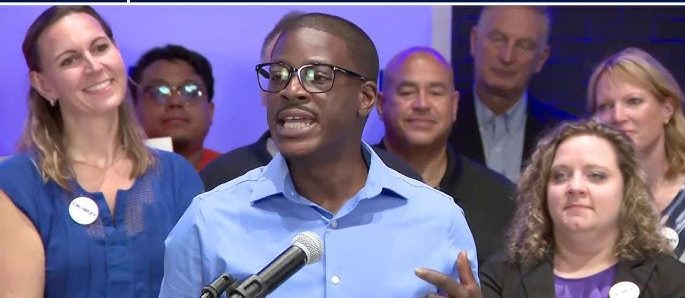
Moderate Democrat David Crowley has narrowly defeated democratic socialist Francesca Hong in Wisconsin’s Democratic primary for governor, delivering a closely watched victory for the party’s establishment in a key presidential battleground state.
Crowley, the Milwaukee County executive, emerged as the Democratic nominee after edging out Hong by less than a percentage point, according to projections from major US media outlets. His victory ends Hong’s bid to become Wisconsin’s first democratic socialist governor and sets up a November showdown with Republican nominee Tom Tiffany, a US representative.
The result has attracted national attention because of what it could signal about the direction of the Democratic Party in competitive states.
Hong’s strong performance demonstrated the appeal of the party’s progressive wing, but Crowley’s victory ultimately underscored the strength of a more moderate approach in a state where Democrats will be seeking to retain the governorship.
Crowley, who is seeking to become Wisconsin’s first Black governor, now faces a Republican opponent in Tiffany in what is expected to be a closely contested November election.
Trump Endorsement Takes a Hit in Minnesota
The Wisconsin contest was not the only closely watched primary in the Upper Midwest.
In Minnesota, Republican House Speaker Lisa Demuth defeated Mike Lindell, the founder of MyPillow and a prominent ally of President Donald Trump, in the Republican primary for governor.
Lindell had received Trump’s endorsement, making his defeat a notable setback for the president’s influence in a Republican primary. Demuth will now represent the GOP in the November election against Democratic nominee Amy Klobuchar, according to election projections.
Lindell has remained one of Trump’s most outspoken supporters and has promoted false claims that widespread fraud caused Trump to lose the 2020 presidential election. His defeat despite Trump’s backing has therefore intensified questions about the limits of presidential endorsements, even among Republican voters.
Broader Political Implications
The results from Wisconsin and Minnesota offer contrasting signals about the state of American politics ahead of the 2026 general election.
In Wisconsin, Democratic voters opted for a more moderate candidate over a progressive challenger, highlighting the continuing debate within the party over how far left its candidates should move in competitive states.
In Minnesota, meanwhile, Republican voters rejected a Trump-backed candidate in favour of a more established state-level politician, suggesting that Trump’s endorsement may not always be decisive in primary contests.
The outcomes do not necessarily signal a broad rejection of either progressive politics or Trump’s influence. Rather, they demonstrate that local political dynamics, candidate profiles and voters’ assessments of electability can still play a decisive role in primary elections.
With both Wisconsin and Minnesota preparing for competitive November contests, the latest results are likely to fuel a broader national debate over the direction of both major US political parties—and the extent to which national political figures can shape voters’ choices at the state level.