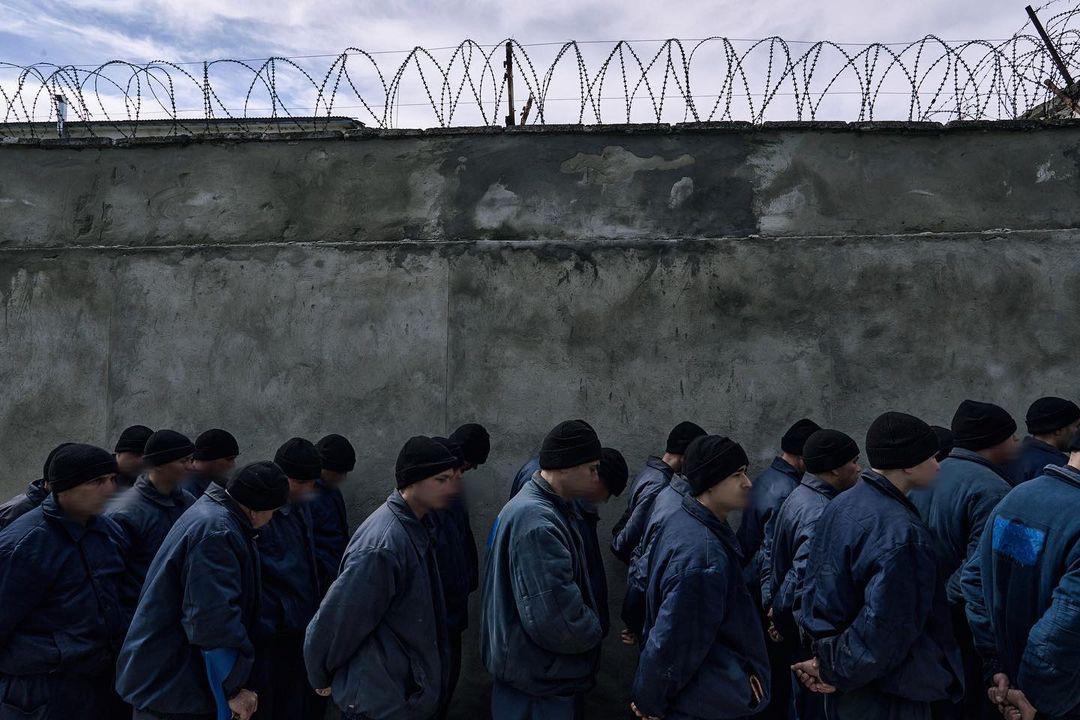
Former Ukrainian detainees and officials have accused Russia of widespread and systematic torture of prisoners of war and civilian detainees, with thousands of Ukrainians still held in captivity.
The allegations were made at an informal United Nations Security Council meeting on Monday, where survivors described beatings, electric shocks, sexual violence, starvation and prolonged detention incommunicado.
U.N. Assistant Secretary-General for Human Rights Claudia Fuentes Julio said U.N. monitoring had found that “widespread and systematic torture and ill-treatment” of Ukrainian prisoners of war and civilian detainees by Russian authorities was continuing, including sexual violence.
Since Russia’s full-scale invasion of Ukraine in February 2022, the U.N. Office of the High Commissioner for Human Rights has documented the execution of 129 Ukrainian prisoners of war at the beginning of their captivity and the deaths of 48 others in custody, Fuentes Julio said.
She added that more than 95% of Ukrainian prisoners of war interviewed by the U.N. reported experiencing torture or ill-treatment.
More than half also reported sexual violence, including rape, gang rape, beatings while naked, attacks targeting the genitals and electric shocks to the genitals and nipples.
The U.N. official said monitors had received consistent accounts of severe beatings with batons, heavy belts and wooden objects, as well as electric shocks, dog attacks, mock executions and other forms of torture.
Khuan Alberto Levya Garsiya, a Ukrainian soldier who spent 1,183 days in Russian captivity, told reporters after the meeting that he had endured repeated physical and psychological abuse.
“Yes … I was tortured,” he said, describing daily beatings, electrocution, forced physical exercises in freezing temperatures and sexual abuse.
Garsiya said two of his friends were beaten to death at detention centres in Ukraine’s Donetsk region. He also described overcrowded barracks with inadequate conditions, saying almost all prisoners suffered from dysentery and many were starving.
He said guards singled him out because of his Latino name, accusing him of being a mercenary and an American spy.
Crimean Tatar activist Leniie Umerova, who was released in a prisoner exchange in 2024, said she was detained while attempting to visit her seriously ill father in Crimea.
Umerova said she was transferred through seven detention facilities in what she described as a “carousel of repression”, accusing Russian authorities of using torture against Ukrainians in captivity.
Oleg Gushin, of Ukraine’s Coordination Headquarters for the Treatment of Prisoners of War, said Kyiv had identified more than 300 detention sites in Russia and Russian-occupied Ukrainian territory.
He said more than 9,000 Ukrainians had been returned through prisoner exchanges, but thousands remained in Russian captivity.
Ukraine’s Chargé d’Affaires Volodymyr Pavlichenko called for increased international pressure and accountability over Russia’s treatment of prisoners.
Russia rejected the allegations at the U.N. meeting.
Maria Zabolotskaya, Russia’s Deputy U.N. Representative, dismissed the claims as a “disinformation campaign” and accused Ukraine of subjecting Russian prisoners to torture, degradation and physical and psychological abuse.
Fuentes Julio acknowledged that the U.N. had also documented torture and ill-treatment of Russian and third-country nationals held as prisoners of war by Ukraine, but said the abuses occurred “on a fundamentally different scale”.
According to the U.N. official, about half of the Russian and third-country prisoners interviewed reported abuse during the initial stages of their captivity.
Boluwatife Enome