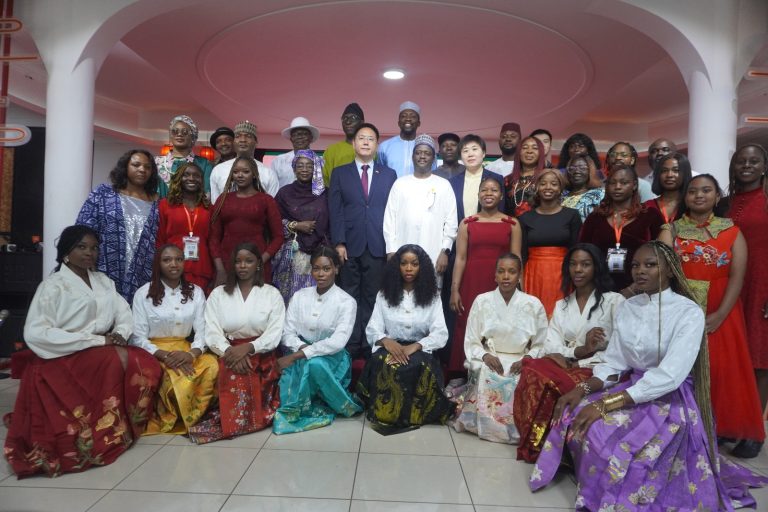
Pate says Nigeria’s youthful population can become a major economic advantage as government launches high-level inter-ministerial platform on family planning and human capital development……
The Federal Government has announced plans to begin the local production of family planning commodities, in a move it says will reduce dependence on imports, create jobs and strengthen Nigeria’s ability to turn its growing population into an economic advantage.
The announcement was made by the Coordinating Minister of Health and Social Welfare, Professor Muhammad Ali Pate, during the inauguration of the Nigeria FP2030 High-Level Inter-Ministerial Platform on Family Planning, Health, Human Capital and National Development in Abuja.
The government said the new platform would bring several ministries and agencies together to coordinate policies and investments around family planning, healthcare and human capital development.
Pate described the initiative as an important development for Nigeria and the wider sub-Saharan African region, arguing that producing family planning commodities within the country would keep more economic value at home while creating employment opportunities, particularly for young Nigerians.
According to him, Nigeria’s population should not simply be viewed in terms of its size but as a resource that can drive productivity and national prosperity if the right investments are made.
Pate said Nigeria currently has an estimated population of about 230 million people, with a predominantly youthful demographic and millions more people being added every year.
He said projections indicate that the population could rise to between 450 million and 500 million by 2050, making investment in health, education, skills and economic opportunities increasingly important.
The minister warned that the country’s rapidly expanding population could become either a major asset or a significant burden depending on how effectively government addresses the needs of its citizens.
He said the objective should be to ensure that Nigerians are healthy, educated, skilled and economically productive.
The new inter-ministerial platform is expected to adopt a life-course approach, addressing the needs of Nigerians from adolescence through adulthood, parenthood and old age.
Pate said the Federal Ministry of Health and Social Welfare would focus on strengthening the health system, expanding access to essential services and improving health and social welfare outcomes.
The Ministry of Budget and Economic Planning, he added, would play a central role in development planning, human capital investment and resource allocation, while the Ministry of Finance would help create the fiscal conditions needed to turn investments in health and social sectors into improved productivity and economic growth.
The ministries responsible for Women Affairs, Education and Youth Development will also have key roles to play.
Pate said issues such as reproductive health, girls’ education, youth empowerment and access to reliable health information were closely connected and could not be tackled effectively in isolation.
The National Population Commission was identified as another key partner, particularly in population planning, monitoring fertility trends and demographic projections, as well as helping Nigeria take advantage of its potential demographic dividend.
The Coordinating Minister also stressed the importance of strengthening primary healthcare services, particularly maternal, newborn and child health.
He noted that reducing child mortality and improving access to healthcare could influence families’ decisions about the number of children they want and their ability to plan effectively.
Pate also called for a stronger role for the National Orientation Agency in public education, community engagement and efforts to combat misinformation that could undermine health interventions.
He said the success of the initiative would require cooperation not only among federal ministries but also across state and local governments, civil society, the private sector and development partners.
“The platform must move beyond meetings and discussions to deliver concrete and measurable actions,” Pate said, stressing the need for improved financing and implementation at the subnational level.
He pointed to the National Health Sector Renewal Investment Initiative as an existing framework through which the Federal Government works with states, local governments and development partners.
According to him, the new platform will build on that framework by strengthening coordination around family planning and broader human capital priorities.
Speaking at the inauguration, the Managing Director of the FP2030 West and Central Africa Office, Alain Damiba, praised the Federal Government for establishing the platform.
Damiba said family planning and healthcare should not be treated as issues belonging exclusively to the health sector because their impact extends to education, employment, productivity and the wellbeing of families.
He argued that empowering women and young people to make informed and voluntary decisions about their reproductive health could produce benefits far beyond the health sector.
“Health, including family planning, is a smart investment in human capital and Nigeria’s future,” he said.
Damiba said FP2030 sees the platform as an opportunity for government ministries to establish common targets, strengthen accountability, monitor progress and collectively address challenges affecting Nigeria’s human capital.
The Permanent Secretary of the Federal Ministry of Health and Social Welfare, Daju Kachollom S. mni, also called for stronger cooperation among government institutions.
Represented by the Director of Family Health in the ministry, Dr Ahmad Muhammad Ozi, Kachollom said improving the health and wellbeing of Nigerians would require coordinated policies and investments spanning population, education, finance, women affairs, economic planning and social protection.
She said the platform could help deepen understanding of the links between family planning, maternal and newborn health, healthcare system strengthening and sustainable national development.
Kachollom urged members to focus on practical measures that could produce measurable results rather than allowing the platform to become another forum for discussions.
Stakeholders from the Ministries of Youth Development, Women Affairs and Social Development, Finance, and Budget and Economic Planning, alongside the National Population Commission, National Primary Health Care Development Agency and civil society organisations, have pledged their support for the initiative.
The Federal Government is now expected to translate the new framework into concrete programmes, including efforts to expand financing, strengthen implementation at the state level and establish the foundation for local production of family planning commodities.