Screenshot
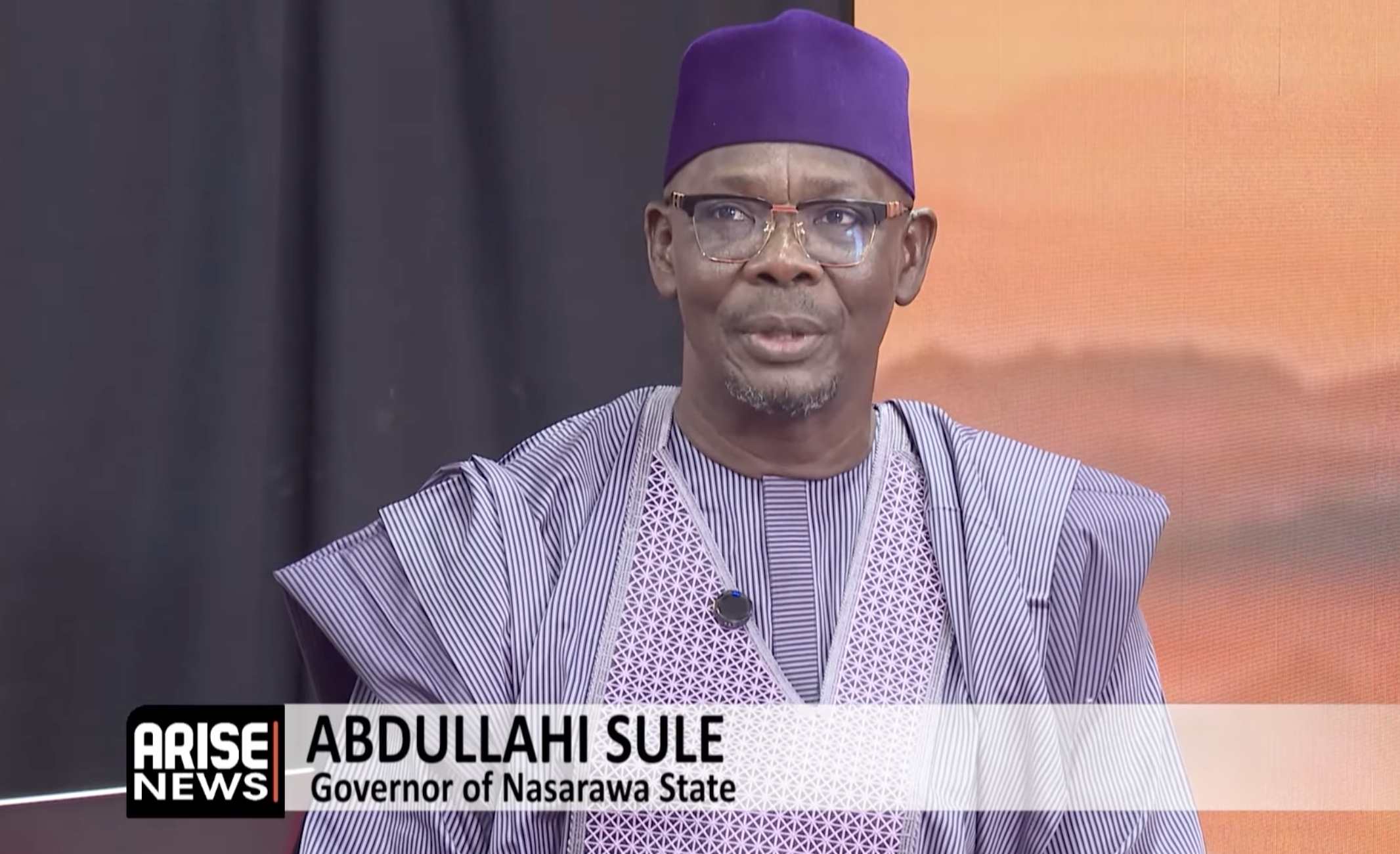
The governor of Nasarawa State, Abdullahi Sule, has highlighted the state’s business-friendly environment as a major attraction for foreign investors, saying it offers ease of doing business, abundant raw materials, peace, skilled labour and proximity to Abuja, creating the conditions for faster returns on investment.
Speaking in an exclusive interview with ARISE NEWS, Governor Sule’s remarks come after his July 2026 visit to China, where he attended the commissioning of the Jinlide Qiangyu New Energy production facility in Nanchang City, Jiangxi Province—an advanced lithium processing and finishing plant. During the visit, Nasarawa State also signed a strategic Memorandum of Understanding (MoU) with Jinglide Mining to advance local lithium resource development and industrial value addition.
“Investors are looking for a return on investment. I assure them that Nasarawa State has all the ease of doing business for them to be able to get their return on investment faster.
Number two: we explain to them that Nasarawa State has a government whose thinking and support are purely for business. That is why you continue to see all these people coming in. They want raw materials. We tell them that Nasarawa State has an abundance of these raw materials. Nasarawa State has a workforce at a moderate cost that can deliver because we have all these institutions in place.
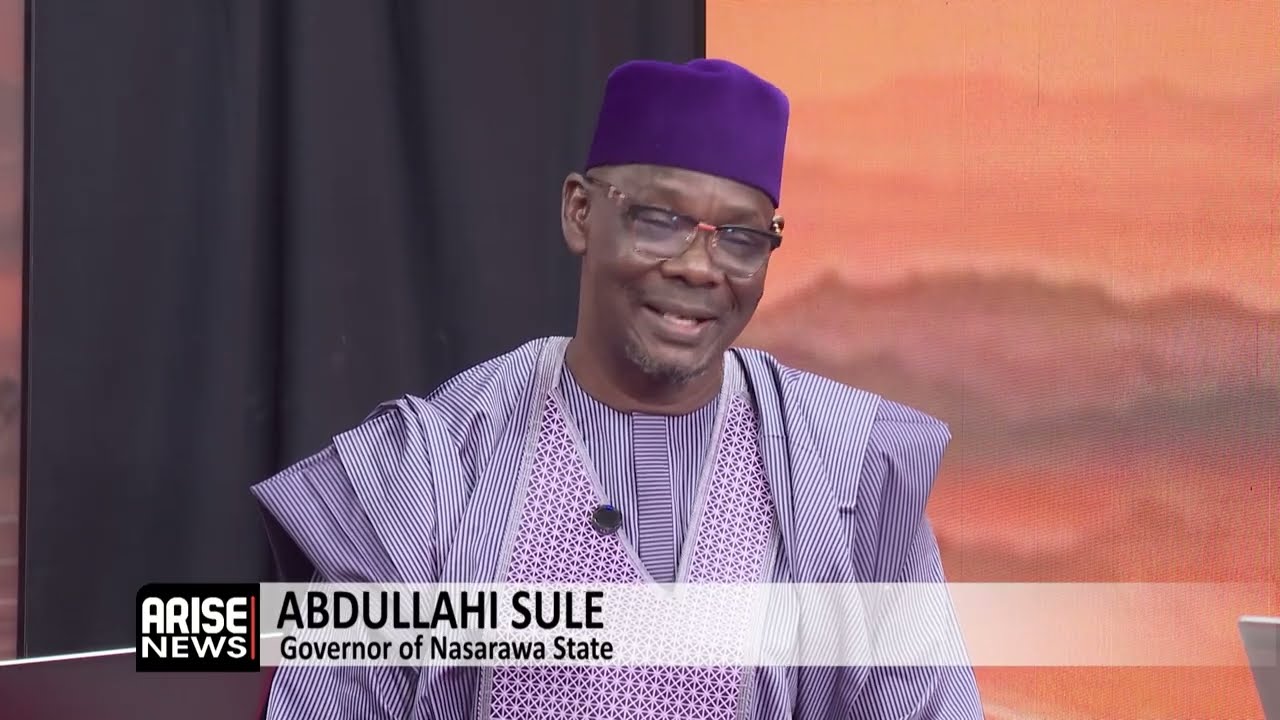
“Nasarawa State is closer to the market; we are just next door to Abuja, located in the central part of the country. Furthermore, Nasarawa State has peace. We are a very peaceful state, and that is part of the reason why we continue to see what we are seeing,” he highlighted.
Speaking further on his recent visit to China, Governor Sule said the trip was aimed at advancing Nasarawa State’s lithium value chain beyond the production of lithium concentrate.
He explained that the state signed a strategic Memorandum of Understanding (MoU) with Jinglide Mining to expand local lithium processing, create more economic value and jobs, and enable the company to operate the state’s lithium licence under a partnership designed to deliver direct benefits to the government and the people of Nasarawa.
“Regarding peer review, I did not go alone. I traveled with the Governor of Zamfara State, who also happens to have the same investors building lithium processing facilities. They are now preparing to build another $200 million lithium processing plant for him in Zamfara State. Traveling together made it easier for us to learn from one another.
“Second, regarding our objectives in China: in 2020, during COVID, Nasarawa State issued an executive order mandating that anyone mining in the state must also process there. However, the initial lithium processing plants we established only handle first-stage processing, which produces concentrate. That is not yet the stage where lithium batteries are produced. We went back to advance to the second stage. The company invited me to commission their expansion because about 50% of their raw material—the concentrate—is coming from Nasarawa State. Following that, we signed an MOU so they can expand their operations in Nasarawa State, allowing us to process more lithium, generate more resources, and create more local benefits.
“We also entered into an agreement regarding Nasarawa State’s own lithium license. They are taking over the operation of our license, similar to arrangements in the oil and gas sector where asset owners partner with IOCs to act as operators in exchange for a signature bonus. This ensures that the state government and its citizens benefit directly,” he explained.
Explaining that the mining and industrial projects underway would create significant employment opportunities, Governor Sule said the state’s lithium industry has already generated about 3,000 direct jobs and an estimated 5,000 indirect jobs through mining, processing and supporting services.
“Let us look at how many have been created so far. Our first company, Avatar, processes about 3,000 metric tons per day and employs roughly 1,000 people across its mining and factory operations. A few kilometers away, we have the largest new energy lithium processing plant in Africa. That facility employs about 2,000 people across its mining and operational sites. Directly, we have about 3,000 people employed between both facilities. Indirectly—through support staff, housing, repairs, and secondary services—the total impact reaches roughly 5,000 people for both factories combined,” he disclosed.
On the economic benefits of the investments, Governor Sule said Nasarawa State is positioning itself to earn more foreign exchange by partnering directly with investors through its own lithium licence. He noted that, in addition to taxes and royalties, the state has secured a joint venture that includes a signature bonus and annual payments of about $2 million over five years, alongside community development projects undertaken by the investor.
“Foreign exchange earnings function similarly to the oil and gas sector: governments capture huge foreign exchange potential primarily when they are direct co-investors in operations. That is why we secured our own state license—our MOUs allow us to retain a portion of the sales proceeds. Currently, most investments are driven by foreign investors rather than direct state or federal equity. The government benefits through taxes, royalties, and joint ventures.
“For example, the largest operating company paid roughly ₦9 billion to the federal government between last year and this year. For Nasarawa State, we entered a joint venture where they paid us a signature bonus and agreed to pay approximately $10 million over five years ($2 million annually) to operate our site. This is separate from state taxes and community Corporate Social Responsibility (CSR) projects.”
Addressing concerns over the implementation of Memoranda of Understanding (MoUs), Governor Sule said his administration has put legal safeguards in place to ensure they are implemented.
“That is where my background in the private sector comes in. I agree that many public MOUs sit on shelves gathering dust. To prevent that, most of our agreements are backed by law rather than administrative goodwill. This structure began during our 2022 Economic Summit. We avoid signing excessive, non-operational MOUs; we only execute agreements with active partners where operations can scale. Everything related to mining is governed by state legislation to guarantee project sustainability,” he assured.
Sharing how his policies plan to support small-scale and artisanal miners, Governor Sule said his administration is promoting partnerships between large investors and local licence holders to ensure they benefit from the lithium value chain.
“We encourage backward integration through an ‘out-grower’ system. Nasarawa State has over 400 issued mining licenses, and more than 90% were granted to individuals and small players rather than large corporations. We encourage major processing companies to form joint venture relationships with small local license holders near their sites. Instead of buying out small miners completely, large companies enter operational partnerships so local operators retain their licenses and earn continuous annual dividends,” he said.
Speaking on the state’s recent partnership with Colombia, Governor Sule said the initiative is aimed at strengthening security, protecting lives and safeguarding investments, noting that peace and stability are critical to attracting and sustaining economic growth.
“Nasarawa State engaged with this initiative for three main reasons: Ensuring the safety of our citizens. Our close geographic proximity to the Federal Capital Territory. Protecting our expanding industrial investments.
“Investors require guaranteed peace before committing capital. Having worked on large-scale infrastructure and industrial projects in the private sector, I know that capital stays away from instability. Proactive security management is essential for economic growth,” he explained.
Clarifying the Dangote Group’s involvement in Nasarawa State’s lithium sector, Governor Sule said the company is not directly investing in lithium, noting that its current investments in the state are focused on agriculture. He added that his private sector experience continues to shape his approach to governance through accountability, execution and structured planning.
“Not directly in lithium at the moment. The Dangote Group is already in the broader mining sector through limestone and raw material mining for cement production. While we discuss these developments, Dangote Group’s current active investments in Nasarawa State are in agriculture, not lithium mining,” he clarified.
Reflecting on his leadership style, Governor Sule said he has applied lessons from his private sector career to governance by prioritising accountability, execution and structured planning in the administration of Nasarawa State.
“I apply private sector practices to state administration every day. My experience working alongside business leaders informed my perspective on accountability, execution, and structured planning. Integrating corporate discipline into public governance has proven invaluable.”
On what he considers his biggest industrial milestone as Governor of Nasarawa State, Governor Sule said it is the inclusion of both the mining and agricultural sectors in the state’s industrialisation drive, adding that he is working to attract more investment, particularly in agriculture because of its greater job creation potential.
“It is the inclusion of all these areas. Nasarawa State is a state of agriculture and mining. I want to see more mining companies and more agricultural companies. The reason why I love agricultural companies is that they are bigger employers of labor than mining. They do not require the same type of technology or capital as mining, but they offer the largest employment opportunities. That is why I would love to see more agricultural companies, and that is what I am pushing for,” he said.
Favour Odima