From the White House to the streets of Gomorrah, 2025 proved that public figures never fail to deliver unforgettable, shocking, and sometimes downright absurd soundbites.
In this year-end roundup, The Citizen revisits some of the statements that left South Africans stunned, made one burst into a brief, but unexpected laughter, or shake their heads in disbelief.
Here are five 5 ridiculous and memorable quotes of 2025:
‘Turn the lights down, turn the lights down’
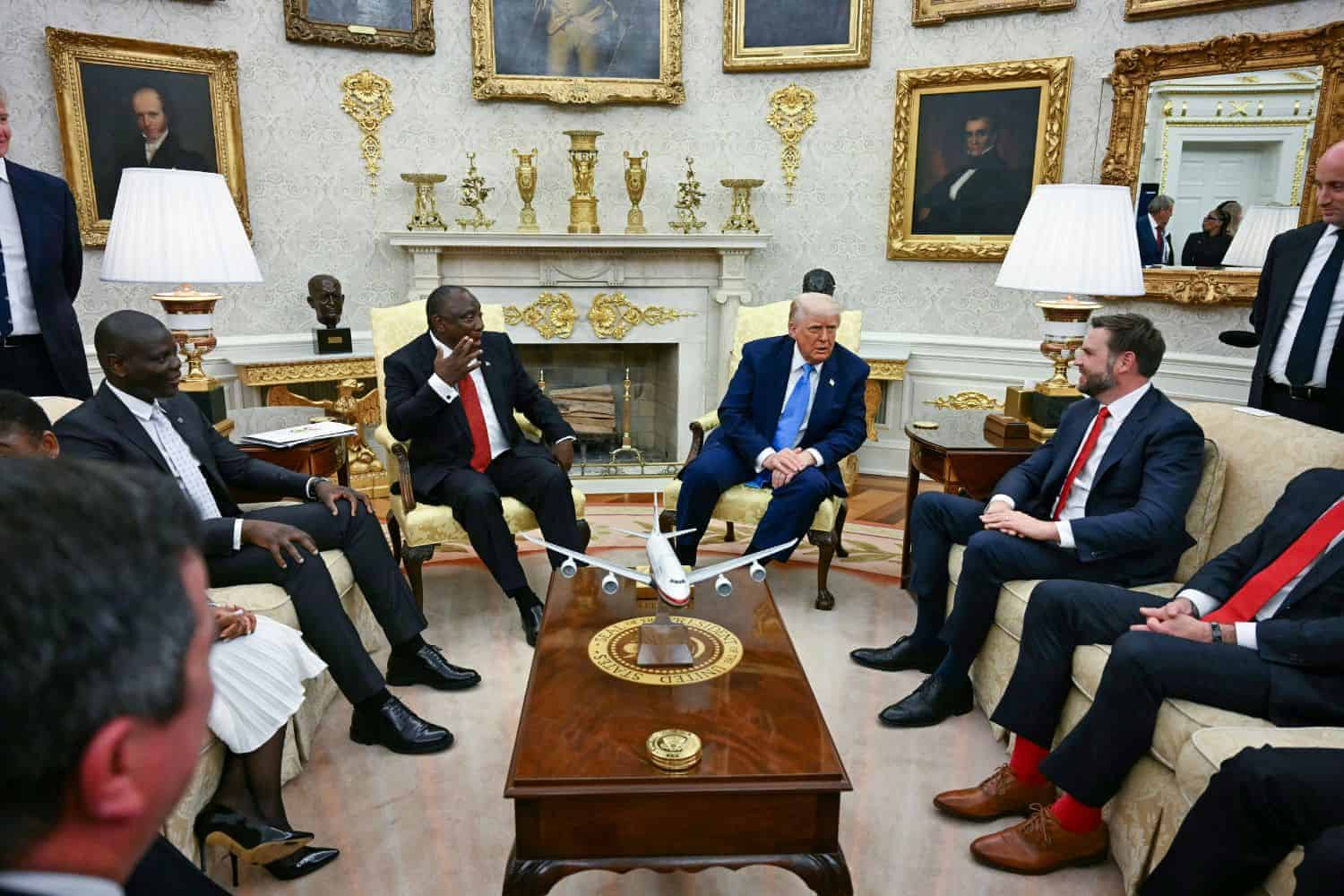
While this list is not ranked, the top spot almost automatically belongs to President Cyril Ramaphosa’s uneasy and widely publicised encounter with former reality TV star turned United States (US) President, Donald Trump.
The 21 May Oval Office meeting unfolded against a backdrop of strained diplomatic relations between South Africa and the US.
Tensions escalated when Trump, shortly after returning to the White House, signed an executive order halting foreign aid to South Africa and introduced a refugee programme aimed at Afrikaners.
The order was sparked by Ramaphosa’s signing of the Expropriation Act, which allows for the expropriation of land without compensation.
The Trump administration also repeatedly accused South Africa of carrying out a so-called “white genocide” against Afrikaners.
While Ramaphosa and his delegation (which included golfers Ernie Els and Retief Goosen – Yes, GOLFERS in a diplomatic meeting. Imagine!) sought to use the meeting to reset bilateral relations and negotiate a comprehensive trade deal, what he came to an encounter was a very expected ambush, as happened to Ukrainian President Volodymyr Zelenskyy two months.
Roughly 20 minutes into what began as a cordial exchange, Ramaphosa attempted to reassure Trump that no such genocide existed.
ALSO READ: Here is the origin of the white cross video Trump used to ambush Ramaphosa
That’s when the meeting took a dramatic turn.
Trump signalled to his staff and delivered what would become one of the year’s most memorable lines.
“Turn the lights down, turn the lights down,” the US president remarked.
What followed was a video compilation being screened for the South African delegation.
The montage consisted of utterances, notably made by EFF leader Julius Malema, about white people.
This included the singing of the apartheid struggle song Dubul’ ibhunu (Kill the Boer).
Trump later showed Ramaphosa a stack of news clippings, which he claimed detailed farm murders across South Africa.
Ramaphosa earned praise from some for remaining composed under pressure in the aftermath, while others criticised him for not standing up to Trump.
In his later public appearances, Ramaphosa would jokingly reference his experience of hearing “dim the lights” (in his own words).
‘I will die for this badge. I will fight until the end, whatever the end is’
KwaZulu-Natal (KZN) police commissioner Nhlanhla Mkhwanazi came out guns blazing, making sweeping allegations that shocked the nation during a press conference on 6 July.
Dressed in a military-style uniform and flanked by masked officers carrying firearms, Mkhwanazi accused Police Minister Senzo Mchunu and Deputy National Police Commissioner Shadrack Sibiya of having links to criminal syndicates.
Mkhwanazi also questioned the decision to disband the political killings task team (PKTT).
READ MORE: Mchunu says PKTT should have been disbanded sooner, points to Masemola’s ‘lapse’
His statement to South Africans quickly went viral.
“I will die for this badge. I will fight until the end, whatever the end is. We will not stop,” Mkhwanazi remarked.
The declaration made him a symbol of resistance for many on social media, with #HandsoffNhlanhlaMkhwanazi trending widely on X.
His allegations ultimately led to the formation of both the Madlanga Judicial Commission of Inquiry and Parliament’s ad hoc committee, which are currently investigating claims of political interference, corruption, and criminal activity within the justice system.
‘Supernatural powers to make people disappear’
At another media briefing, Mayibuye Afrika leader Floyd Shivambu made startling accusations against his former political home, the MK party.
The 19 June press conference followed his abrupt removal as MK secretary-general by former president Jacob Zuma, after Shivambu travelled to Malawi to visit fugitive pastor Shepherd Bushiri.
Shivambu claimed his ousting stemmed from fabricated allegations that he was plotting to overthrow Zuma as leader of the party — claims he said were supported by what he described as an “extremely bizarre and fake intelligence report”.
He also revealed that he was accused of “accumulating supernatural powers to make people disappear” (witchcraft).
READ MORE: ‘Shivambu was better off in the EFF’: Is Afrika Mayibuye crashing before liftoff?
What stood out, however, is what Shivambu said about Zuma, the MK party, and the EFF.
To summarise his words, he essentially described Zuma as “gullible” and labelled the MK party a “family, tribal and ethnic project”.
He also called the EFF a “cult”, a jab at his former ally and Red Berets leader Julius Malema.
Despite announcing plans to begin a “consultation process” for launching his own political party, Shivambu also insisted he would not resign from the MK party.
Bizarre, indeed.
‘This is what happens in a South Africa run by blacks’
Judge Ratha Mokgoatlheng, who presides over the Senzo Meyiwa murder trial, found himself at the centre of controversy in early June following racially charged remarks made in court.
At the time, the judge expressed anger at what he perceived as a lack of respect from defence lawyers who addressed witnesses without using formal titles, despite prior rulings on courtroom decorum.
He particularly took issue with the conduct of black legal professionals.
“When I make remarks about our black counsels, attorneys and maybe even judges, I’m told ‘you are crazy, you think you are better than other people’.”
Tensions escalated when defence attorney Charles Mnisi informed the court he would be unavailable due to his participation in the Comrades Marathon.
READ MORE: Judge offers to recuse himself from Senzo Meyiwa murder trial after racial remarks
Mokgoatlheng, frustrated by public dissatisfaction with the prolonged trial, responded: “Even the accused themselves have been in custody for two to three years, and here’s this stupid judge called Ratha Mokgoatlheng allowing a person who is representing two of the accused here to go and run a marathon.”
His following remarks ignited fierce backlash nationwide.
“This is what happens in a South Africa run by blacks. I can tell you now, even if you call me Uncle Tom, I don’t think a white advocate will ever have the gall to ask me that. Never,” Mokgoatlheng said.
Although the judge later apologised, calls mounted for the Judicial Service Commission (JSC) to investigate.
It was also not the first time he had apologised for remarks directed at black legal professionals.
‘South Africans, you are Sodom and Gomorrah’
Former police minister Bheki Cele also made headlines following the death of South Africa’s ambassador to France, Nathi Mthethwa.
Mthethwa, aged 58, was found dead in Paris on 29 September, in what is believed to be a suicide.
While many mourned his passing, others responded with open criticism due to the controversies that plagued his political career.
His tenure as police minister was overshadowed by major scandals such as Nkandlagate and the Marikana massacre.
He also faced ridicule for proposing a R22 million monumental South African flag at Freedom Park during his time as minister of sports, arts and culture.
READ MORE: Ramaphosa lauds Mthethwa as ‘unapologetic activist’
Mthethwa had even earned the nickname “Minister of Condolences and Congratulations”.
Speaking at Mthethwa’s memorial service on 10 October, Cele lashed out at those who appeared unsympathetic.
“The priests must go to the mountain and pray that he does to South Africa what he did to Sodom and Gomorrah.
“South Africans, you are Sodom and Gomorrah; you do not have a conscience and a heart,” Cele said.
As 2025 draws to a close, one thing is certain: in a year marked by political tension, public outrage and high-stakes drama, it was often the words — not just the actions — that left the deepest impression.
About the Author